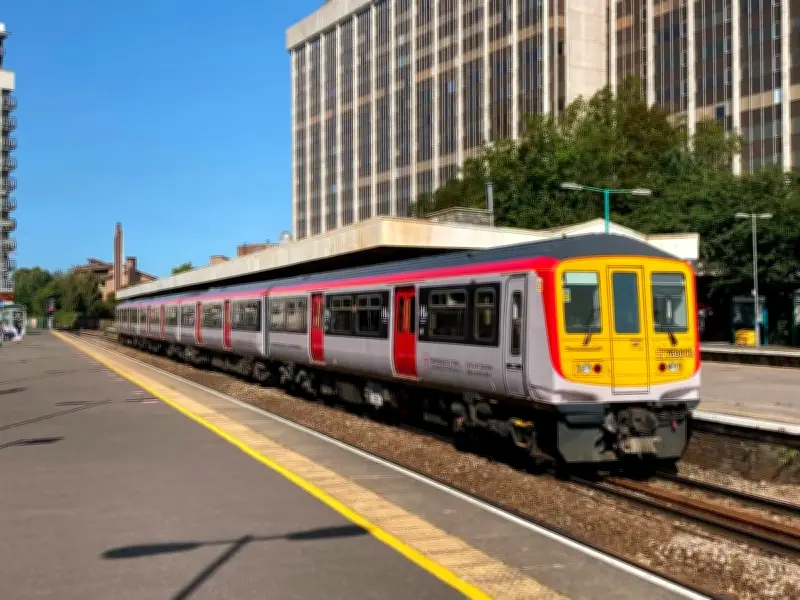
Relations between the UK and Welsh governments are more strained than publicly acknowledged, with rail funding at the centre of the dispute. The UK Budget allocated £30m towards the Cardiff Parkway rail project, but this was not new money; it came from the existing rail investment settlement for Wales, set out in last year's spending review.
Funding Dispute Over Burns Stations
The Plaid Cymru administration argues that the UK Government, responsible for rail infrastructure in Wales, should fund new stations as a first step towards addressing decades of underinvestment. The Welsh Government initially sought £1bn, hoping it would form part of a longer-term £14bn commitment made by former Prime Minister Sir Keir Starmer for new stations, upgrades, and new track.
Instead, no new money was announced in Chancellor John Healey's Budget. The Department for Transport is also arguing that the Welsh Government should contribute towards station projects on the south Wales mainline, for which it is not officially responsible.
Stations Ready or Not?
The two administrations disagree on whether the five original "Burns stations" are ready to develop. Welsh Secretary Stephen Kinnock told reporters that funds were allocated to Cardiff Parkway because it is the only "shovel-ready" project. The Welsh Government disputes this, saying the other five Burns stations are also ready to progress.
Cardiff Parkway, supported by Lord Burns, was not one of the original five Burns stations. Those were Newport Road in Cardiff (Cardiff East), Newport West, Llanwern and Somerton in Newport, and Magor and Undy. As rail is not devolved, the Welsh Government's position is that all funding should come from the UK Government, honouring the endorsement given by former PM Keir Starmer for Transport for Wales' £14bn wish list.
All six stations, with necessary work to surrounding rail corridors, now have an indicative price tag of around £800m. Cardiff Parkway, a four-platform mainline station, would cost up to £150m. The first two stations to be taken forward will be Cardiff Parkway and Magor and Undy.
The funding currently available for the Burns stations, including Cardiff Parkway, is estimated to be around £100m. Further funding will be needed in the next spending review period, with negotiations under way at a time when UK Government departments face real-term budgetary cuts.
Who Pays for the Burns Stations?
First Minister Rhun ap Iorwerth emerged from a meeting of the National Economic Council in Glasgow with the Prime Minister sounding relatively bullish about prospects of persuading the UK Government to honour its £14bn rail pledge. He believes the Prime Minister was in listening mode and would look again at the commitment.
To put the disparity into context, the UK Government's commitment to rail enhancements in Wales during the current comprehensive spending review period, running to 2030, is £350m. This compares with approximately £34bn committed to rail enhancements in England over the same period.
Rachel Reeves announced a wider £445m package for Welsh railways in last summer's spending review. However, this includes around £48m for maintenance associated with the Core Valley Lines and a £90m pipeline to develop future projects. The first £30m tranche for Cardiff Parkway has seemingly come from the pipeline pot.
Department for Transport and Welsh Government Positions
A Department for Transport spokesperson said: "Our £30m investment in Cardiff Parkway will transform East Cardiff, unlocking jobs, investment, and improved connectivity across the region – and it's just one part of £445 million we've committed to upgrade Wales' railways. We now expect the Welsh Government to confirm its share of funding, and we hope to be able to deliver benefits for passengers as quickly as possible."
Deputy Minister for Transport Mark Hooper was unequivocal in saying that he had not entered into any agreement with the UK Government to contribute towards the stations. He said: "Rail infrastructure is not devolved, so it is for them to resource these stations. We would love it if it was all devolved to us, but ultimately it is their responsibility to do it. They are referencing an agreement that is not there. There is no agreement between the parties on this.
"Conversations we have had have been constructive, but constructive conversations don't pay the bills."
Mr Hooper rejected the suggestion that the stations were not ready to progress. He said: "The UK Government committed to deliver this money in February and, since then, we've agreed with Network Rail that Transport for Wales will deliver the stations. Transport for Wales is ready to start work. We just need the UK Government to deliver on its commitment."
He added: "Spades in the ground can be described in lots of different ways, but the work is starting on Parkway from a UK Government, Network Rail and Welsh Government perspective. We have got the best part of £90m to spend, but we have got to get on and start doing that work and ensure that money isn't holding that up."
Asked when he expected clarity on the funding, Mr Hooper said: "We are working on that next spending review period now with Network Rail and Transport for Wales, and we will start to see some certainty in the early part of next year. As soon as we get this, we go into the spending review."
He also highlighted the benefits of building up a Welsh-based supply chain through previous rail infrastructure projects, including the £1.1bn electrification of the South Wales rail network, warning that without a funding commitment, that expertise could ebb away.
Cardiff Parkway and the Future
The Cardiff Parkway station project, originally planned with four platforms, was previously estimated to cost around £120m. Its cost is now being reassessed by Transport for Wales and Network Rail, and including necessary rail corridor work, the overall cost could rise to around £150m. The original funding model, involving private finance against long-term car parking income, has been shelved.
Mr Hooper said: "We have got to be pragmatic and get this over the line. It's pointless building something that doesn't need to be built in the way that it is, as that would be wasting public resources. We need to build the appropriate station. Whether it turns out to be two or four [platforms], I am pretty sanguine about it, frankly. I want it to be the right station for the right job."
The proposed integrated business park at Cardiff Parkway is being developed by Cardiff Parkway Developments Ltd, majority-owned by Investec, with the Roberts family and the Welsh Government holding a 10% interest. Rolls-Royce has appraised the site and considers it to meet key requirements for a major hub investment. It is understood that Parkway is one of three sites currently being appraised for a hub investment that could create thousands of high-skilled jobs.
Chairman of Cardiff Parkway Developments Nigel Roberts said: "I welcome the Chancellor's shout-out on Cardiff Parkway, and we are working hand in glove with the Welsh Government, Transport for Wales, Network Rail, the UK Government and DfT to ensure the speedy delivery of this game-changing project."
The underlying problem goes beyond the Burns stations. Spending on rail projects is calculated on an England and Wales basis, meaning any increase in Department for Transport spending generates a Welsh consequential of just 33.5% of the comparable English spending increase. For Scotland and Northern Ireland, the comparable figure is close to 100%, at 95.6%. This means Scotland and Northern Ireland get close to the full benefit of increased overall DfT spending under the Barnett Formula.
Possible solutions include uncoupling English rail projects from Welsh ones, establishing a specific funding guarantee ensuring Wales receives at least 5% of UK rail enhancement spending, or devolving rail fully to Wales with a funding settlement that recognises decades of underinvestment. There is also a case for the UK Government to provide a backstop contingency funding mechanism for unforeseen events, such as infrastructure damaged by landslips.
At present, Wales has the worst of both worlds: an unfair UK Government funding settlement for rail, alongside repeated instances in which the Welsh Government has had to use its own resources to fund railway projects. Examples include the £160m spent upgrading the Ebbw Vale line, the £1.1bn electrification of the Core Valley Lines, and a £22m contribution towards the revamp of Cardiff Central Station, with a further £40m from the Cardiff Capital Region.
The immediate priority must be for the UK Government to accept responsibility for funding the Burns stations. Expecting the Welsh Government to contribute towards projects that remain a non-devolved responsibility simply perpetuates the unfairness UK ministers claim they want to address. The current position of expecting a Welsh Government contribution towards Cardiff Parkway is a retrograde step.