First Minister Swinney Rejects 'Bulletproof' Assisted Dying Bill Ahead of Crucial Vote
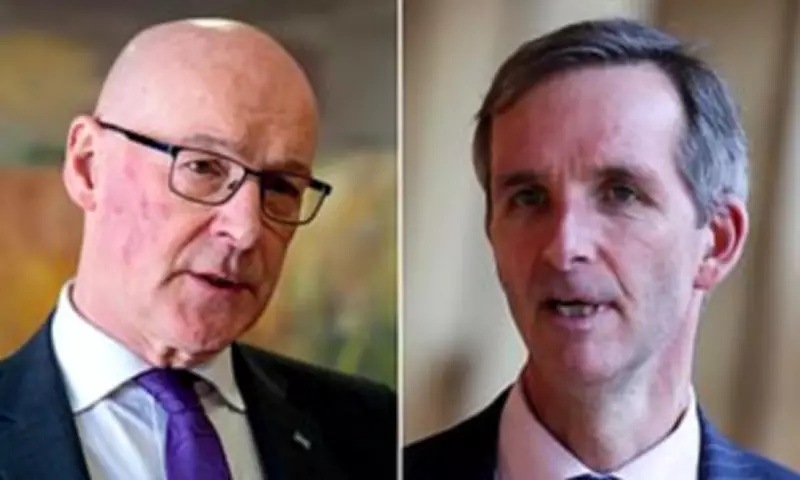
First Minister John Swinney has issued a stark warning that hundreds of last-minute changes have done "nothing" to make Holyrood's proposed assisted dying law safe or appropriate for Scotland. Despite MSPs approving 175 amendments last week, Mr Swinney stated he could not support the Bill for "many" reasons, highlighting significant vulnerabilities for individuals and a lack of protection for those implementing the system.
Final Conscience Vote Looms
The final vote on the Assisted Dying for Terminally Ill Adults Bill, spearheaded by Orkney Liberal Democrat MSP Liam McArthur, is scheduled for Tuesday. Each MSP will be free to follow their conscience in what is expected to be a knife-edge decision. The Bill, which passed its initial principles vote 70 to 56 last May, has seen some supporters switch sides, adding uncertainty to the outcome.
Under Mr McArthur's proposals, adults with a terminal illness and six months or less to live would have the right to request a self-administered lethal drug, overseen by two independent doctors. Coercion would be criminalised, but critics, including Mr Swinney, fear the legislation could pressure vulnerable individuals into ending their lives early to avoid feeling a burden on others.

Clashing Claims Over Safeguards
Following last week's amendments, Mr McArthur asserted the Bill had been made "bulletproof" through enhanced safeguards. However, Mr Swinney, a member of the Church of Scotland and long-standing opponent of the legislation, flatly rejected this claim. In an interview with the BBC, he emphasised, "There's nothing that I've heard that gives me the reassurance that this legislation is appropriate for our times."
He elaborated, "I think it leaves significant vulnerabilities for individuals in Scotland. And for those who would have to lead this system, I don't think they've got any protection. For that reason, and many others, I can't support the Bill." Mr Swinney acknowledged the Scottish Parliament's thorough scrutiny but stressed the decision ultimately rests with individual MSPs.
Key Concerns and Political Dynamics
The debate has intensified with notable shifts in stance from medical bodies. The Royal College of Psychiatrists and the Royal Pharmaceutical Society both moved from neutrality to opposition last week after a conscientious objection clause was removed from the Bill. This clause, which would have allowed health professionals to refuse participation, was deleted on Wednesday after Mr McArthur argued Holyrood's limited powers required the issue to be addressed through future Westminster legislation.
Scottish Labour MSP Michael Marra criticised the Bill as "riddled with holes" and increasingly unworkable, urging MSPs to heed warnings from medical professionals who have "torn the Bill to shreds" over inadequate protections for workers. Meanwhile, SNP health secretary Neil Gray plans to abstain to maintain neutrality, anticipating potential need for Westminster involvement if the Bill passes.
Proponents Defend the Legislation
On BBC Scotland's Sunday Show, Mr McArthur defended the amendments, stating they placed the Bill in a "better position" to address concerns raised during scrutiny. He framed the legislation as fundamentally about choice: "Choice primarily for dying Scots that are being failed by the ban on assisted dying that exists at present, but choice too for medical professionals who, for whatever reason, do not wish to participate."
When questioned about the Bill's prospects, Mr McArthur admitted it was "difficult to tell" with many MSPs still uncertain, but emphasised the issue "isn't going away" even if the vote fails. As Tuesday approaches, the political and ethical tensions surrounding assisted dying in Scotland remain sharply divided, with the outcome hanging in the balance.