Scottish Political Leaders Issue Joint Warning Over Business Rates Crisis
The leaders of Scotland's six main political parties have delivered an unprecedented united warning that the country risks becoming a "tumbleweed area" if urgent reforms are not made to the business rates system. The stark prediction came during the first major hustings event of the election campaign, organized by the Confederation of British Industry (CBI) on Thursday.
Unprecedented Unity on Stage
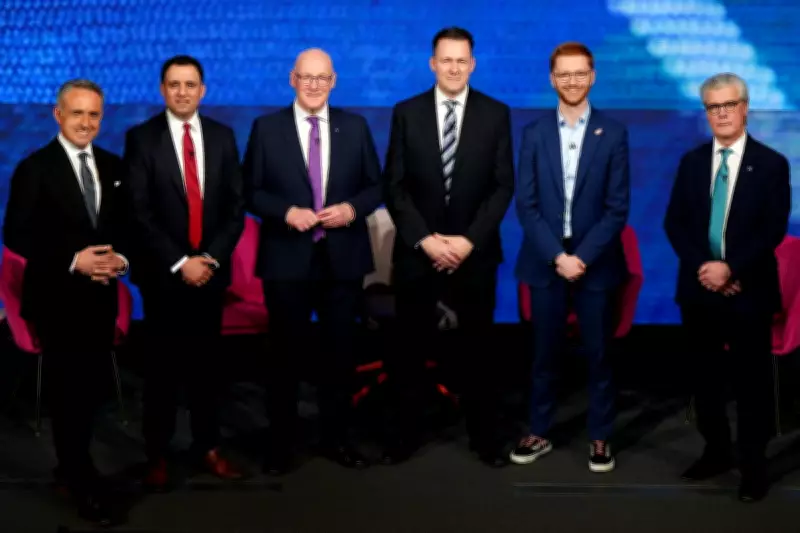
First Minister John Swinney of the SNP, Russell Findlay of the Scottish Conservatives, Anas Sarwar of Scottish Labour, Ross Greer of the Scottish Greens, Alex Cole-Hamilton of the Scottish Liberal Democrats, and Malcolm Offord of Reform UK appeared together for the first time in this election cycle. The rare display of cross-party concern highlighted the severity of the business rates crisis facing Scottish enterprises.
Hospitality Sector Sounds Alarm
The Scottish Government's recent business rates revaluation came under intense scrutiny during the event. Stephen Montgomery, director of the Scottish Hospitality Group, presented a compelling case for immediate intervention, revealing shocking examples of rate increases that threaten business survival.

"One of our members has seen their rateable value increase from £111,000 to £675,000 payable," Montgomery told the assembled leaders. "That is completely unaffordable. If we don't have surviving businesses, you're going to have no tax take whatsoever."
Montgomery issued a direct challenge to the political panel: "My question really comes down to this – if we see the continuation of businesses closing, will the Scottish Government take the blame when there's more unemployment, more high street shops and pubs shut, and we're a tumbleweed area?"
Political Responses and Proposed Solutions
First Minister John Swinney acknowledged that some businesses face "challenges" from the revaluation but defended his government's position. While refusing to pause the revaluations, Swinney highlighted the £900 million in rates relief passed through his government's budget earlier this year. He redirected some criticism toward Westminster, describing the UK Government's decision to increase national insurance contributions for employers as a "tax on jobs."
Russell Findlay, Scottish Conservative leader, declared the rates system "completely broken" and argued that fixes could be implemented immediately. "The SNP Government has been listening to businesses, not least hospitality businesses – it could have paused the rates bill and given that respite, given them that breathing space," he stated.
Anas Sarwar, Scottish Labour leader, criticized the existing relief measures as insufficient, saying they "do not touch the sides" in addressing the impact of revaluations on struggling businesses.
Ross Greer, Scottish Green co-leader, argued that Scotland was "still not seeing the value" of business rates due to extensive government relief in recent years. He proposed targeted relief for firms spun out of universities as a potential solution.
Alex Cole-Hamilton, Scottish Lib Dem leader, called for fundamental reform, arguing that rates should not be set by "arbitrary assessment." He warned against disincentivizing business improvements: "You should not be disincentivised to refurbish your premises, in the understanding that when those revaluations come around again, that's going to be penalised against the value of your business."
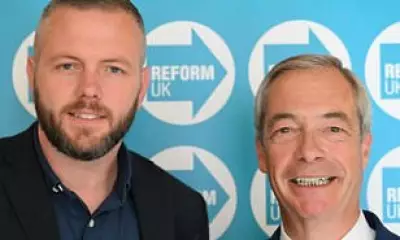
Malcolm Offord, Reform UK's leader in Scotland, delivered perhaps the most scathing assessment, attributing the crisis to "politicians who say they understand business and they actually don't." He identified a "breakdown here in the rhetoric between business friendly and actually seeing this happen in real life," and called for policies that would "allow businesses to thrive" in what he described as an "underperforming" Scotland.

Broader Implications for Scottish Economy
The unified warning from across the political spectrum underscores the critical nature of the business rates issue as Scotland approaches elections. With hospitality businesses facing potentially ruinous increases and warnings of empty high streets becoming reality, the pressure for meaningful reform has reached unprecedented levels. The CBI hustings event has crystallized what promises to be a defining issue of the campaign, with business survival and economic vitality hanging in the balance.