Rural Synagogue Revival Project Expands Nationwide from Maine to Montana
The Center for Small Town Jewish Life at Colby College is experiencing significant growth as Passover concludes this year, with its mission to preserve and strengthen rural synagogues expanding across the United States.
Rabbi's Leadership Drives National Movement
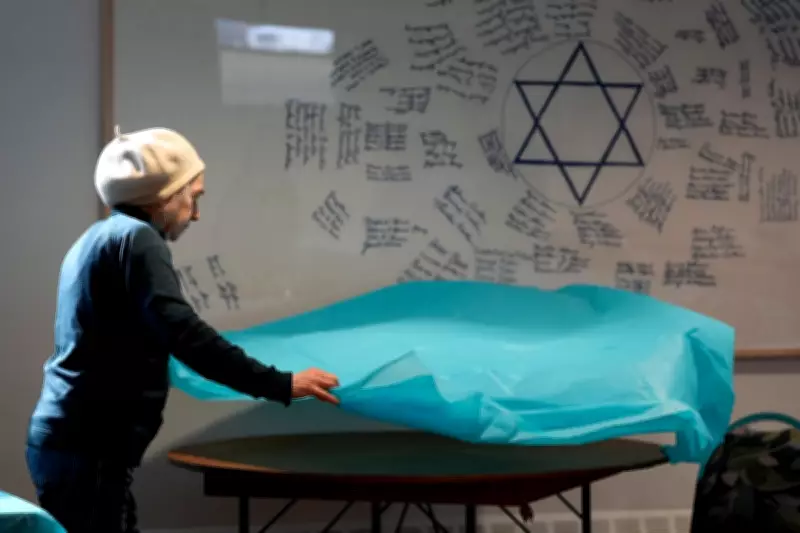
Rabbi Rachel Isaacs recently oversaw the preparation of ceremonial Passover foods at Beth Israel Congregation in central Maine, where membership has quadrupled over the last fifteen years. As executive director of the Center for Small Town Jewish Life, Isaacs is spearheading a national movement to revitalize rural Jewish communities.
"Rural Jewish life is important for the Jewish people and it's important for rural America," Isaacs emphasized. "Those people deserve to be served and shepherded."

Addressing Critical Decline in Rural Synagogues
The center's expansion comes at a crucial moment for American Judaism. According to data compiled by Alanna E. Cooper, a Jewish studies professor at Case Western Reserve University, America has approximately 20% fewer synagogues today than in 1990. This decline is particularly severe in rural areas, where aging populations and resident relocations have devastated congregations.
Founded a decade ago at the liberal arts college in Waterville, Maine, the center now operates programs for more than 60 communities across 22 states. While less than 2.4% of Americans identify as Jewish, approximately one in eight lives outside major urban areas, creating a significant need for the center's services.
Confronting Rising Antisemitism
The center's work has gained additional urgency amid escalating antisemitism across America. The Anti-Defamation League documented a nearly 900% increase in antisemitic incidents during the decade ending in 2024, with high rates reported in predominantly rural states including Maine, New Hampshire, and Wyoming.
"In a world of rising antisemitism it's more and more important that Jewish communities are joyful, strong and connected," Isaacs stated. "You have more Jews that experience joy, who can locate strength, form connections with other Jews across the country and around the world."
Three-Pronged Strategy for Revitalization
The center employs three distinct strategies to support rural congregations:
- Makom Program: A two-year mentorship initiative for rabbis serving rural synagogues during their early career stages.
- Lay Leadership Training: Programs that equip community members to lead prayers and support congregations without full-time rabbinical leadership.
- Board Leadership Coaching: Specialized training for synagogue presidents and boards on managing small-town Jewish institutions effectively.
Rabbi Lisa Rappaport of Congregation Beth Israel in Chico, California, participated in the inaugural Makom program. She noted that rural rabbis often lead their town's only Jewish congregation, making their work "special and it's beautiful and it's challenging."
Building Connections Across Vast Distances
In Helena, Montana, Rebecca Stanfel, executive director of the Montana Jewish Project, highlighted the center's critical role in uniting her state's scattered Jewish community. "In Helena, we have no choice but to rely on volunteers," Stanfel explained. "And if we want to have something like a seder, High Holidays, it's got to come from the community."
She added that this volunteer-driven model provides "a really important model for people outside rural America."
Local Impact and National Reach
While Isaacs also serves as rabbi at Beth Israel—a century-old synagogue near Colby College that has grown alongside the center—the organization's influence extends far beyond Maine. The center has assisted congregations from California to Texas, creating a nationwide network of support.

In Waterville, volunteers including Colby students and retirees recently prepared to host approximately 100 people for Passover. Synagogue member Jeff Lovitz, while folding napkins for the event, reflected on the community's resilience: "We've been here since the early '70s. Our kids went to Hebrew school here. I think it's important to have a Jewish community in Waterville."
The Center for Small Town Jewish Life continues to expand its reach, offering hope and practical support to rural Jewish communities facing demographic challenges and rising antisemitism across America.