MSPs Shift Focus from Suicide Debate to Glasgow Fire Fallout
Members of the Scottish Parliament briefly diverted their attention from discussions on suicide prevention to address the devastating fire that ripped through Glasgow city centre earlier this week. The blaze, which caused significant damage to businesses in the area, has sparked a political confrontation over the government's response.
First Minister's Vague Promises on Financial Support
First Minister John Swinney used his platform to praise the efforts of his government and the SNP-controlled Glasgow City Council in supporting businesses affected by the inferno. However, his assurances were met with scepticism from opposition benches.
Conservative leader Russell Findlay, a former tabloid journalist known for his direct questioning style, challenged Swinney on the specifics of this support. When pressed about what financial assistance would be available, Swinney admitted he was 'not in a position to say definitely what financial support will be available', though he expected to have details 'very shortly'.

Findlay questioned whether this vague response would inspire confidence among business owners, particularly given that the fire affected Scotland's largest public transport hub. The Conservative leader noted that retailers and other firms were already grappling with impending business rates increases, adding further pressure to an already difficult situation.
Business Rates Controversy Takes Centre Stage
Swinney acknowledged 'the challenges' facing the business community and 'the significance of the issue' surrounding rates, but offered little concrete action. He reminded entrepreneurs that his government had 'protected the business community from some of the increases that it has faced', a statement that did little to address current concerns.
The exchange took a dramatic turn when Findlay revealed he had contacted Swinney two weeks earlier, requesting a meeting with Katie Long, the owner of a community pub in Perthshire North who claims a rates hike will force her establishment to close, putting 26 staff members out of work.
Constituency Embarrassment for First Minister
In a potentially embarrassing revelation, Findlay disclosed that Swinney had neither met with Katie nor responded to the initial request for a meeting. The situation was particularly awkward for the First Minister as Katie's pub is located in his own constituency of Perthshire North.
Findlay announced that since Swinney wouldn't visit Katie's pub, she had come to Parliament instead. He extended a public invitation: 'I will be going with Katie to a nearby pub at 1.30pm this afternoon. Will John Swinney join us to discuss Katie's plight and Scotland's pub crisis over a pint?'
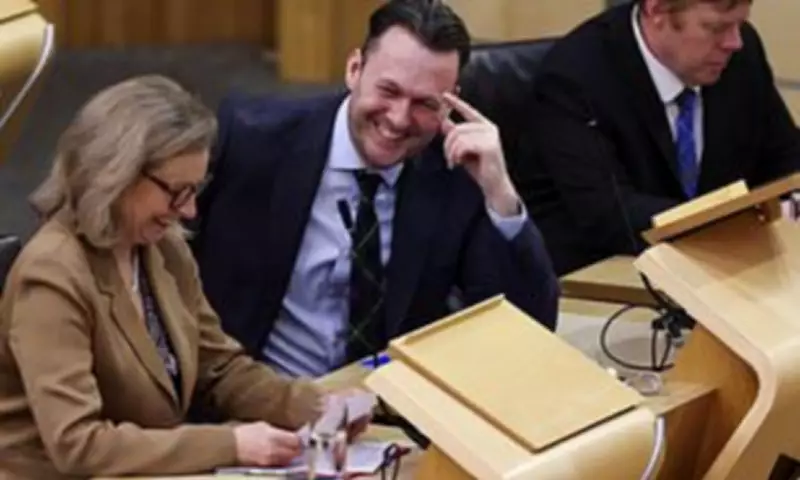
In what might be considered unusual for Scottish political culture, Swinney declined the invitation, citing other commitments. The First Minister appeared visibly uncomfortable following this ambush, which combined the immediate crisis of the Glasgow fire with the broader issue of business rates affecting enterprises across Scotland.
The confrontation highlighted growing tensions between the Scottish government and business owners facing multiple challenges, from emergency situations like the Glasgow fire to ongoing financial pressures from rates increases. The exchange demonstrated how local issues can quickly become national political flashpoints in the Scottish Parliament.