

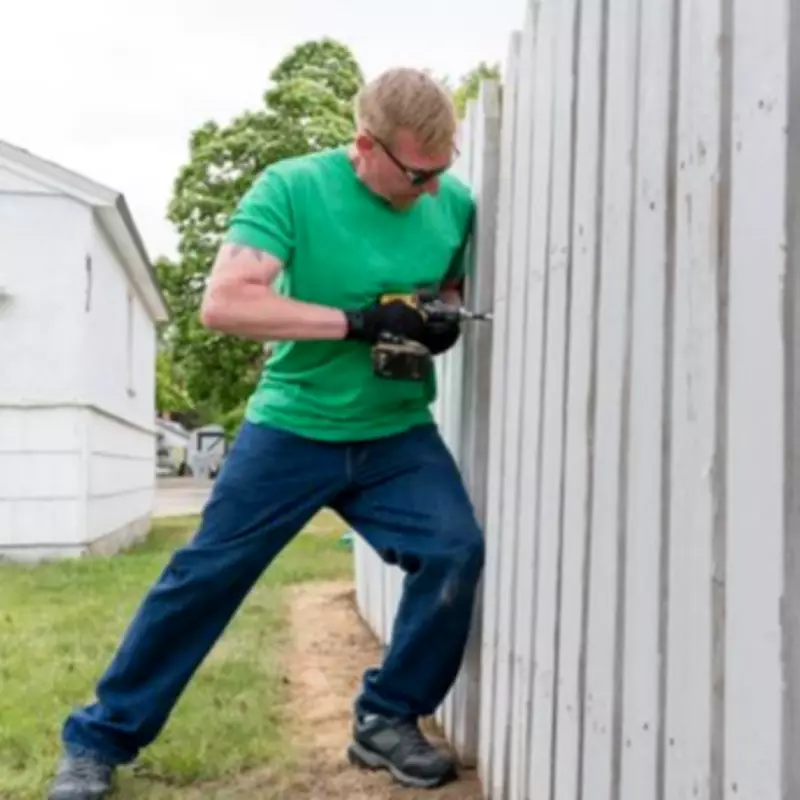
Neighbour fence repair responsibility is a common issue among Brits, with many taking to social media to air their grievances. However, experts have revealed a simple method to find out with certainty who is actually responsible.
The 'Good Side' Clue
One early clue is to check whether the 'good' side of the fence faces your property. It is standard practice for homeowners to position the 'good' side outward. Jacksons Fencing specialists explain: 'Typically, you can guess who owns a fence by seeing where the rails are, with the fence typically facing away from their property so that their neighbour gets the 'good' side of the fence.'
They add: 'This is the most secure way of facing fencing so there are no rails for anyone to use to climb into your garden. This is then repeated with the neighbour on the other side to ensure that each home has both a 'good' and 'bad' fence side.'

While this offers a straightforward technique for making an informed assumption, the experts acknowledged it is not foolproof.
The Definitive Method: Land Registry
The only way to conclusively determine ownership is by checking the Title Plan or Land Registry documentation. In these records, a 'T' symbol indicates who the boundary belongs to, establishing responsibility for fence maintenance. If the 'T' marking appears on both sides forming an 'H' shape, the fence is shared ownership, and both neighbours must work together on its maintenance as it represents a 'party wall'.
If you suspect the boundary is incorrect, the specialists recommend checking the Land Registry to identify who holds responsibility for the fence, whether the property is rented or owned.
What If Your Neighbour Owns the Fence?
However, if your neighbour owns the fence but lets it deteriorate into an eyesore, sadly it is not simply a case of asking them to fix it. Jacksons Fencing explained: 'Frustratingly, there is no way to make your neighbour repair their fence, even if it is rotting and making your garden look unsightly.'
You can look to hire a disputes expert, but this will go down as an official dispute and will have to be declared when selling your house. The only way to get around this would be to install your own fence within your boundary right next to it.






