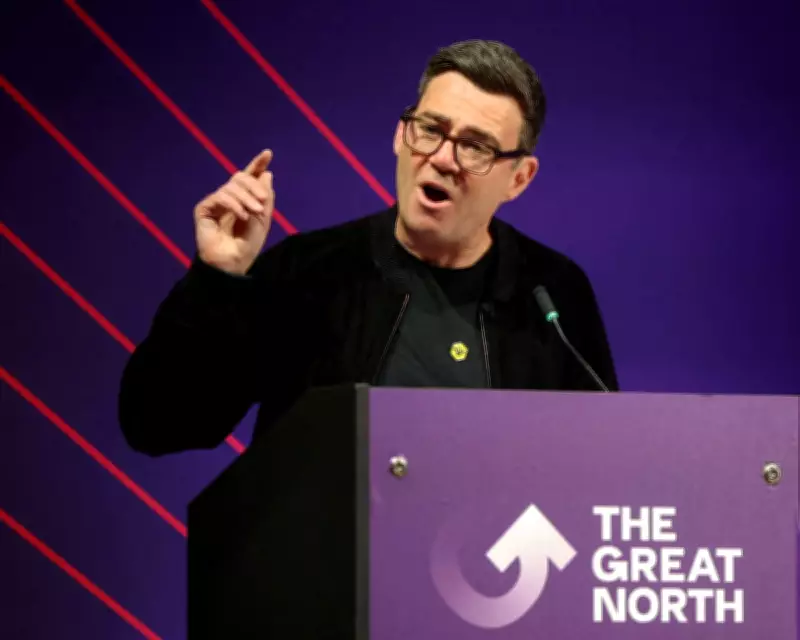
Andy Burnham, the Mayor of Greater Manchester, has long championed a model of governance that he calls 'Manchesterism' — a blend of devolved powers, local economic strategy, and public service integration. Now, as political parties seek fresh ideas ahead of the next general election, Burnham's approach is being scrutinized as a potential blueprint for national government.
The Rise of Manchesterism
Manchesterism is not a formal ideology but a practical set of policies that have emerged from Burnham's tenure since 2017. It emphasizes metro mayors with significant control over transport, housing, skills, and health budgets. The model has delivered tangible results: improved bus services through franchising, a mayor-led housing strategy, and integrated health and social care. Burnham argues that this localism drives efficiency and accountability, contrasting with Westminster's top-down approach.
Could It Work Nationally?
Burnham's supporters suggest that Manchesterism offers a middle way between centralization and fragmentation. They point to the Greater Manchester Combined Authority as a testbed for policies that could be scaled up. However, critics question whether the model relies too heavily on Burnham's personal popularity and the unique dynamics of Manchester's economy. The city's strong growth, driven by digital and creative sectors, may not be replicable in struggling regions.

Challenges and Criticisms
Opponents argue that Manchesterism lacks a coherent national framework for redistribution. While devolution works for prosperous areas, it could exacerbate inequalities if poorer regions are left to fend for themselves. Moreover, Burnham's focus on mayoral authority clashes with traditional party structures, raising questions about accountability and democratic oversight. Some Labour figures worry that embracing Manchesterism might undermine the party's centralist heritage.
The Practical Offer
Despite these concerns, Burnham is positioning himself as a policy innovator. His 'offer' includes a devolution deal for every region, a national care service, and a green industrial strategy rooted in local economies. He argues that Manchesterism is not about copying Manchester but about empowering local leaders to tailor solutions to their areas. This pragmatic, evidence-based approach appeals to voters disillusioned with Westminster gridlock.
Conclusion
Whether Manchesterism can transition from a regional success story to a national governing philosophy remains uncertain. Burnham's challenge is to prove that his model is more than a personal brand — that its principles can be adapted across the UK without losing their effectiveness. As political debate intensifies, Burnham's Manchester experiment may offer crucial lessons for the future of British governance.