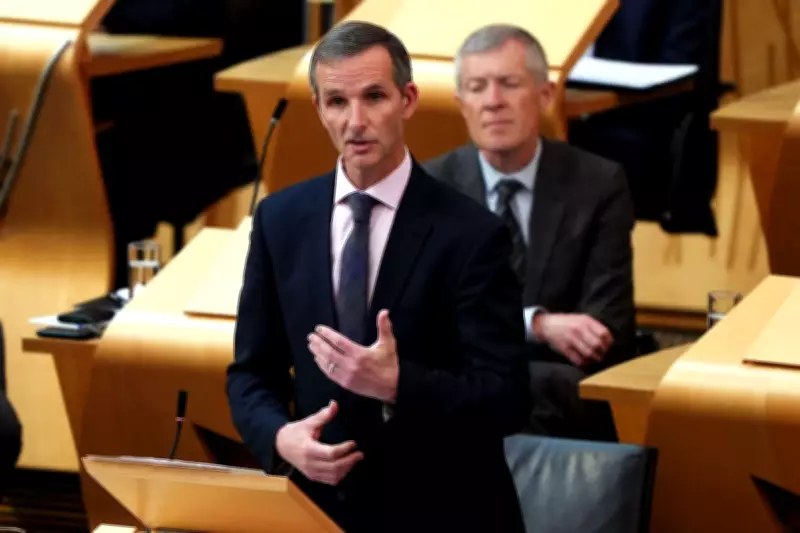
Holyrood's Final Vote on Assisted Dying Bill Sparks Last-Minute Appeals
Supporters and opponents of Liam McArthur's Assisted Dying for Terminally Ill Adults (Scotland) Bill have made urgent, last-ditch pleas to MSPs ahead of the crucial final vote scheduled for Tuesday evening at 10pm. The Liberal Democrat MSP, who has championed the legislation, insists his proposals represent the most rigorously safeguarded assisted dying bill globally, offering terminally ill Scots the right to request assistance in ending their lives under strict conditions.
McArthur's Final Push for Compassionate Change
Liam McArthur will meet with campaigners outside the Scottish Parliament on Tuesday before the vote, urging fellow MSPs to back the bill. He argues that the current law fails dying people by lacking compassion and safety, and that his legislation addresses these gaps. "This is now the toughest and most comprehensively safeguarded assisted dying bill in the world," McArthur stated. "If you believe that dying people should not have to suffer against their will and you have heard, like I have, of the many instances where they have been simply failed by the lack of compassion and safety in our current law, you now have to back this Bill."
He emphasized that after five years of development, consultation, revision, and amendment, the bill is ready for Parliament's consideration. The proposals require two doctors to confirm that a person is terminally ill and has the mental capacity to make such a request. A recent amendment specifies that individuals must be "reasonably expected" to have six months or less to live to be eligible. McArthur highlighted that MSPs have added detailed amendments on coercion, prognosis, and protection of vulnerable groups, with robust safeguards for healthcare professionals.

Opposition Voices Raise Concerns Over Safety
Opponents of the bill, including Deputy First Minister Kate Forbes, will also gather outside Holyrood ahead of the vote. Forbes announced her intention to vote against the legislation, citing increased risks after MSPs rejected critical safeguards and outsourced protections for doctors to the UK Government. She pointed to opposition from medical professionals, including the Royal College of Psychiatrists and the Royal Pharmaceutical Society, who have expressed concerns about implementation.
"Doctors, psychiatrists, pharmacists and palliative care specialists – the people who would be tasked with implementing this – are asking us not to do it," Forbes said. "These are the people on the front line of compassion in Scotland, the people who have dedicated their lives and careers to helping people in life and in death. They think this Bill is unsafe." She urged MSPs to heed the views of healthcare workers, whose careers are dedicated to caring for patients.
Debate Intensifies Over Vulnerable Groups and Societal Impact
Dr. Gordon Macdonald, chief executive of campaign group Care Not Killing, warned that the legislation threatens vulnerable individuals in Scottish society. "Vulnerable people who are sick, elderly or disabled, can so easily feel pressure, whether real or imagined, to end their lives so as not to be a burden on others," he said. "Parliament's first responsibility is to protect its most vulnerable citizens from exploitation and abuse by those who may have a financial or emotional interest in their deaths."
In contrast, Emma Cooper, convener of Friends at the End (Fate), argued for the bill's passage, stating that the majority of Scots support assisted dying for mentally competent individuals in their final six months of life. "We cannot deny those who are going to die the right to choose. It is simply a misconception that pain relief can alleviate the suffering of all conditions at the end of life," Cooper said. "Passing this Bill is the right thing to do, the only compassionate decision."

Historical Context and Legislative Process
This marks the third time MSPs have considered assisted dying legislation, with two previous attempts failing at their first vote. Last week, MSPs made 175 changes to the bill during four lengthy sessions at Holyrood, refining its provisions. MSPs will have a free vote on the legislation, allowing them to decide based on conscience rather than party lines. The outcome remains uncertain, with both sides mobilizing support in a high-stakes debate that balances compassion, safety, and ethical considerations for terminally ill adults in Scotland.