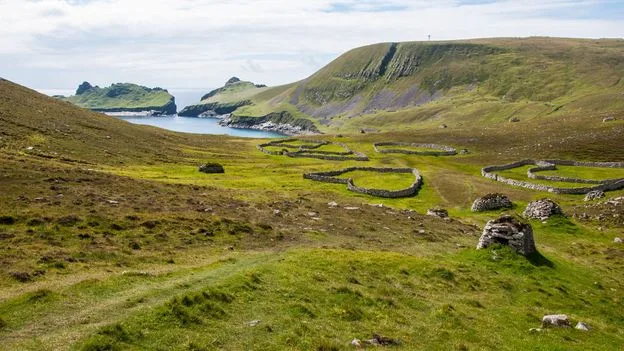
Hirta, the main island of the St Kilda archipelago, is one of the most remote places in the British Isles. Located 40 miles west of North Uist in the Outer Hebrides, it is home to a ghost town abandoned by its last residents in 1930. The final St Kildan died in April 2024, marking the end of an era. The village is now maintained by the National Trust for Scotland as a heritage site.
Access to St Kilda is only possible by boat, but weather often disrupts travel plans. A recent journey from the Isle of Skye was delayed multiple times due to poor forecasts. The trip eventually departed at 7 am, with a two-hour crossing after passing the last islands. The archipelago's isolation has attracted visitors for millennia, with evidence of Neolithic tools, Bronze Age burial mounds, and Viking artefacts.
The islands are also a haven for seabirds, hosting the largest colony in the northeast Atlantic, including the world's largest gannet colony and the EU's largest puffin and fulmar colonies. However, bird numbers have declined by up to 90% in 15 years due to climate change and food shortages. The St Kildans relied on these birds for survival, hunting 89,600 puffins in 1876 alone.

Today, Hirta also features military installations run by the Ministry of Defence, including lodging and a communications centre, which are off-limits to the public. These facilities add to the island's eerie atmosphere, alongside the abandoned village with its 40 stone homes lining a main path called 'The Street'. The site remains a poignant reminder of a lost way of life.