Victoria's Education System Grinds to a Halt as Teachers Stage Mass Strike
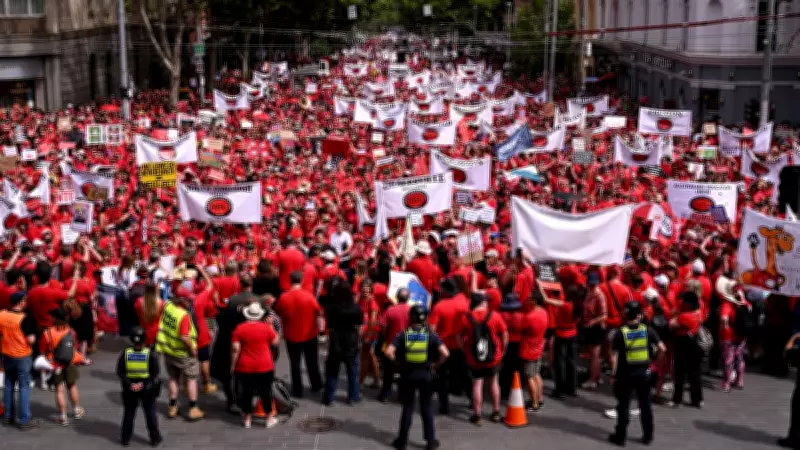
In an unprecedented display of industrial action, classes across Victoria were suspended as tens of thousands of public school teachers, principals, and education support staff walked off the job. The strike, the first of its kind in 13 years, saw an estimated 35,000 protesters flood the streets of Melbourne, creating a sea of red as they marched from Trades Hall to parliament house. Approximately 500 public schools were forced to close or operate with significant disruptions, highlighting the severe impact on the state's education system.
Rally Demands Fair Deal Amid Government Standoff
The rally, described by union leaders as one of the largest in Victoria's history, featured chants of "What do we want? A fair deal! When do we want it? Now!" Protesters carried signs with messages like "Allan government, see me after class" and "My preps can count, why can't the government?" expressing frustration over stalled negotiations. Major CBD roads were closed, and public transport services were affected until early afternoon, though Victoria Police reported generally orderly behaviour among attendees.
Briley Stokes, Victorian vice-president of the Australian Education Union (AEU), revealed that over 32,000 members participated in the 24-hour stop-work action. Entire teaching cohorts at schools such as Footscray West, Fairhills, Newmerella, and MacArthur primary schools went on strike, effectively shutting them down. "The government likes to say all schools are open. We say, how can they be?" Stokes asserted, emphasizing the widespread disruption.

Union Warns of Escalation as Pay Offer Falls Short
The AEU entered enterprise bargaining agreement negotiations eight months ago, seeking a 35% pay rise over four years, reduced class sizes, and enhanced mental health and classroom support. In response, the government offered an 18.5% increase, including an 8% rise for teachers and 4% for support staff effective in April, followed by 3% annually for three years, plus a 1.5% overtime allowance. Union officials criticized this as an attempt to "divide education staff and teachers," with warnings of further action if demands are not met.
Justin Mullaly, AEU Victorian president, cautioned that the union would "escalate our action if that's what we need to do," with potential rolling regional stoppages. He highlighted a "chronic shortage" of public school teachers, noting attrition rates have doubled since the pandemic. "The government has relied on your passion and commitment to cover the funding gap and staff shortages for way too long," Mullaly told the crowd.
Teachers and Parents Voice Support Amid Growing Concerns
Protesters shared personal stories underscoring the crisis. James Woodward, a technology teacher at a regional secondary school, revealed he relies on donated materials for classes, questioning how this aligns with Victoria's "education state" branding. Edward Arthur, a leader at the Victorian school for the deaf, cited teacher shortages and interstate moves for higher pay as key issues, with parents expressing solidarity, such as one who messaged, "I'll keep my child home, you go get a pay rise."
Parent Helen Bell, a teacher in the Catholic system not involved in the strike, brought her children to support their teachers from Brunswick East primary school, holding signs reading "we love our teachers." "We are here in our droves ... all the parents I know are in full support of the strike," Bell stated, reflecting broad community backing.
Government Response and Future Implications
Education Minister Ben Carroll stated the government did "everything" to avoid the strike, with meetings scheduled before and after the action. "I've always said to the union, please prioritise making sure that kids go to school, let's not disrupt them," Carroll told reporters. However, few students attended schools on Tuesday, and the education department acknowledged some institutions couldn't support all children.

Union leaders, including Sally McManus of the Australian Council of Trade Unions, labeled this the "biggest strike this state has seen for a very long time," attributing it to government disrespect. As tensions simmer, the strike underscores deepening challenges in Victoria's education sector, with potential for prolonged industrial unrest if resolutions remain elusive.