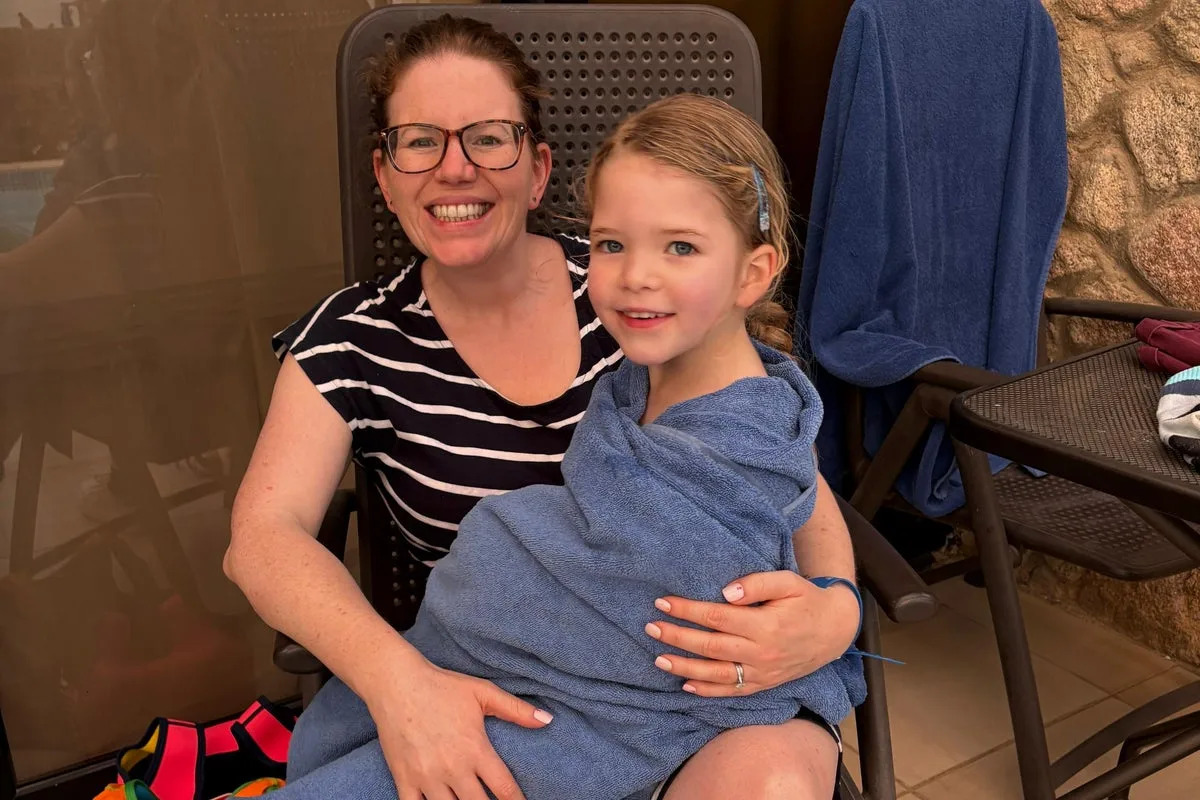
Mother with terminal cancer demands reform of 'unfair' school admissions policy
Terminal cancer mother fights 'unfair' school admissions policy

Mother with terminal cancer demands reform of 'unfair' school admissions policy

A mother diagnosed with incurable stage four cancer has launched a campaign to reform what she describes as an "unfair" school allocation policy in her local authority, while also calling for changes to the national schools admissions code.

Family's heartbreaking circumstances

Christine Lote, a 41-year-old mother from Bristol, received a devastating diagnosis in 2022 of a rare type of bone cancer called chondrosarcoma in her heel. This particular cancer does not respond to conventional treatments like chemotherapy or radiotherapy, leading to the difficult decision to amputate her leg in June 2023.

Tragically, just one year later, medical scans revealed the cancer had metastasized to her lungs, confirming the disease as terminal. Mrs Lote lives with her husband Damien and their two young daughters, four-year-old Sophie and three-year-old Chloe.

Wide Pickt banner — collaborative shopping lists app for Telegram, phone mockup with grocery list

The school allocation disappointment

Last year, the family went through the standard application process to secure a primary school place for their eldest daughter Sophie. Their preferred school offered two crucial advantages: proximity that would enable Mrs Lote, as an amputee, to walk her daughter to school, and staff trained in bereavement support.

"Statistically, I won't see her through primary school," Mrs Lote told the Press Association. "Because it's such a rare type of cancer that I've got, there's not an awful lot of data around it, but I did put to my consultant at the time I was diagnosed: 'How long are we talking?' She said five years is optimistic. That was over 18 months ago."

Despite these extraordinary circumstances, Sophie was allocated a place at the family's third-choice school, which is located further away and lacks the specialist bereavement support the family desperately needs.

Appeal rejected under current policy

The family appealed the decision but were rejected because South Gloucestershire Council's admissions criteria do not consider parental medical conditions when allocating school places.

"I felt that was slightly unfair," Mrs Lote explained. "We've since been on a bit of a crusade about trying to get the council to consider their policy and review that, which they have promised me they will undertake this year."

She added: "While I understand that policy must be adhered to, it is a shame that a human heart can't look into my circumstances and make an exception."

Political support and national implications

Mrs Lote's local MP, Claire Hazelgrove, has taken up the case, describing the situation as "feeling wrong" while acknowledging the council is "legally tied" by its current policy. The Labour MP for Filton and Bradley Stoke arranged for her constituent to meet with schools minister Georgia Gould in December.

"Given everything she's going through, all the worry that she has the whole time, and she is generously campaigning for others who she hasn't even met," Ms Hazelgrove said. "I think she is phenomenal and it is my privilege to represent her voice in the Commons."

Mrs Lote's campaign aims to end what she calls the "postcode lottery" of school admissions policies across the country. While the Department for Education cannot intervene in legal local policies, many authorities follow guidance from the national schools admissions code.

Council response and potential changes

A spokesperson for South Gloucestershire Council expressed sympathy for the family's situation but explained the legal constraints: "The school place application process is governed by laws outside of the council's control. These state that class sizes cannot be larger than 30 unless very specific criteria are met, and a family member's health is not a factor that can be considered."

The spokesperson added that the council would be "exploring what changes might be made to local arrangements if practical or even possible" to prevent similar outcomes in future.

Other local authorities already include "social or medical need exemptions" in their policies, and South Gloucestershire Council has committed to consulting its community on potential policy changes this year.

Pickt after-article banner — collaborative shopping lists app with family illustration

Looking toward the future

While any policy change would come too late for Sophie, who began reception in September, Mrs Lote continues her campaign to help other families facing similar challenges. She and her MP plan to make a submission to the Government's consultation on changes to the schools admissions code.

Schools minister Georgia Gould confirmed the consultation would examine how to "promote fairness for all families" and specifically look at "how to ensure that cases such as this are better supported through admissions policy in the future."

Ms Hazelgrove reflected on Mrs Lote's determination: "When she learned to walk again with a prosthetic leg, one of the things she had in her mind's eye while she was doing it was being able to walk her daughter to school. On a human level, you hear the story and think, why is it like this? So when the system is in the way, then let's go fix the system."




