
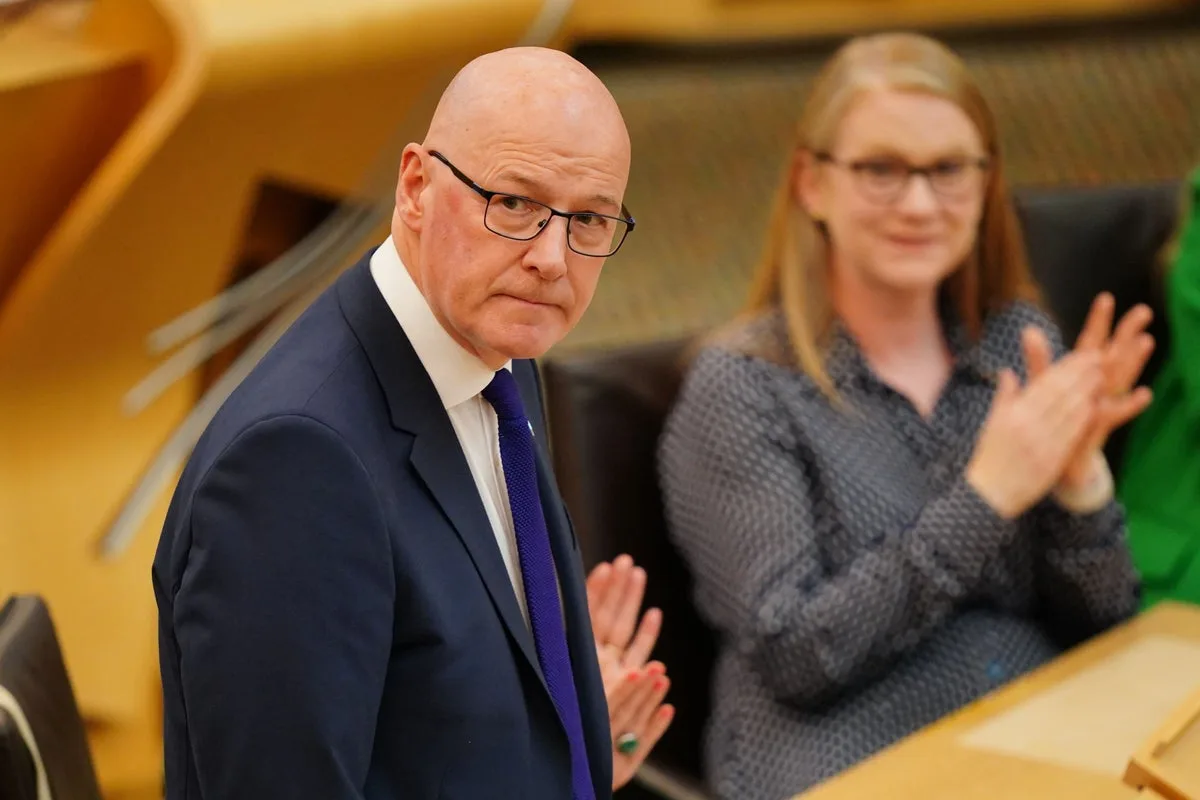
John Swinney has been re-elected as Scotland's First Minister after a series of votes at Holyrood on Tuesday. The SNP leader secured the necessary majority, winning 56 of the 105 votes cast, and is expected to be formally sworn in at the Court of Session in Edinburgh on Wednesday.
Leaders of all six parties at Holyrood had put themselves forward for the post. Scottish Liberal Democrat leader Alex Cole-Hamilton and Scottish Conservative counterpart Russell Findlay were eliminated in the first two rounds of voting. The final vote saw Mr Swinney defeat Scottish Green co-leader Gillian Mackay, Reform UK's Malcolm Offord, and Scottish Labour leader Anas Sarwar.
Following his victory, Mr Swinney promised an agenda that is both "ambitious" and "practical", adding that he has a "clear plan for the work ahead" and a "determination to deliver for the people of Scotland". He also made clear he will continue to push for a second independence referendum, despite the SNP falling short of an overall majority in the Holyrood election. The SNP won 58 seats, seven short of that majority, but Mr Swinney noted that a record 15 Scottish Greens had been returned, saying the election had produced the "largest ever" pro-independence majority in Parliament.
Mr Swinney told Holyrood: "The people have again returned a pro-independence majority to this Parliament, the largest ever elected. They have said with a resounding voice that decision about Scotland's future should be taken here in Scotland, and I will ensure that the people have the right to decide on their own future." He stressed his "willingness to work with others in the Parliament" to deliver measures that improve lives.
Other leaders also responded. Ms Mackay backed the call for a second vote, saying voters had been "promised big things" after 2014 but got "Brexit, a decade of Westminster failure, a merry-go-round of prime ministers and ongoing climate breakdown". Mr Sarwar called for co-operation, warning that people are "frustrated, angry and tired" of political arguments disconnected from their lives. Lord Offord insisted Reform is the only party with an agenda to "build opportunity and prosperity for every Scot", while Mr Findlay called the result a "foregone conclusion" and Mr Cole-Hamilton highlighted his party's "massive leap forward" in returning 10 MSPs.




