

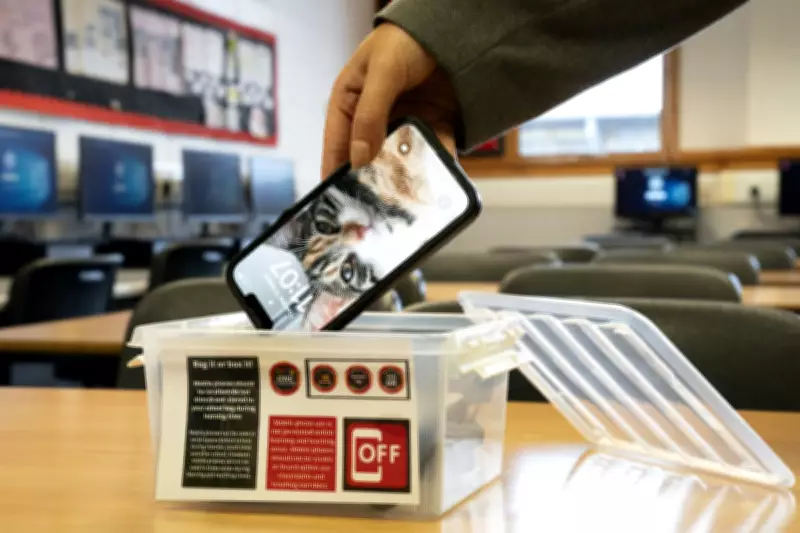
School Mobile Phone Policies Show No Benefit to Pupil Wellbeing, Major Study Concludes
Restrictive mobile phone policies in secondary schools fail to improve student mental wellbeing while consuming substantial staff resources, according to significant new research from the University of Birmingham. The comprehensive study reveals no discernible difference in measures of worry, sadness, or optimism among Year 8 and Year 10 pupils regardless of whether their schools enforce strict or lenient phone rules.
Substantial Staff Time Consumed by Phone Management
The research, encompassing 20 carefully matched secondary schools across England, found that institutions with restrictive policies spent an average of 102 hours weekly implementing rules and applying behaviour sanctions. Surprisingly, schools with more permissive approaches still reported spending approximately 108 hours managing phone use through policy administration and incident recording.
Professor Victoria Goodyear, chief investigator of the Smart Schools Study, emphasised the resource implications: "School phone policies, whether permissive or restrictive, represent a huge drain on school resources. The substantial proportion of teacher time dedicated to managing phone use potentially diverts attention from other wellbeing-promoting activities like pastoral support or extracurricular programmes."

Financial Implications and Policy Context
While restrictive policies showed modest financial advantages—costing approximately £94 less per pupil annually than more lenient approaches—researchers cautioned against viewing stricter rules as a comprehensive solution. Professor Hareth Al-Janabi, senior study author, noted: "We are under no illusion that policing phone use represents a significant strain for schools, and a stricter policy is certainly no silver bullet for the challenges schools face."
This research emerges as the government updates its guidance advocating against phone use in schools and announces consultation plans for an Australia-style social media ban for under-16s. Data collection occurred between 2022 and 2023, preceding recent non-statutory guidance from the former Conservative government.
Current Landscape and Divergent Perspectives
According to Department for Science, Innovation and Technology statistics, 99.9% of primary schools and 90% of secondary schools have mobile phone policies in place. However, compliance remains challenging, with 58% of secondary pupils reporting unauthorized phone use during lessons—rising to 65% among Key Stage 4 students.
The debate continues to intensify, with teaching union NASUWT recently backing a complete statutory ban on phones in schools. Meanwhile, Ofsted has been directed to examine mobile phone policies during inspections, a move criticised by teaching unions as adding bureaucratic burden.
Professor Goodyear highlighted the evidence gap: "There remains a significant lack of evidence in this domain. As researchers, we maintain that all new policies should be supported by robust evaluation and substantive evidence informing their implementation."
Campaigners remain divided, with some advocating for total statutory bans while others champion technological solutions like lockable pouches for phone storage during school hours. The research team concludes that innovative approaches to adolescent smartphone management in educational settings are urgently required.






