
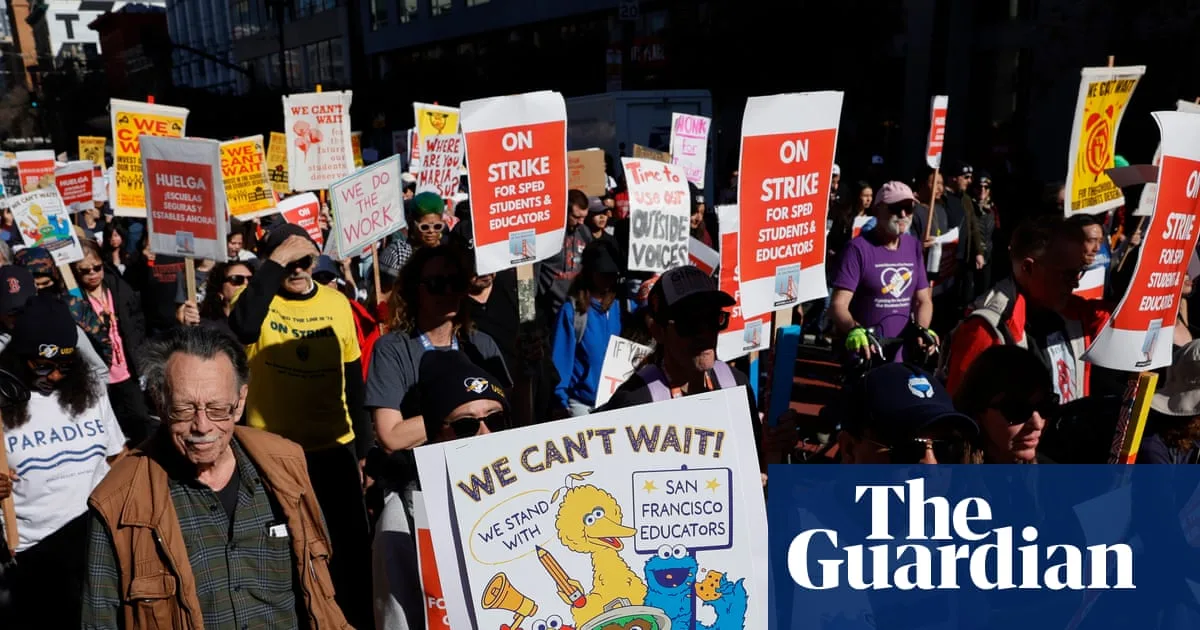
San Francisco's public school teachers have ended their first strike in nearly 50 years after reaching a tentative agreement with the school district. The San Francisco Unified School District (SFUSD) announced on Friday that schools would reopen to staff immediately, with pupils returning on Wednesday after two public holidays.
The walkout, which began on Monday, involved around 6,000 teachers and led to the closure of all 120 district schools, affecting 50,000 students. Many parents were left scrambling to arrange childcare at short notice. The strike was triggered by the collapse of last-ditch contract negotiations over wages, health benefits and support for pupils with special educational needs.
The United Educators of San Francisco (UESF) had demanded a 9% pay rise over two years, which it said would cost the district an additional $92m a year, funded from reserve accounts. SFUSD, which faces a $100m deficit and operates under state oversight due to a long-running financial crisis, countered with a 6% increase spread over three years. A neutral fact-finding panel last week recommended a compromise of 6% over two years, largely backing the district's position that it is financially constrained.
On healthcare, the district offered two options: paying 75% of family health coverage through insurer Kaiser, or providing an annual allowance of $24,000 for teachers to select their own plan. The two sides also agreed on terms regarding artificial intelligence and increased protections for immigrant students before finalising the pay and healthcare package.
UESF president Cassondra Curiel said the contract represented "a strong foundation" for building safe and stable learning environments, while Superintendent Dr Maria Su praised the community's resilience and described the agreement as "a new beginning". According to the San Francisco Chronicle, the average teacher salary in the city is $103,472, excluding benefits, with the pay scale ranging from $70,000 to approximately $131,700 depending on experience and qualifications.




