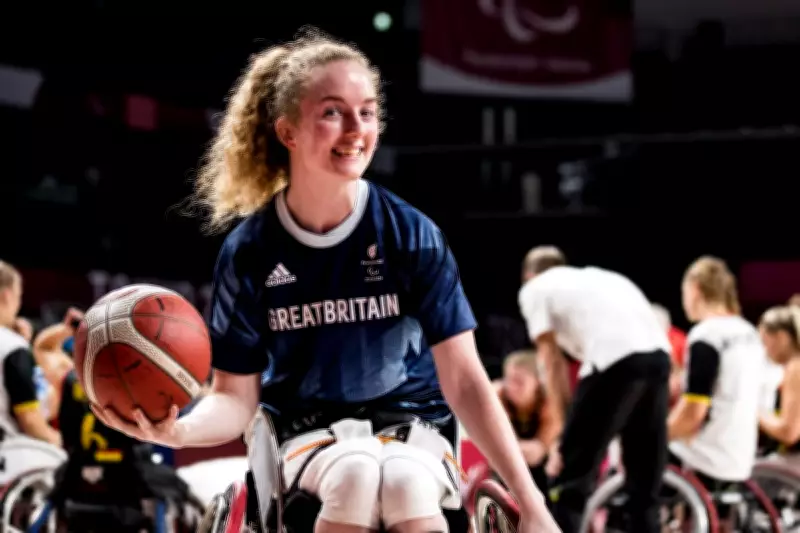
Paralympian Siobhan Fitzpatrick: 'I Was a World Champion But Couldn't Do GCSE PE'
Siobhan Fitzpatrick, a 28-year-old Paralympic athlete, has revealed a shocking disparity in her educational journey: despite representing her country in wheelchair basketball at just 15 years old and winning a silver medal at the 2018 World Championship, she was prohibited from taking a GCSE Physical Education qualification. This revelation comes as Labour consults on major reforms to the special educational needs and disabilities (Send) system, which could impact millions of children across the UK.
Exclusion from Mainstream PE Lessons
Fitzpatrick told The Independent that during her school years, she was unable to access standard PE lessons. Reflecting on her experience, she said, "If I take myself back to 11-year-old me, who was told that sport in a mainstream world can't be for me... I find it really difficult to accept because I had to do sport in a different way." Instead of discovering her talent for wheelchair basketball through school, it was a local sports club that ignited her passion and transformed her life.
She began playing the sport in 2010, rapidly building an impressive junior career that included co-captaining the under-25 women's team to consecutive victories. Her achievements culminated in representing Britain at the Hamburg World Championship in 2018, where her team secured a silver medal, and later at the 2021 Paralympic Games in Tokyo.

Curriculum Barriers and Recent Changes
Fitzpatrick explained the specific barrier she faced: "I couldn't do GCSE PE because I couldn't do four sports. I was representing my country at 15, and I couldn't do it. It wasn't because my school didn't want me to do it, it was because the curriculum wouldn't allow me to do it." At the time, she could only participate in wheelchair basketball, failing to meet the requirement of four sports. However, since 2018, the curriculum has evolved, now assessing pupils in three activities and offering more accessible options like powerchair football and table cricket.
Now, Fitzpatrick delivers inclusive PE sessions at both specialist and mainstream schools across the UK when not competing. These sessions are designed to engage all learners, regardless of their needs, through adapted versions of existing lessons.
Government Initiatives and Ongoing Challenges
Last year, the government announced £300,000 in funding for its Inclusion 2028 programme, aimed at promoting more inclusive PE sessions nationwide. Fitzpatrick noted, "The government seems to be really investing in making mainstream schools more inclusive." Yet, she emphasized that such lessons are still not widespread, preventing many disabled children from realizing their potential, much as she nearly did.
She added, "I feel like it's a constant battle for a child with an additional need who is already struggling within a mainstream setting to get that support." Her entire secondary school experience was marked by feelings of isolation and exclusion, fueling her passion for advocacy.
Send Reforms and Cultural Shifts
In February, the government outlined proposals for significant reforms to Send provision, currently under open consultation. The Send system, which includes Education, Health and Care Plans (EHCPs) for children requiring additional support, has faced criticism for being inconsistent and difficult to navigate. Between 2015 and 2025, the number of EHCPs surged by 166 percent, leading the government to write off 90 percent of councils' Send deficits.
Fitzpatrick had an EHCP for only part of her schooling, as her cerebral palsy did not affect her academic performance in other subjects, leaving her unaware of available support. Beyond funding, she believes a cultural change is essential to improve educational environments for disabled individuals.
"I think people feel uncomfortable around disabled people sometimes, and they're so worried about offending people or saying the wrong thing that they just look down and don't engage at all," she said. "I've even seen it in schools, where teachers keep disabled people 'out of the way' because they're worried other, non-disabled children will bully them. I know how it feels to be isolated – I don't want other disabled children feeling the same way I did at school."

Expert Insights and Government Response
Amelia Canning, policy adviser at Sense, commented, "Families we support tell us the Send system is under-resourced, adversarial and very difficult to navigate – this needs to change. The government is currently consulting on once-in-a-generation reforms to fix the Send system. If done properly, these reforms have huge potential to help disabled children have a better experience at school than Siobhan did when she was growing up."
A Department for Education spokesperson stated, "Our Send reforms are ensuring children get the right support earlier, in their local school, without having to fight for it, and are being co-designed with parents so everyone has confidence in the system we're building. Every child, whatever their background or needs, should have access to high-quality sport in and out of school. That's why we're investing up to £300,000 a year through the Inclusion 2028 programme – upskilling teachers to deliver truly inclusive PE and school sport for pupils with Send."