Parenting Expert Advocates for Modern Nursery Rhymes to Combat Ageist Stereotypes
Traditional nursery rhymes containing negative depictions of older people should be confined to history lessons, according to a leading parenting specialist who argues they spread harmful ageist stereotypes. Kirsty Ketley, a parenting expert from Surrey, contends that modern versions reflecting ageing more positively should be introduced to contemporary childhood education.
Study Reveals Widespread Negative Age Depictions
Ms Ketley's position follows a comprehensive study published in the journal JMIR Aging, where researchers from the National University of Singapore analyzed 735 unique nursery rhymes. Their findings revealed that among rhymes mentioning age, a striking 59 percent contained negative stereotypes about older adults. The researchers described nursery rhymes as "powerful cultural artefacts capable of moulding thought processes" that require careful consideration.
In an Instagram post discussing the research, Ms Ketley emphasized: "We absolutely should challenge stereotypes about ageing. Children do build their understanding of the world from these tiny repeated narratives. If old always equals useless or confused then that's going to shape their perception."

Specific Examples of Problematic Rhymes
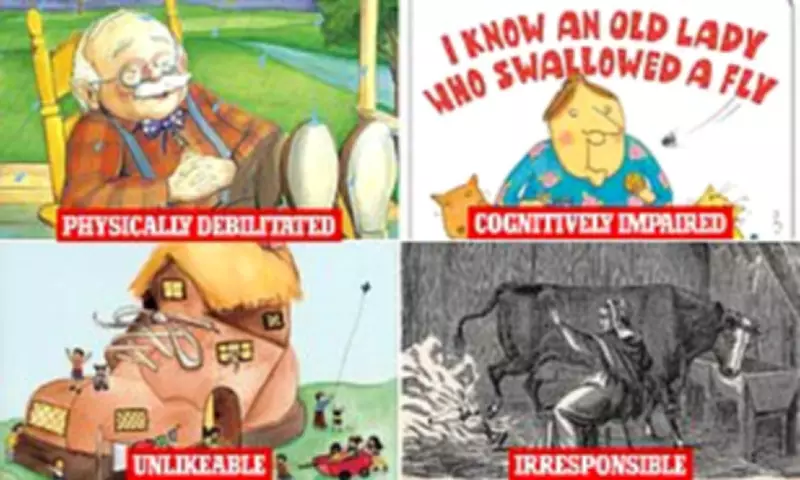
The research identified several classic nursery rhymes containing what they term harmful age stereotypes:
- Physical Debilitation: "It's Raining, It's Pouring" references an old man who bumps his head and "couldn't get up in the morning," suggesting physical decline.
- Cognitive Impairment: "I Know an Old Lady who Swallowed a Fly" features repetitive, nonsensical actions that researchers argue suggest possible mental decline.
- Unhygienic Depictions: "Desperate Dan" portrays an older man washing his face in a frying pan and combing his hair with a chair leg, equating age with neglect of personal hygiene.
- Unlikeable Characters: "The Old Woman Who Lived in a Shoe" presents an overwhelmed mother who gives children "broth without any bread" and whips them, suggesting callous parenting.
- Irresponsible Behavior: "Old Mother Leary" depicts an Irish immigrant whose cow allegedly started the Great Chicago Fire of 1871, with her wink implying pleasure in the ensuing chaos.
Proposed Solution: Modern Rhymes and Historical Context
Ms Ketley proposes a dual approach to addressing these concerns: "So would it not make sense to bring in more modern rhymes that reflect ageing – and the modern world in general – a bit more positively? And just keep the more traditional ones as part of cultural history lessons?"
The researchers echo this sentiment, suggesting children should have "access to more accurate and nuanced stories about older adults" to counterbalance traditional narratives. They noted that positive portrayals of ageing did appear in approximately one-third of analyzed rhymes, depicting older characters as wise, affectionate, and jovial, while neutral portrayals framed ageing as a natural life process.
Broader Implications for Childhood Development
The study's authors concluded: "The presence of negative age stereotypes in more than half of the rhymes raises important concerns about their potential impact on children's beliefs." This research adds to growing discussions about how cultural materials shape children's perceptions of different demographic groups.
Ms Ketley's advocacy represents a practical approach to updating childhood education materials while preserving traditional rhymes as historical artifacts rather than removing them entirely from children's exposure. This balanced perspective acknowledges both the cultural significance of traditional nursery rhymes and the importance of presenting diverse, positive representations of ageing to young minds.