Federal Judge Halts Trump Administration's Rush to Collect University Race Data
A federal judge in Boston has issued a preliminary injunction to block the Trump administration's efforts to collect detailed data on race from higher education institutions. The ruling, delivered by US District Judge F. Dennis Saylor IV on Friday, comes after a lawsuit filed by a coalition of 17 Democratic state attorneys general earlier this month.
Chaotic Rollout and Privacy Concerns Cited
Judge Saylor acknowledged that the federal government likely possesses the authority to gather such information. However, he sharply criticized the administration for implementing the demand in a "rushed and chaotic" manner. The judge noted that the 120-day deadline imposed by President Donald Trump directly contributed to the failure of the National Center for Education Statistics (NCES) to properly engage with universities during the notice-and-comment process.
"The multitude of problems presented by the new requirements were not adequately addressed," Saylor wrote in his ruling. The injunction will apply specifically to public universities within the states of the plaintiffs involved in the lawsuit.

Background of the Data Demand
President Trump ordered the data collection in August, expressing concerns that colleges and universities might be using personal statements and other indirect methods to consider race in admissions—a practice he views as illegal discrimination. This move followed the Supreme Court's 2023 ruling against affirmative action in admissions, though the court did allow institutions to consider how race has shaped an applicant's life if voluntarily shared in essays.
The states argued that the data collection poses significant risks, including potential invasions of student privacy and could lead to unfounded investigations of colleges. They also contended that universities were given insufficient time to compile the extensive data requested.
"The data has been sought in such a hasty and irresponsible way that it will create problems for universities," stated Michelle Pascucci, a lawyer for the plaintiffs, during court proceedings. She added that the effort appeared aimed at uncovering unlawful practices.
Education Department's Defense and Potential Consequences
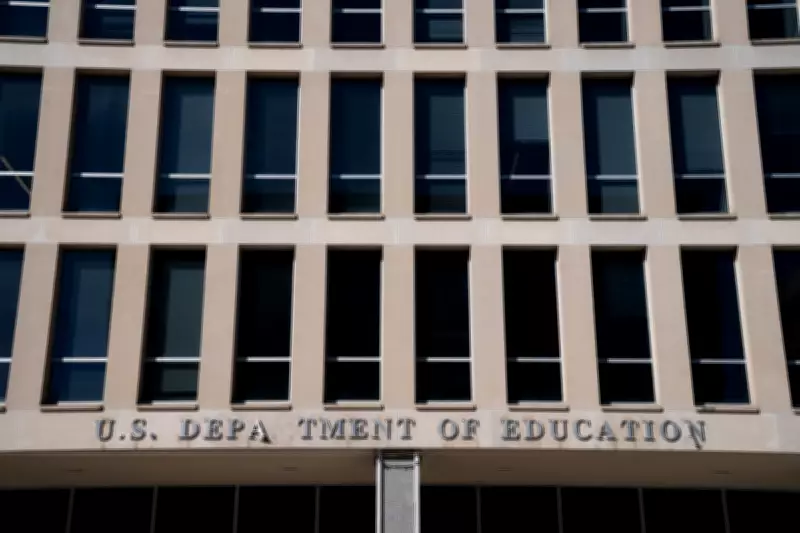
The US Education Department has defended the demand, asserting that taxpayers deserve transparency regarding how federal funds are utilized at institutions receiving such financial support. The policy mirrors settlement agreements previously negotiated with Brown University and Columbia University, which restored their federal research funding in exchange for providing data on applicants' race, grade-point averages, and standardized test scores.
Under the directive, the NCES is tasked with collecting new data, including the race and sex of applicants, admitted students, and enrolled students. Education Secretary Linda McMahon emphasized that this data, originally due by March 18, must be disaggregated by race and sex and reported retroactively for the past seven years.
Should colleges fail to submit timely, complete, and accurate data, the administration has indicated that Secretary McMahon could take action under Title IV of the Higher Education Act of 1965. This legislation outlines requirements for colleges that receive federal financial aid for students.
Ongoing Legal Battles and Compliance Issues
In a related development, the Trump administration has separately sued Harvard University over similar data requests, alleging the institution refused to provide admissions records demanded by the Justice Department to ensure compliance with the affirmative action ban. Harvard maintains that it has been responsive to government requests and is adhering to the Supreme Court ruling.
On Monday, the Education Department's Office for Civil Rights directed Harvard to comply with the data requests within 20 days or face referral to the Justice Department, highlighting the ongoing tensions between federal oversight and institutional autonomy.
This legal clash underscores the broader national debate over race, equity, and transparency in higher education admissions, with significant implications for policy and practice across US universities.