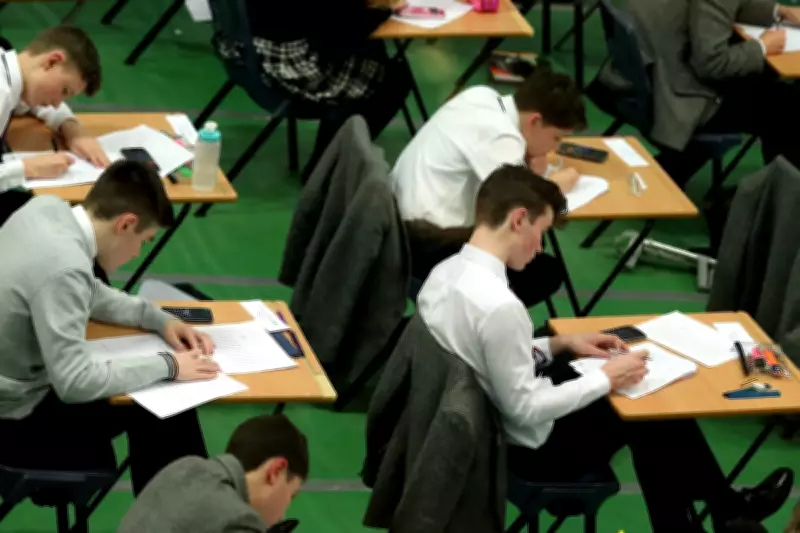
The Department for Education has confirmed that GCSE students will continue to receive formula and equation sheets for their maths and science examinations until at least the year 2030. This significant extension forms part of a broader government strategy to overhaul the national curriculum and reduce overall assessment burdens on pupils.
Extended Support for Students
School standards minister Georgia Gould has formally requested that the exams regulator Ofqual prolong the current arrangements, which provide GCSE maths, physics, and combined science candidates with essential formulae during their tests. Originally introduced in 2022 as a temporary measure following the Covid-19 pandemic, these support sheets were previously extended until 2027 by former shadow education secretary Bridget Phillipson.
In a detailed letter to Ofqual chief regulator Sir Ian Bauckham, Minister Gould emphasised that for the entire duration of the existing GCSE specifications, students should not be compelled to memorise formulae and equations for assessment purposes. However, she stressed that pupils will still be expected to fully comprehend and correctly apply these mathematical and scientific principles, thereby maintaining rigorous academic standards.

Curriculum Reforms and Future Considerations
The government announced comprehensive plans for a revised curriculum last year, aiming to decrease total GCSE exam time by approximately two-and-a-half to three hours for the average student. Officials intend to publish the updated national curriculum by spring 2027, with implementation scheduled for first teaching from September 2028. Subsequently, revised GCSE qualifications are planned for first teaching from 2029 onwards.
As the Department for Education develops new subject content for these future GCSEs, it will carefully evaluate whether students should be required to memorise formulae and equations. This consideration forms a crucial component of the ongoing curriculum review process, balancing educational rigour with student wellbeing.
Political Reactions and Consultation Process
Shadow education secretary Laura Trott has strongly criticised the decision to extend formula sheet provisions, accusing the government of lowering educational standards. In a social media statement, Trott argued that this approach disadvantages the most vulnerable students and represents a failure to believe in children's potential for achievement.
Ofqual has launched a formal consultation on the proposed extension, which remains open for three weeks from Monday until March 23. Sir Ian Bauckham has indicated that the regulator anticipates these arrangements will apply to GCSE exams taken by students up to and including 2030 or 2031, plus any subsequent resit series.
The ongoing debate highlights fundamental questions about assessment methodology, educational equity, and how best to prepare students for future academic and professional challenges while acknowledging the evolving educational landscape.