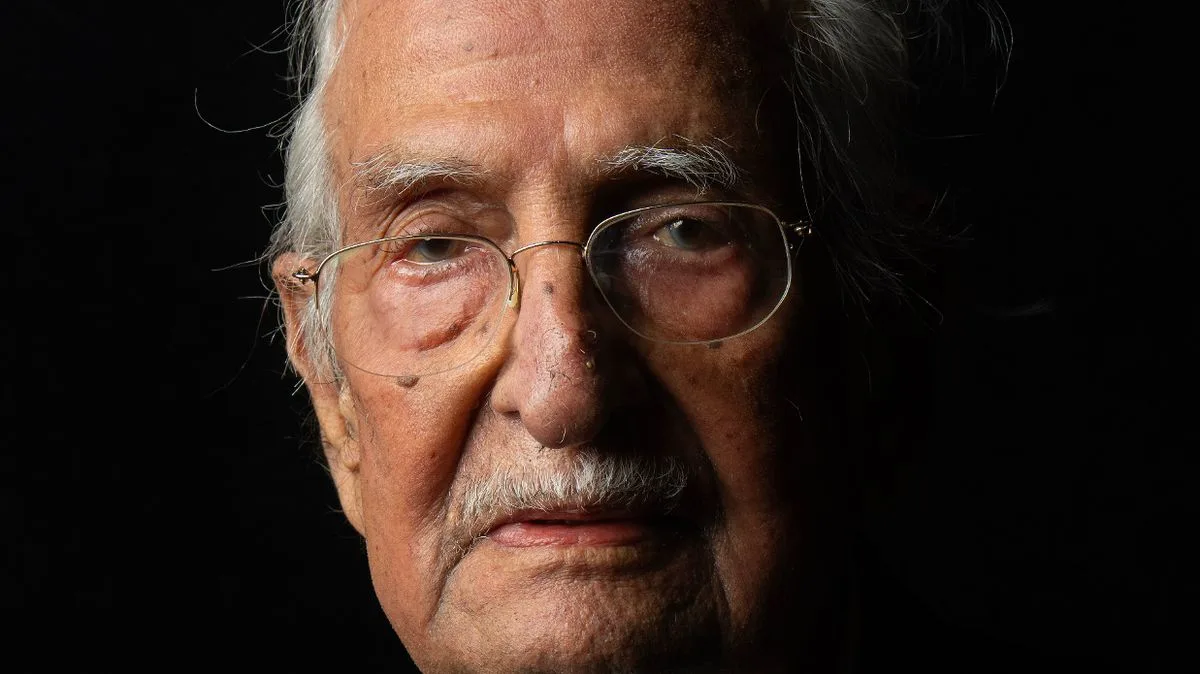
Centenarian Veteran Moves Nation with Emotional Plea for Recognition
At 105 years old, Captain Yavar Abbas has witnessed history unfold across more than a century. Now, the war hero who once moved King Charles III and Queen Camilla to tears with his heartfelt tribute says he is "thrilled" to be alive to witness a historic moment: the launch of a permanent memorial honouring the British Indian Army.
A Monument Decades in the Making
The Freedom Fountain memorial, designed as a two-metre bronze banyan tree—India's national symbol—will be erected in Cambridge to honour the millions of volunteers from the British Indian Army who served in World War I and World War II. Organisers have revealed they are halfway toward raising the required £180,000 for the project, which they hope will be completed in time for Remembrance Day ceremonies.
"I could not have wished for a better thing to have happened in the closing years of my life," Captain Abbas declared at a parliamentary reception in the Speaker's House, where he received a hero's welcome. "Than to be privileged to be associated with this noble cause."
The Forgotten Army's Immense Sacrifice
Historical records reveal the staggering scale of contribution from the British Indian Army: 1.3 million soldiers served in the First World War, while more than 2 million fought in the Second World War, with over 87,000 making the ultimate sacrifice in the latter conflict alone. These volunteers endured some of the harshest conditions of World War II, particularly during the brutal Burma campaign against Japanese forces.
"They served as infantry, pilots, medics, engineers and support staff," explained Adam Moghadas, part of the team fighting for the memorial. "They're all united by courage and sacrifice. Their contribution has, in my opinion, shamefully been overlooked."
A Personal Connection to History
Captain Abbas served as a combat cameraman with the 11th Sikh Regiment during World War II, escaping death twice during his service. He was present in Hiroshima after the atomic bombs were dropped, witnessing what he described as "utter desolation." The veteran was a student at Allahabad University when war was declared, immediately volunteering to serve.
"My wish is that I will live long enough to see the King lay the first wreath on our proposed monument," Captain Abbas told attendees. "And it is also my wish that a replica will find a suitable place in the hallowed grounds of the National Arboretum."
Royal Recognition and Emotional Moments
The 105-year-old veteran gained national attention last year when he went "off script" during the 80th anniversary of VJ Day at the National Memorial Arboretum. Standing before King Charles III and Queen Camilla, he paid tribute to "my brave King who is here with his beloved Queen in spite of the fact that he's under treatment for cancer." The emotional moment visibly moved both monarchs.
Captain Abbas also revealed he had been cancer-free for 25 years, receiving a round of applause from the gathered crowd. He has since approached the King for support of the memorial project, noting their shared values regarding integration and celebrating immigrants who have served the country.
Artistic Vision and Symbolic Design
Artist Colleen McLaughlin Barlow, who designed the memorial, described facing "a huge challenge" in creating something that "history, politics, and circumstance have never allowed to exist." She explained: "There hasn't been a fully inclusive memorial to all these men from different countries, cultural and religious backgrounds, nothing to honour all of them and their huge contributions in both world wars."
The banyan tree design was chosen for its symbolic meaning. "The banyan is the national tree of India and it has these astonishing aerial roots that grow down from the branches and into the ground," Barlow elaborated. "Then new tree trunks rise up and the entire forest spreads laterally. It's this heaving interwoven mass of enduring life. The tree is a symbol of endurance, shelter, and continuity across generations, eternity."
Correcting Historical Oversight
Speaker of the House of Commons Lindsay Hoyle, who hosted the launch event, emphasised the importance of the memorial. "The British Indian Army was one of the greatest volunteer forces in history, yet for many years insufficiently recognized in our national story," he stated. "Events such as this help ensure that remembrance is inclusive, accurate and shared."
Abdul Kayum Arain, Chair of Trustee for Bridging Worlds and Freedom Fountain lead, added: "Millions served, many died, and for decades their sacrifice went largely unrecognised. The Freedom Fountain is our way of saying: we remember, we honour you, and you belong in Britain's story."
Captain Abbas echoed this sentiment, telling supporters: "We should have had a memorial for the Indian Army a long, long time ago. The Indian Army was disbanded in 1947 because of Partition and has remained unhonoured up to now. It's important to Britain, it's more important to India, it is important to Pakistan, important to everybody."
The veteran made a final appeal for public support, noting that the monument relies entirely on donations rather than government funding. As the project moves forward, Captain Abbas remains hopeful that he will witness the King laying the first wreath at a memorial that finally gives proper recognition to the brave volunteers of the British Indian Army.






