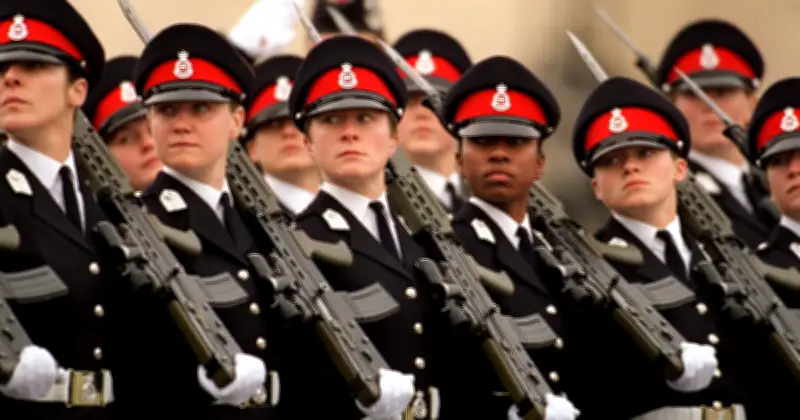
Women could be conscripted if World War Three breaks out, as the UK is told to 'prepare for war' amid escalating global tensions. The head of the army has called on the UK's political leaders to start a 'frank conversation' with the public about preparing for war.
Army chief calls for national preparedness
General Sir Roly Walker told Sky News that 'every' citizen will be 'asked to make sacrifices' and play their part in the defence of the country. His comments come in the wake of escalation between Russia and Ukraine, with the US, against all precedent, appearing to side with Russia.
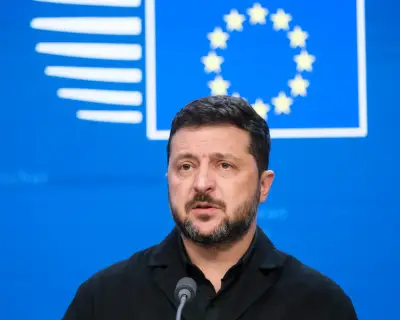
US President Trump has in the past few weeks blamed Ukraine for the price of diesel and urged President Zelenskyy to step down, despite the US signing a deal with Russia for diesel supplies. Trump has increasingly pinned the global price of diesel on Ukraine's refusal to surrender to Putin, rather than the US' war with Iran.
Historical precedent for female conscription
Conscription - aka mandatory military service - was last used in the UK in 1960, but with mounting tensions worldwide, there has been talk of boosting Britain's military numbers, especially if Russia were to not stop at Ukraine with its attempt to expand its borders.
In WW2, conscription began for men aged between 20 to 22 in 1939, up to six months before the war actually broke out. But by the end of 1941, this was expanded to all women and 'childless widows' aged up to 30 as well as men aged up to 51, so there is already precedent for women being called up to the frontline.
Government plans and public opinion
The UK Parliament website says: "During the spring of 1939 the deteriorating international situation forced the British government under Neville Chamberlain to consider preparations for a possible war against Nazi Germany."
"Plans for limited conscription applying to single men aged between 20 and 22 were given parliamentary approval in the Military Training Act in May 1939. This required men to undertake six months' military training, and some 240,000 registered for service."
"In December 1941 Parliament passed a second National Service Act. It widened the scope of conscription still further by making all unmarried women and all childless widows between the ages of 20 and 30 liable to call-up."
"Men were now required to do some form of National Service up to the age of 60, which included military service for those under 51. The main reason was that there were not enough men volunteering for police and civilian defence work, or women for the auxiliary units of the Armed Forces."
Recently, Grant Shapps, who was Defence Secretary at the time, said that we are "moving from a post-war to a pre-war world", and General Sir Patrick Sanders, Britain's most senior army officer, called for an increase in the size of the Army and said that the country needed to increase its preparedness for conflict.
Conscription was last in place in the UK in 1960, as the last soldiers who served in the national service scheme introduced for the Second World War and Cold War were discharged. During the 2024 general election, then Conservative Party leader Rishi Sunak pledged to introduce a system of national service for school leavers which would include military or civilian service. Labour branded the policy a "gimmick".
A YouGov survey carried out in 2025 found that 38% of under-40s said they would refuse to serve in the Armed Forces if a new world war broke out, and 30% would not serve even if the UK faced 'imminent invasion'. The same poll found that 72% supported women being conscripted as well as men.
In WW2, those who refused to fight were put on trial where conscientious objectors had to appear before a tribunal to argue their reasons for refusing to join-up. If their cases were not dismissed, they were granted one of several categories of exemption, and were given non-combatant jobs.