The Chancellor's Budget speech has been criticised for failing to outline how the UK will spend 3% and 3.5% of its GDP on defence, with experts saying the omission is "good news" for the Kremlin and other adversaries. Critics have accused Labour of prioritising electoral fortunes over national security, and they point to three reasons why the Government may not deliver on its defence spending commitments: avoiding tax rises before an election, the political risk of cutting welfare, and constrained public finances.
Criticism from former minister and security experts
Tobias Ellwood, a former soldier and Conservative Minister of Veterans and People, told the Express that the Prime Minister is gambling with Britain's security. "He is staking Britain's future on the good will of President Putin not to do anything too hostile that will test our defences," he said. He added that "an opportunity to improve security has been ignored in favour of an election strategy to pay for welfare".
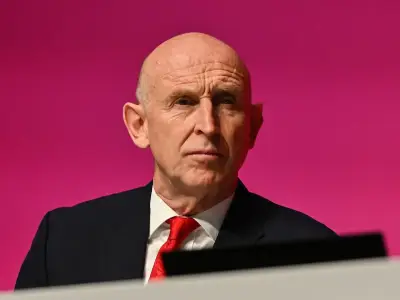
Defence Secretary John Healey said he is "getting work under way" to reach spending of 3% of GDP on defence by 2030 and will set out how he will hit that target at next year's spending review. The Chancellor added that the Government is increasing private investment into defence, including through public private partnerships.
Election strategy and welfare concerns
Mr Ellwood said: "Burnham's whole strategic approach is to woo a slice of the electorate that will certainly reward him at the ballot box for greater spending on all matters connected with welfare." He added: "What Burnham is doing is setting up an election-winning Budget, an election-winning strategy that targets your typical voters, your typical socialist voters. The old red wall seats he's targeting, rather than putting Britain first."
The former Tory MP noted that "economic constraints are the backdrop on which tough choices have to be made", but the Government is today "banking on us avoiding any upscale in hostilities, and that's completely naive when the rest of Europe is doing the exact opposite."
Credibility gap and budget priorities
Emeritus professor at the University of Buckingham and security expert Anthony Glees denounced the Budget as "soft", adding that it seems to be "intended to keep the Labour Party happy and is a prelude to a general election soon". There was "just a nod to the safety of the realm", which comes "at the expense of all we need to secure our liberty in the dangerous months and years that lie ahead", Prof. Glees warned.
He added: "The Chancellor says his aim is 'to give breathing space now and fresh hope for the future'. But as far as our national security is concerned, it is Putin, Iran and China who are getting the 'breathing space and fresh hope' on offer." Prof. Glees is concerned that a large "credibility gap" has opened up between Britain's words and deeds when it comes to defence, as Mr Healey has failed to say precisely and exactly how he intends to meet the "vital commitment" to spending 3% of GDP on defence by 2030 and 3.5% by 2035.
He accused the Government of delaying and kicking the can down the road, which is "good news for our enemies and adversaries". The academic slammed Labour over its spend on welfare, noting the Office for Budget Responsibility (OBR) predicts the benefits bill is on course to reach £431.3 billion by 2031-32, and backed up Conservative leader Kemi Badenoch's assertion that "if you can't defend your country, there will be nothing left to defend".
Experts on funding and rearmament pace
Maxim Starchak, a Russian expert on nuclear weapons and nuclear industry and a Fellow at the Centre for International and Defence Policy of the Queen's University in Canada, said Healey's Budget was "conservative", confirming funding for the Defence Investment Plan (DIP) and thereby "reducing the risk of previously planned programmes being revised, including the modernisation of the nuclear deterrent, ammunition procurement, the development of unmanned systems and other initiatives". But he added that there is "no money available to accelerate the development of the defence industry".
Professor of economics at the University of Buckingham and editorial and research fellow at the Institute of Economic Affairs (IEA), Len Shackleton, said the Budget was "underwhelming" and "made up of small and largely insignificant adjustments". "Although Mr Healey seems to have committed to the 3% defence target by 2030," he added, "it is still not clear how this is to be funded." The expert suggested that setting out how to finance a defence uplift on a continuing basis "involves raising taxes, which puts off wavering centrist voters near a possible election, or making cuts, which would enrage the left at a time they're trying to win back defectors to the Greens".