
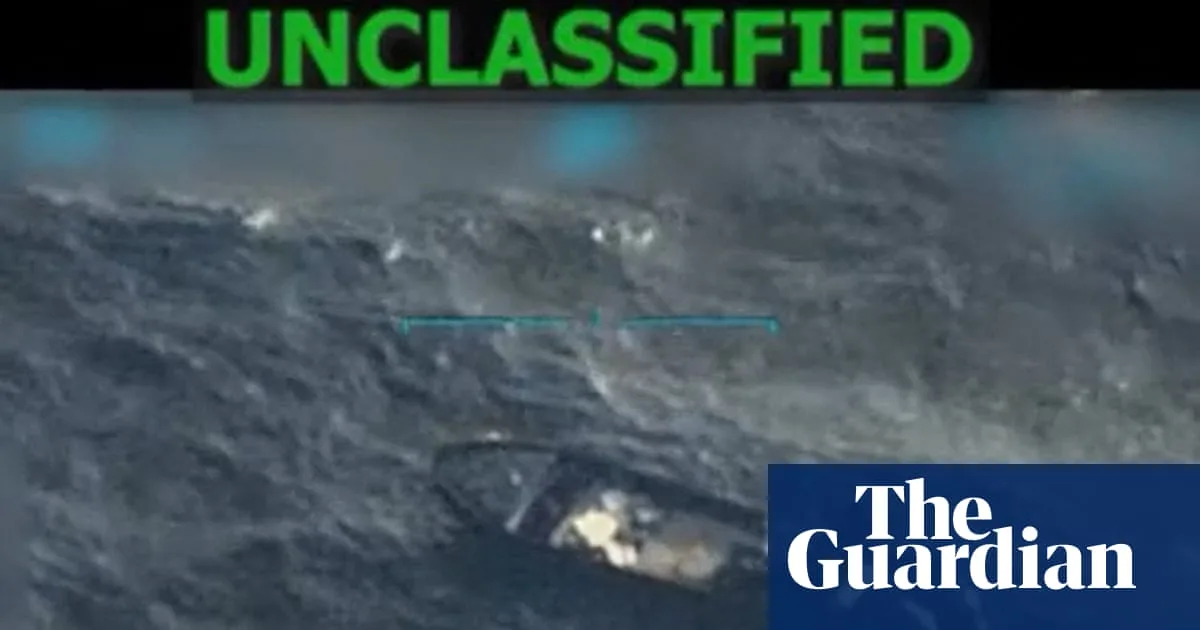
Two men who survived a US airstrike on a suspected drug smuggling boat in the Caribbean Sea clung to the wreckage for about an hour before being killed in a second attack, according to a video shown to US senators. The footage, seen by lawmakers behind closed doors, shows the men shirtless, unarmed, and desperately trying to flip a severed section of hull upright. They are described as having no radio or communications equipment and appearing unaware of what had hit them.
The attack on 2 September involved an airburst munition that killed nine crew members. The two survivors were then visible floating in the water. Sources familiar with the recording said the video shows three additional munitions being fired at the damaged vessel. The men died in this follow-up strike, which was ordered by US defence secretary Pete Hegseth, according to reports.
The incident has raised concerns about potential war crimes, with Democratic congressman Jim Himes calling it 'one of the most troubling things I've seen in my time in public service'. He said the video depicts the US military attacking shipwrecked sailors. Republicans defended the strike, with Senator Tom Cotton claiming the survivors were trying to 'stay in the fight'.
The Pentagon announced another strike on a boat in the eastern Pacific on Thursday, killing four men. This was the 22nd such attack in the Caribbean and eastern Pacific, bringing the death toll to at least 87. The US Southern Command described the latest incident as a 'lethal kinetic strike' on a vessel operated by a designated terrorist organisation, carrying illicit narcotics.
Admiral Frank Bradley, who commanded the 2 September attack, told lawmakers there was no order to 'kill them all', contradicting earlier reports. The full video has not been released, though President Donald Trump vowed to make it public. The legal basis for the campaign to kill suspected drug smugglers remains under scrutiny.




