
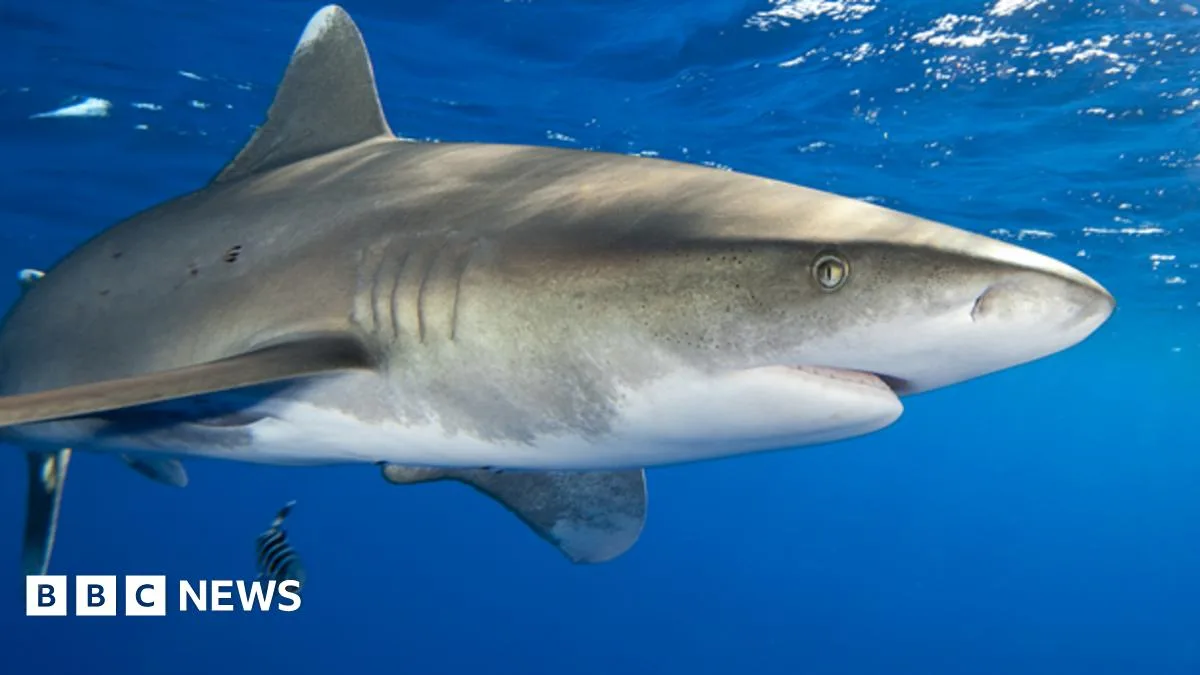
When USS Indianapolis was hit by Japanese torpedoes in the final weeks of WWII, hundreds of crewmen jumped into the water to escape the burning ship. Surrounded by sharks, they waited for a response to their SOS. But no one had been sent to look for them.
In late July 1945, USS Indianapolis had been on a special secret mission, delivering parts of the first atomic bomb to the Pacific Island of Tinian. Its job done, the warship, with 1,197 men on board, was sailing west towards Leyte in the Philippines when it was attacked.
The first torpedo struck just after midnight on 30 July 1945. A 19-year-old seaman, Loel Dean Cox, now 87, recalls: 'Whoom. Up in the air I went. There was water, debris, fire, everything just coming up. Then, about the time I got to my knees, another one hit.' The second torpedo almost tore the ship in half. As fires raged, the order came to abandon ship. Cox clambered to the top side and jumped, hitting the hull and bouncing into the ocean. 'Twelve minutes. Can you imagine a ship 610ft long sinking in 12 minutes? It just rolled over and went under.'
The Indianapolis did not have sonar to detect submarines. Captain Charles McVay had asked for an escort, but his request was turned down. The US Navy also failed to pass on information that Japanese submarines were still active. About 900 men survived the initial attack, but no rescue came. Although SOS signals were sent, they were not taken seriously.
Drawn by the carnage, hundreds of sharks headed towards the survivors. 'We were losing three or four each night and day,' says Cox. 'You were constantly in fear because you'd see 'em all the time. Every few minutes you'd see their fins.' Some men pounded the water, kicked and yelled when sharks attacked. 'In that clear water you could see the sharks circling. Then every now and then, like lightning, one would come straight up and take a sailor.'
The sharks were not the main killer. Under the scorching sun, without food or water, men died from exposure or dehydration. 'You could barely keep your face out of the water. The life preserver had blisters on my shoulders, blisters on top of blisters,' recalls Cox. After four days, a US Navy plane spotted the survivors and a rescue operation began. Of the 900 men in the water, only 316 were rescued.




