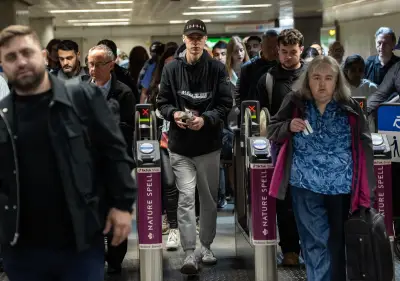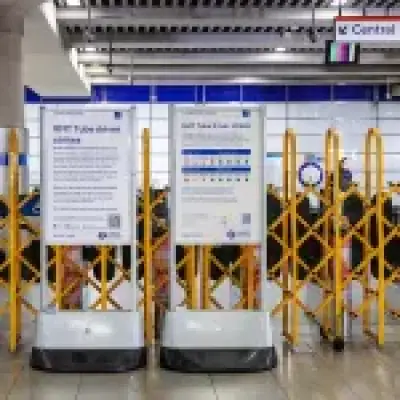
London transport chiefs have urged the RMT to return to the negotiating table as the capital faces the first of eight Tube strikes on Thursday. Transport for London (TfL) believes that a number of issues around working practices can be resolved if the union returns to talks. These include disputes over depots, picking up trains, cover arrangements, and spare staff duties.
However, last-ditch talks held on Tuesday failed to achieve a breakthrough, meaning the walkouts will go ahead as planned. The first strike is set to begin at midday on November 26, with seven more scheduled in the run-up to Christmas and into 2027.
Disruption Expected on All Lines
On Thursday, all Tube lines are expected to face disruption, with no service on the Circle, Piccadilly, and Waterloo & City lines from midday. TfL has said it met with the RMT in an attempt to avert the strike action and amended its proposals to address some of the union’s concerns.
Nick Dent, Director of Customer Operations for London Underground, said: “We met with the RMT today to discuss their ongoing concerns around the terms and conditions of our proposal for a voluntary four-day week. As part of those discussions, we committed to working on proposals to address several of their concerns and asked them to postpone any industrial action until we had done so. They have refused to withdraw the action.”
Dent added: “We have amended our proposals to guarantee that drivers who wish to continue working a five-day working pattern can do so, and have worked hard, alongside the RMT and our other union Aslef, to resolve many of their other concerns with the proposals and provide our colleagues with a real, meaningful choice on their own working patterns. Drivers who choose a four-day week, and those who choose to work a five-day pattern with the same terms and conditions as the four-day pattern, will spend less time at work per year, while delivering a more efficient, reliable Tube service for our customers.”
Key Disputes Detailed
TfL highlights four key issues which the RMT has raised concerns about. It believes those issues, which largely relate to notification times and depot arrangements, can be resolved with further discussions.
Picking Up Trains
One major dispute centres on where drivers officially begin their shifts. Currently, drivers sign on for duty at their depot before walking to the train on the platform, meaning they are paid for the walking time to the cab door. TfL is proposing that drivers’ paid shift should begin directly from the platform, which is in line with many other operating companies.
Coverage Arrangements
Another sticking point involves how much notice should be given to alter staff shifts. TfL wants to reduce the existing one-week notice period required to change shifts, allowing for more flexibility to plug gaps and reassign drivers. Currently, if a driver were to call in sick, a replacement would be arranged. However, that shift then becomes fixed, meaning that if the original driver returns to work early, TfL would end up paying two people for the same duty.
Spare Staff Duties
Spare shifts are another issue which TfL wants to resolve. Shifts are scheduled with fixed start times, even when drivers don’t have specific work assigned to them. Those start times cannot be moved and can lead to drivers ending up idle at depots when no cover is needed. TfL wants the flexibility to move these start times on spare shifts by two hours each way to help cover duties when it is required.
Fixing to Depots
At the moment, it takes 14 weeks to train a new driver for a specific line. They are eligible to move from that line after just 18 months. Transferring lines means more retraining for drivers, so often staff can spend as many as six months out of their first two years off the track, creating capacity gaps. TfL wants to introduce a rule which means drivers can only move lines every five years in a bid to reduce the impact of drivers changing soon after qualifying.
The RMT has previously argued that changes proposed by TfL would erode working conditions, despite the reforms being firmly backed by rival union ASLEF. The Standard has approached the union for comment.