US Rescue Mission Highlights Iran's Capability to Inflict Costly Damage
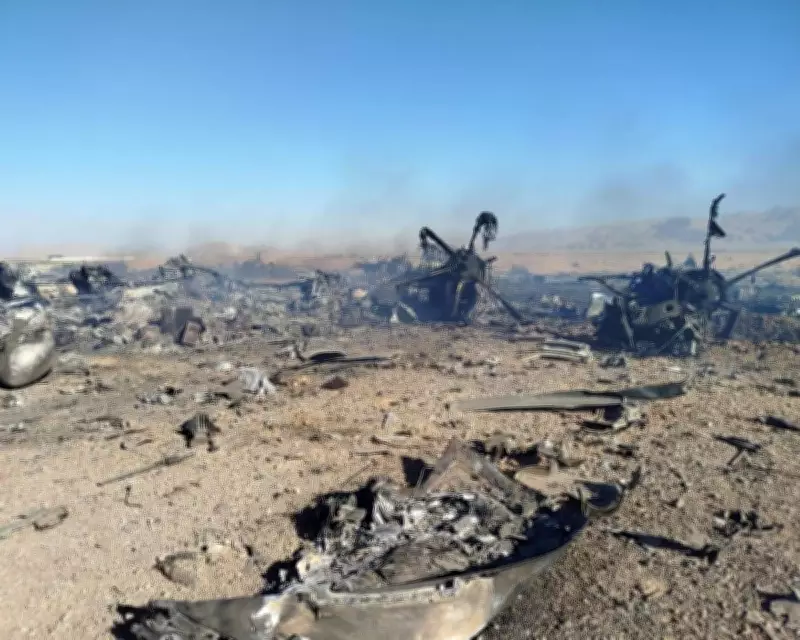
The wreckage of a C-130J Hercules, as depicted in imagery released by Iranian media on Sunday, underscores a dramatic 48-hour episode in the ongoing US-Israeli bombing campaign against Iran. This incident serves as a stark reminder that, despite overwhelming air superiority, Iran retains the capacity to fight back and impose significant costs on American forces.
Propaganda and Practical Realities
While former President Donald Trump may tout the rescue of the second crew member from the downed F-15E fighter as a propaganda triumph, the operation reveals deeper vulnerabilities. The shoot-down, occurring five weeks into the war, marks a rare event—the last hostile downing of a US warplane was in 2003 during the Iraq war. This rarity amplifies its impact, challenging the perception of absolute US air dominance as daily bombings number between 300 and 500.
The F-15E Strike Eagle, valued at $31 million with potential replacement costs up to $100 million, was brought down under unclear circumstances. However, the rescue mission proved even more perilous. Using an abandoned Iranian airstrip south of Isfahan as a forward base, two modified C-130 Hercules transporters, each priced at nearly $115 million, became stuck and were destroyed by US forces to prevent capture. Additional transporters were deployed to extract the wounded crew member, and an HH-60 Pave Hawk helicopter sustained gunfire damage.

Financial and Strategic Costs
In total, losses and damages from this single episode exceed $250 million, primarily incurred during the rescue effort. Militarily, such losses are part of warfare, with the US possessing 218 F-15E Strike Eagles and 55 C-130s in its special forces command prior to the conflict. Yet, the political necessity of a full-scale rescue cannot be overstated. Preventing Iranian capture of crew members was crucial to avoid a propaganda coup reminiscent of the 1979-80 US embassy hostage crisis, which severely damaged President Jimmy Carter's administration.
Trump emphasized this commitment in a social media post, vowing never to leave an American warfighter behind. While admirable, this pledge entails ongoing risks and expenses. Iranian forces failed to locate the F-15E crew or contest the use of the Isfahan airbase, possibly deterred by Reaper drones overhead, authorized to eliminate threats within a 3km radius.
Implications for Future Operations
The loss of the C-130 transports highlights the heightened risks of any potential US ground operation in Iran. Questions arise about the feasibility of seizing 440kg of highly enriched uranium, believed hidden underground in Isfahan, without major incidents. Despite enduring over 15,000 airstrikes, Iran can leverage minor US or Israeli losses into propaganda victories due to their infrequency.
In asymmetric conflicts, the weaker side need only succeed occasionally to achieve significant impact. This episode serves as a cautionary tale for US policymakers considering escalated military actions, reinforcing that Iran remains an undefeated adversary capable of imposing substantial costs.