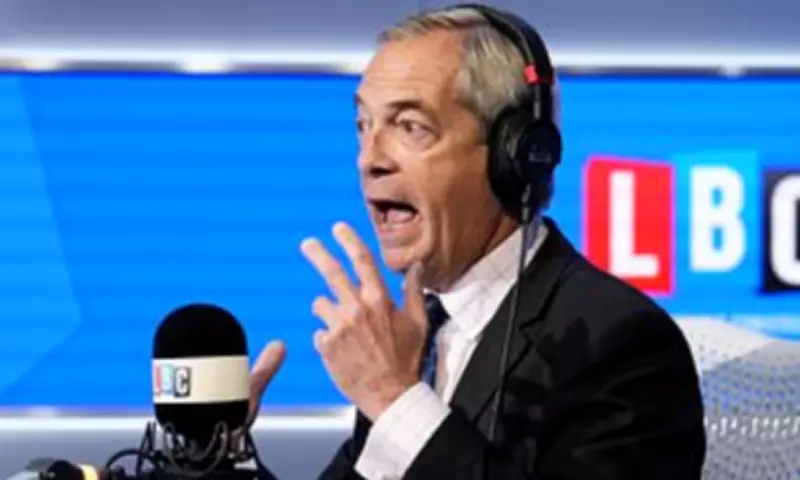
The BBC has faced fresh allegations of bias after claims emerged that Nigel Farage has been effectively barred from appearing on the prestigious Radio 4 programme Desert Island Discs. A new biography by former Tory deputy chairman Lord Ashcroft asserts that the Reform UK leader will never be invited onto the show, as his presence would make 'woke' corporation staff feel 'unsafe'. Producers are also said to fear a backlash from other potential guests who might boycott the programme if it provided a platform for the populist politician.
Farage Responds
Last night, Mr Farage told The Mail on Sunday: 'I have come to expect nothing less from the BBC – their blatant bias has been obvious for years. The BBC will have a rude awakening under a Reform government.' However, the broadcaster – which has faced repeated accusations of left-wing bias – responded: 'We do not ban any individuals from appearing on Desert Island Discs and that includes Mr Farage.'
Biography Claims
The claims of a ban appear in Lord Ashcroft's forthcoming biography, The Farage Factor: Reform UK And The Remaking Of British Politics. The book quotes a BBC source as saying that Mr Farage 'has effectively been blacklisted' from the show, which has run for 84 years and was once named the greatest radio programme of all time. The source stated: 'Farage is regarded instinctively by many BBC staff as unacceptable. At least half the staff would think Radio 4 had become an 'unsafe space' if he was on Desert Island Discs. Nothing would be written down, it's just classic liberal-Left BBC.' The source added that the snobbery was particularly notable given that political bias on such programmes often goes unrecognised, and that there were concerns other guests might boycott if Farage appeared.

BBC's Response
Earlier this month, a member of Mr Farage's team contacted Radio 4 to inquire about an invitation. They were told: 'As we are now well into production on our latest series, we're not currently looking for new castaways. When making decisions about the very few active politicians we have on the programme, we make the bookings over quite a long time period ensuring a range of voices.' The BBC added it would 'stay in touch' and 'revisit Nigel's interest for a future series'. Both Prime Minister Sir Keir Starmer and Conservative leader Kemi Badenoch have appeared on the programme, which has also invited figures from the hard left without controversy.
Broader Context
Matt Brittin, who succeeded Tim Davie as BBC director-general earlier this month, has reportedly described one of his main challenges as trying to 'Reform-proof' the BBC – ensuring any future government cannot change how the broadcaster operates. In November, Mr Farage branded the Corporation 'rotten to the core', claiming it had become a 'byword for sleaze, hypocrisy, arrogance, anti-Semitism and worse'. Writing in the Daily Mail, he called for the licence fee to be abolished, describing it as an 'appallingly regressive tax'. He clarified that Reform UK does not wish to abolish the BBC entirely but wants to enhance its good aspects, such as news reporting and the World Service, while ensuring true impartiality.
The controversy follows a row over Panorama's misleading editing of a Donald Trump speech on January 6, 2021, which led to a $10 billion lawsuit against the BBC. A BBC source reiterated that guest choices for Desert Island Discs are editorially driven and that the broadcaster welcomes a range of contributors. They confirmed they would be happy to revisit Mr Farage's interest for a future series.
Historical Context
Some of the UK's most infamous left-wing firebrands have previously appeared on Desert Island Discs. Arthur Scargill, president of the National Union of Mineworkers, appeared in 1988 and defended the miners' strike. Tony Benn, in 1989, condemned Thatcherism and chose Karl Marx's Das Kapital as his reading material. Dennis Skinner, the 'Beast of Bolsover', appeared in 1990, and Ken Livingstone in 1993. Even Lady Mosley, widow of fascist leader Oswald Mosley, appeared and expressed admiration for Hitler, though she denounced the Holocaust. These examples highlight the programme's history of hosting controversial figures from across the political spectrum.