
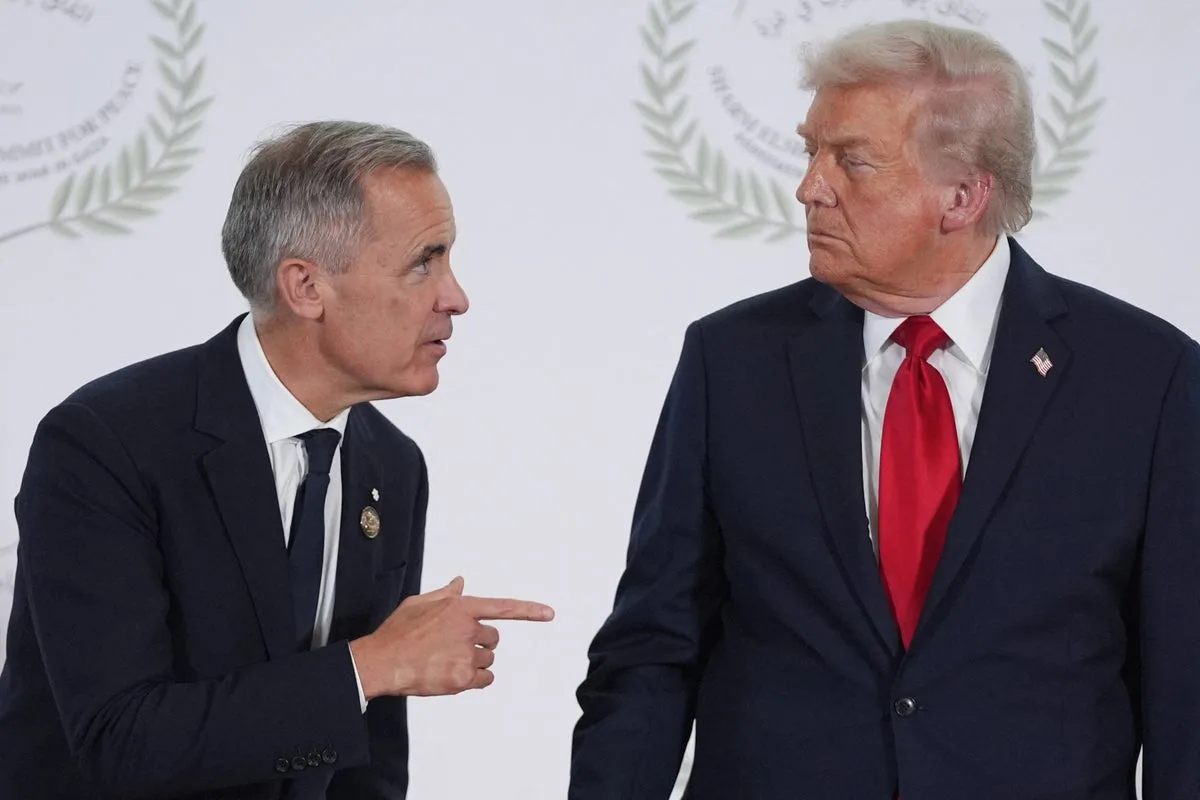
The Pentagon has withdrawn from a joint military board with Canada that dates back to World War II, prompting angry responses from Ottawa as tensions between the two countries continue to simmer.
Elbridge Colby, an undersecretary of defense, announced this week that “Canada has failed to make credible progress on its defense commitments,” leading the US to “pause the Permanent Joint Board on Defense to reassess how this forum benefits shared North American defence.” The board, established in 1940 by President Franklin D. Roosevelt and Prime Minister Mackenzie King, includes military and civilian officials from both nations and typically meets once a year.
The decision comes amid strained relations since Donald Trump returned to office, repeatedly mocking Canada as “America’s 51st state” and complaining that the US shoulders too much of the defence burden for Canada and other NATO countries. Canadian Prime Minister Mark Carney downplayed the move, saying he “wouldn’t overplay the importance of this,” but former officials and defence experts described it as “a warning shot” to Ottawa.
David Perry, president of the Canadian Global Affairs Institute, called it “a symbolic blow from a Canadian sense” and “a bit of a wake-up call.” Former Canadian parliament member John McKay, who co-chaired the board, told CBC News the decision was “short-sighted.” Erin O’Toole, a former Canadian minister of Veterans Affairs, questioned the timing, noting it came “right after the President’s visit to China.”
Andrea Charron of the University of Manitoba warned that the US cannot afford to push Canada away, highlighting Canada’s radar and satellite systems that provide advance warning in the Arctic. Republican Rep. Don Bacon of Nebraska also criticised the move, saying, “Cooler & wiser brains are needed to preserve a close alliance w/ our neighbour,” and blaming the rift on Trump’s taunts about Canada becoming the 51st state.




