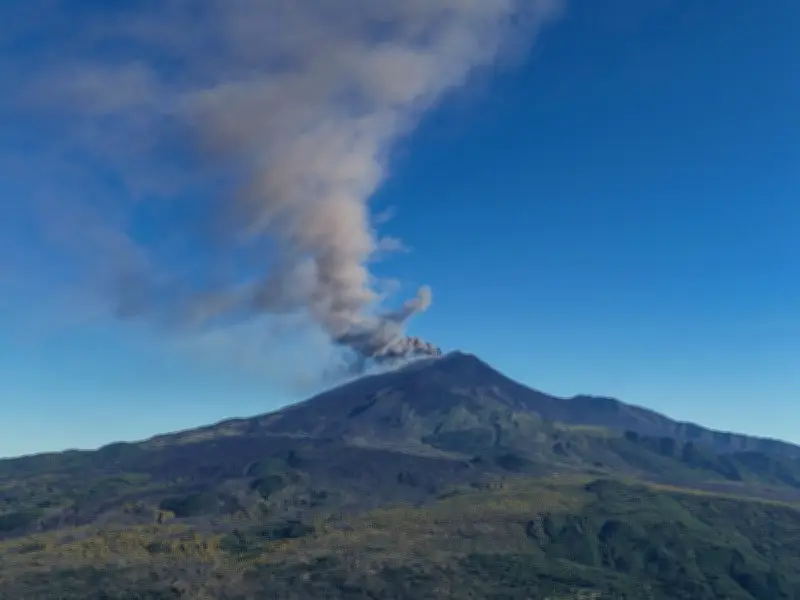
Mount Etna, Europe's tallest and most active volcano, erupted on the morning of July 5, 2026, sending a massive plume of volcanic ash into the sky and causing widespread flight cancellations and travel disruption across Sicily. The eruption began at approximately 7:45 a.m. local time from a vent on the upper eastern flank of the Voragine crater, intensifying around 8:45 a.m. and generating an eruptive cloud about 1.5 kilometres high above the volcano's summit, according to La Sicilia.
Flight Suspensions and Safety Measures
In response to the volcanic activity, Catania-Fontanarossa Airport immediately suspended all incoming flights for safety reasons. The airport management company, SAC, confirmed that while incoming flights were halted, departures of aircraft already at the airport were permitted. Italy's leading airline, ITA Airways, announced that all departing and arriving flights were subject to cancellation or rescheduling. In a statement on X, the airline said: "Temporary closure of Catania Fontanarossa airport. Due to Mount Etna’s volcanic activity and the presence of volcanic ash in the atmosphere, operations at Catania Fontanarossa Airport have been temporarily suspended. Our departing and arriving flights are subject to cancellations and rescheduling. Please check your flight status on our website and app before heading to the airport."
Volcanic Ash Plume and Monitoring
The Italian National Institute of Geophysics and Volcanology (INGV) reported that the ash cloud is expected to move toward the southern and south-southeast sectors in the coming hours. Mount Etna, standing at approximately 3,400 metres tall with a base measuring just under 100 miles, is known for its frequent eruptions. Volcanic ash is hard and abrasive, capable of causing significant wear to propellers and turbocompressor blades, as well as scratching cockpit windows and impairing visibility. Previous eruptions have led to prolonged groundings of aircraft due to these risks.
Social Media and Visual Evidence
Pictures and videos shared on social media have revealed a massive plume of black smoke and volcanic material rising from the summit of the erupting volcano. The eruption follows recent activity earlier in July, when lava was observed flowing from the volcano on July 1, 2026.