

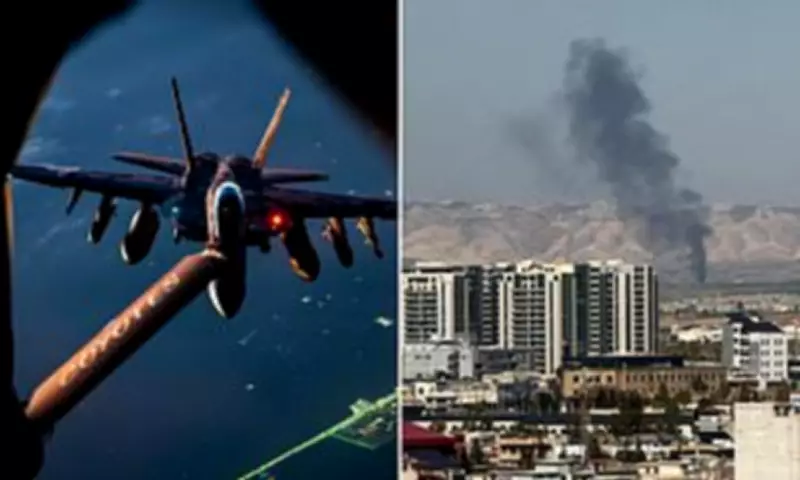
US Military Aircraft Crashes in Western Iraq Amid Regional Escalation
A United States Air Force refueling plane has crashed in western Iraq following what appears to have been a mid-air collision, as the conflict in the Middle East enters its thirteenth day with no signs of abating. US Central Command confirmed that two aircraft were involved in the incident, with one suffering a complete loss. The downed aircraft has been identified as a KC-135 Stratotanker, a crucial refueling craft that typically requires a three-person crew to operate effectively.
Drone Attacks Target Western Forces in Iraq
Meanwhile, the security situation in Iraq deteriorated significantly as drone attacks targeted both French and British military personnel stationed in the country. French President Emmanuel Macron announced on Friday that a French soldier had been killed during an attack on a joint base in Iraqi Kurdistan. The strike, which involved two drones, also injured five additional troops at the headquarters facility shared with Kurdistan's Peshmerga forces.
Earlier in the day, Iranian drone attacks targeted a British Special Forces base in Iraq, though British forces successfully repelled the assault using the UK's Martlet missile system. The attack occurred at the camp in Erbil, northern Iraq, with no British casualties reported, though some US service personnel sustained injuries during the engagement.

Putin's Alleged Involvement in Regional Conflict
British Defence Secretary John Healey pointed to what he described as the "hidden hand" of Russian President Vladimir Putin in directing strikes against military headquarters and coordinating Iran's military operations. Healey condemned what he characterized as the Kremlin's secret mission to support regimes that have fired upon UK troops at least three times during the current conflict.
"No one will be surprised to believe that Putin's hidden hand is behind some of the Iranian tactics and potentially behind some of their capabilities as well," Healey stated. "We have seen this axis of aggression with Russia firing 60,000 drones into Ukraine. We have seen the same tactics by Iran."
Strategic Implications and Regional Tensions
The conflict has prompted significant strategic adjustments among Western military forces. Overstretched British forces have been withdrawn from patrolling the High North and the North Sea to contribute to Middle East operations. HMS Dragon, which sailed from Portsmouth on Monday, had originally been earmarked for NATO operations before being redeployed to the region.
UK's Chief of Joint Operations Lieutenant General Nick Perry noted that Iranian drones were proving "problematic" and "effective" due to their flight patterns, which borrow tactics from Russian operations in Ukraine. The Shaheed suicide drones approach targets on lower trajectories, making detection and interception more challenging for defense systems.
Economic and Security Concerns Mount
With the Strait of Hormuz blockaded due to threats to cargo ships and oil tankers, concerns about international oil prices have intensified. Healey expressed concern about the situation, noting that "nobody wants a situation where the Strait of Hormuz is closed, where international oil prices are at more than $100 a barrel. Nobody except Putin."
The increase in oil prices from approximately $60 to over $100 per barrel has delivered what analysts describe as a windfall for Russia, particularly as the US has granted waivers on sanctions applying to countries purchasing Russian natural resources.
Additional Regional Developments
In other significant developments, US Treasury Secretary Scott Bessent suggested that America and its allies would likely form an "international coalition" to escort oil tankers through the strategically vital Strait of Hormuz. Meanwhile, the Israeli armed forces commenced "several waves" of strikes in Beirut and southern Lebanon targeting what they described as "Hezbollah infrastructure."
Iran has denied laying mines in the Strait of Hormuz despite expert warnings that unmanned naval attack drones could "create havoc" along the vital waterway. The Iranian regime released its first statement from new Supreme Leader Mojtaba Khamenei to his war-torn nation, despite rumors that he had been hospitalized with severe injuries.

International Response and Strategic Considerations
The conflict has drawn multiple European nations deeper into the regional confrontation, with France now suffering its first military death in the Middle East war that began late last month when Israel and the United States struck Iran. The French soldiers were reportedly "engaged in training activities on counterterrorism with Iraqi partners" at the time of the attack, according to a member of the general staff.
Governor of Erbil Omed Koshnaw criticized what he described as "the movement of the terrorist militias in Iraq" and expressed frustration that "the Iraqi government are not taking it seriously." He emphasized that either these groups were part of the Iraqi government and therefore responsible, or the security apparatus had a duty to rein them in effectively.
As the situation continues to develop, military analysts are closely monitoring the strategic implications of the crashed US aircraft and the escalating drone attacks against Western forces in Iraq, with concerns mounting about further regional destabilization and the potential for broader international involvement in the conflict.





