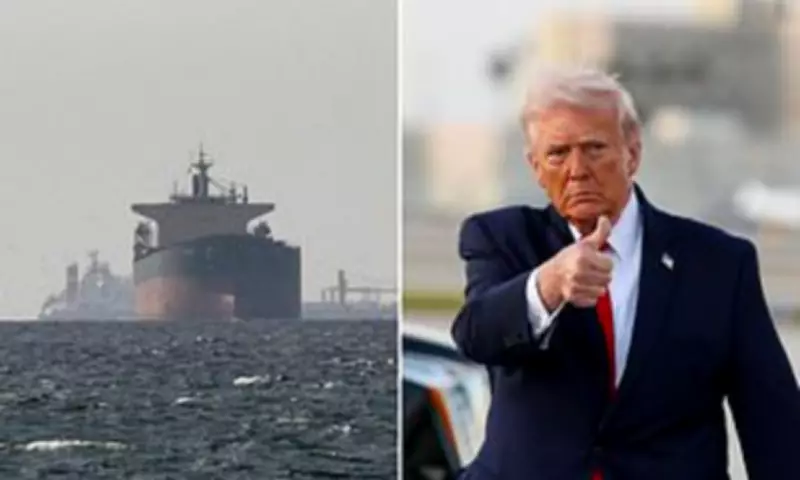
US Military Announces Naval Blockade in Gulf of Oman and Arabian Sea
The United States military has officially declared that it will enforce a comprehensive naval blockade in the Gulf of Oman and the Arabian Sea, specifically targeting areas east of the strategically vital Strait of Hormuz. According to a detailed note issued to seafarers by US Central Command on Monday, this blockade applies universally to all vessel traffic, irrespective of their national flag or origin.
Immediate Implementation and Strict Enforcement
The blockade came into effect at 10:00 AM Eastern Standard Time on Monday, with the US Central Command explicitly warning that any unauthorised vessel entering or departing the designated blockaded area would be subject to immediate interception, diversion, and potential capture. However, the military clarified that neutral transit passage through the Strait of Hormuz to or from non-Iranian destinations would not be impeded, ensuring some continuity for global shipping lanes.
The blockaded zone encompasses the entirety of the Iranian coastline, including but not limited to its major ports and critical oil terminals. Humanitarian shipments, such as those carrying food, medical supplies, and other essential goods, will be permitted entry but will be subject to rigorous inspection protocols to verify their contents and intentions.

Market Turmoil and Soaring Oil Prices
Financial markets reacted swiftly and sharply to the announcement, with oil prices spiking back above the significant threshold of $100 per barrel. This surge is a direct response to former President Donald Trump's confirmation of the blockade, which he announced via a Truth Social post on Sunday following the collapse of peace negotiations with Iran. The blockade effectively prevents access to the Strait of Hormuz for Iranian-bound ships, exacerbating existing tensions.
This US-led chokehold on the strait coincides with a pre-existing blockade already enforced by Iran, as the conflict continues unabated after a failed 21-hour peace negotiation over the weekend. Oil prices have been on a steady upward trajectory since late February, when shipping through the strait began to stall significantly. Brent crude oil has skyrocketed from approximately $70 per barrel before the conflict to over $119 at various points, placing immense pressure on global economies.
The pain is most acutely felt at the gasoline pump, where average prices in the United States have hit $4.20 per gallon, representing an increase of more than one dollar since the war began. This inflationary pressure is piling political strain on Trump to seek a resolution to the conflict, especially with crucial midterm elections looming in November. Other regions, particularly in Asia, are even more reliant on the Strait of Hormuz, through which an estimated one-fifth of the world's crude oil flows daily.
Iranian Defiance and Escalating Rhetoric
In response to Trump's announcement, Iranian officials have responded with defiance and mockery. Iranian Navy Commander Shahram Irani laughed off the threat of the blockade, releasing a statement through state media claiming that the Iranian navy is actively tracking and monitoring all movements of the US military in the region. He described Trump's threats as "very ridiculous and laughable," particularly following what Iran portrays as a humiliating defeat for the US in recent conflicts.
A spokesperson for the Iranian Armed Forces further escalated tensions by accusing the United States of engaging in piracy through its restrictions on ships in international waters. The spokesperson announced that Iran would implement a "permanent mechanism" to control the Strait of Hormuz in direct response to Trump's threats, setting the stage for a potential naval standoff.

Political Fallout and Economic Warnings
Both Trump and Iranian leadership have suggested that American consumers should brace for continued high prices at the pump, potentially extending into the November midterm election period. When pressed by Fox News anchor Maria Bartiromo on whether gasoline prices would fall before the elections, Trump offered little reassurance, stating, "It could be the same or maybe a little bit higher, but it should be around the same." He added that he did not believe the war would last much longer and claimed Iran was "wiped out," while criticising US media for its coverage of Iran's military capabilities.
Iranian Parliament Speaker Mohammad Bagher Ghalibaf, who led negotiations with US Vice President JD Vance, issued a stark warning to Americans, suggesting they would soon feel nostalgic for gasoline priced at $4 to $5 per gallon. This rhetoric underscores the deep economic and political stakes involved in the conflict.
Collapse of Peace Talks and Strategic Implications
The blockade announcement followed the dramatic collapse of peace talks over the weekend, which lasted nearly 21 hours but failed to yield an agreement. Key sticking points included Iran's refusal to commit to ending its nuclear enrichment programme and to reopen key access points in the Strait of Hormuz. The US delegation, led by Vice President JD Vance and including Jared Kushner and Steve Witkoff, pushed for a freeze on all uranium enrichment and the handover of Iran's uranium stockpile. Disagreements over the release of frozen Iranian funds in exchange for nuclear concessions also contributed to the breakdown.
In a Truth Social post, Trump acknowledged that the US representatives had developed a respectful rapport with their Iranian counterparts but emphasised that this did not alter the fundamental issue: "Iran Will Never Have A Nuclear Weapon!" The future remains uncertain, with neither side indicating what will happen after the current 14-day ceasefire expires on April 22. Pakistani mediators have urged all parties to maintain the fragile truce.
Regional Coordination and Military Vulnerabilities
Israeli Prime Minister Benjamin Netanyahu revealed on Monday that Vice President JD Vance called him immediately after negotiations with Iran collapsed. Netanyahu warned that the two-week ceasefire brokered by Trump could unravel rapidly into all-out war, stating, "The ceasefire is like a coin — it can flip very quickly." He stressed the close coordination between the US and Israeli governments throughout the negotiations, describing it as unprecedented in the history of the State of Israel and the Jewish people.
Despite Trump's claims that the threat posed by the Iranian Navy is "gone" following US military assaults since February 28, experts caution that significant risks remain. While much of the Islamic Revolutionary Guard Corps' large battleships have been destroyed, their smaller, more agile boats—which are crucial for controlling the narrow Strait of Hormuz—remain largely intact. This poses a serious threat to US servicemen deployed to the waterway, which is only about 35 kilometres wide at its narrowest point, making them potential targets for IRGC attacks.
According to reports from Axios, Trump is reportedly considering a return to military strikes on Iran if the naval blockade fails to compel the regime to return to negotiations. The blockade is viewed as part of a broader strategy to deny Tehran leverage over the critical waterway and force concessions on its nuclear programme. As the situation develops, global markets and international observers remain on high alert for any further escalation in this volatile region.