
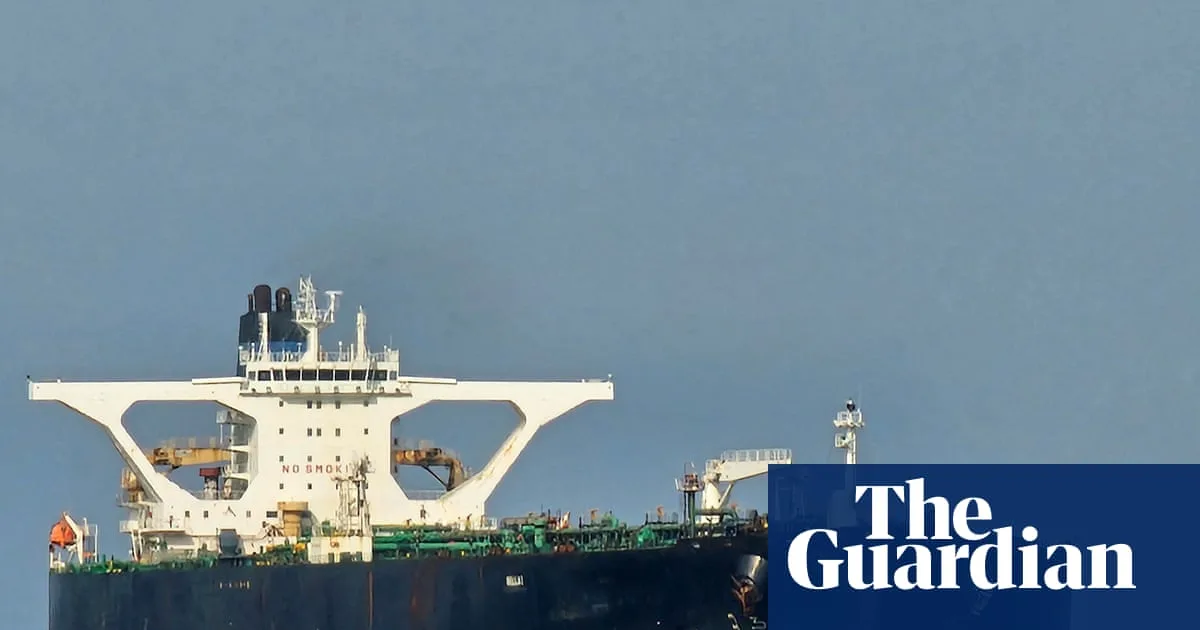
An oil tanker that attempted to evade a US naval blockade of Venezuela is under US military surveillance approximately 250 miles off the coast of Ireland. The vessel, originally named Bella 1, changed its name to Marinera and re-registered in Russia, with a crude Russian flag painted on its side in an apparent bid to prevent seizure near the British Isles.
Flight records indicate that US P-8 surveillance aircraft, flying from RAF Mildenhall in Suffolk, have closely monitored the Marinera over the past two days as it crossed the Atlantic on a course that may enter Ireland's economic waters, 230 miles from its coast. The presence of US C-17 transport flights into RAF Fairford in Gloucestershire has prompted speculation they may carry helicopters for potential special forces operations.
The tanker is one of about a dozen vessels attempting to escape the blockade, though it is not carrying Venezuelan oil. As Bella 1, it had been preparing to load oil from Venezuela last month before the US Coast Guard approached on 20 December on suspicion of invalid registration. The crew refused boarding and fled, during which time it re-registered in Sochi, Russia. Its tracking transponders, off since mid-December, were restored as it headed north.
Bella 1 had been under US Treasury sanctions since July 2024, accused of carrying illicit cargo for a Hezbollah-linked company. Data from TankerTrackers indicates it transported 7.3 million barrels of Iranian crude and 3.7 million barrels of Venezuelan crude to China between October 2021 and September 2025. The US announced a 'quarantine' on Venezuelan oil on Sunday following the capture of President Nicolás Maduro, who faces US drug trafficking charges.
The Venezuelan government has accused the US of 'piracy' but has also called for a 'balanced and respectful' relationship after Maduro's abduction, apparently seeking to prevent further military action.




