In a significant strategic redeployment, the United States has moved a substantial number of Patriot air defence interceptor missiles from Europe to the Middle East to support its ongoing military campaign against Iran. This shift has raised serious concerns among defence officials about vulnerabilities in Europe's air defence capabilities, particularly against potential Russian aggression.
Strategic Redeployment Amid Escalating Conflict
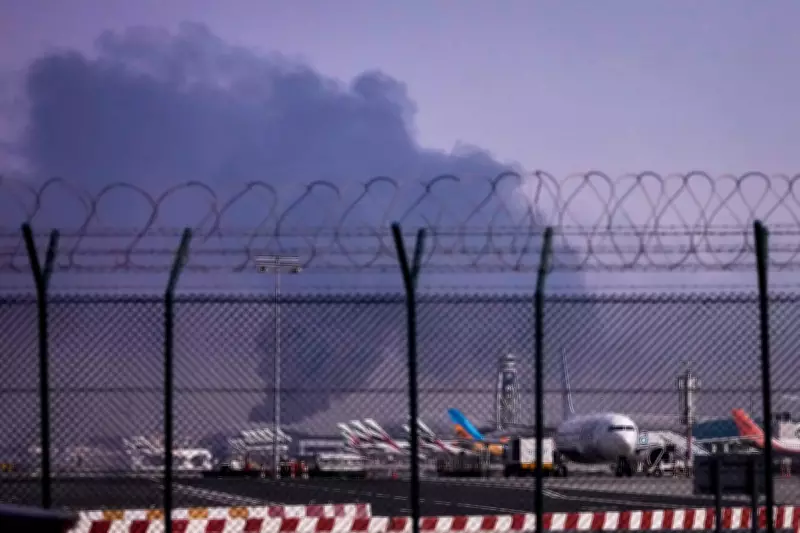
The war in Iran, now entering its fourth week, has prompted Washington to divert critical military resources toward the Middle Eastern theatre. U.S. defence officials speaking anonymously to The Associated Press confirmed that multiple Patriot missile systems have been relocated from various European locations to reinforce air defences in the region. This move comes as Iran continues to launch missile and drone attacks across the Gulf, targeting U.S. bases and civilian infrastructure in popular tourist destinations.
European Defence Gaps Emerge
One U.S. official directly stated that Patriot missile stocks are "absolutely" dwindling in Europe due to the Iran conflict, describing the situation as "pretty concerning." The official emphasized that every asset moved out of Europe represents a capability that cannot respond to Russian threats if Moscow decides to exploit perceived vulnerabilities.

Russia's ongoing war in Ukraine has demonstrated the effectiveness of Patriot systems against sophisticated threats, including hypersonic missiles like Russia's Kinzhal. However, with these systems now being redirected to counter comparatively low-tech Iranian Shahed drones in the Middle East, European nations near Russia's borders face increased risks from drone incursions and hybrid warfare tactics.
NATO's Southern Flank Reinforcement
The Turkish defence ministry confirmed that two Patriot missile systems were transferred from Germany's Ramstein Air Base to Incirlik Air Base in Turkey following Iranian ballistic missile launches toward Turkish airspace. NATO has additionally positioned another Patriot system in southeastern Turkey's Malatya province, where a critical NATO radar station is located.
General Alexus Grynkewich, commander of U.S. and NATO forces in Europe, acknowledged that some air defence capabilities have been redirected toward the Middle East. Meanwhile, Captain Reann Mommsen, spokesperson for U.S. European Command, declined to comment on potential shortages, citing operational security concerns regarding missile movements and locations.
Ukraine's Patriot Concerns
Ukrainian President Volodymyr Zelenskyy has warned that Kyiv will "definitely" face Patriot missile shortages due to the U.S. war against Iran. According to Zelenskyy, the United States produces approximately 60-65 Patriot missiles monthly, with around 800 used during the first day of the Middle East conflict alone. A German military official, speaking anonymously, noted that while operational shortfalls in Ukraine haven't yet materialized, they may occur in the near future, potentially weakening Ukraine's defensive endurance.
Alternative Drone Defence Systems Deployed
In response to the limitations of using expensive Patriot missiles against inexpensive Iranian drones, the United States has begun deploying the Merops anti-drone system in the Middle East. This innovative system, which can be transported in pickup trucks, employs drone-against-drone technology to neutralize threats at significantly lower cost than missile-based defences.
Defence officials described the initial U.S. response to Iranian Shahed drones as "disappointing," particularly since these drones represent less sophisticated versions of the continuously refined drones Russia employs in Ukraine. While the U.S. currently maintains a limited number of operational Merops systems in the Middle East, additional units are en route, and training operations are underway.
The Pentagon's request for an additional $200 billion in funding underscores the substantial resource demands of the Iran conflict, which has already seen thousands of U.S. troops deployed to the region. As military assets continue to be redistributed globally, the balance between Middle Eastern commitments and European security needs remains a critical concern for NATO allies and defence planners.