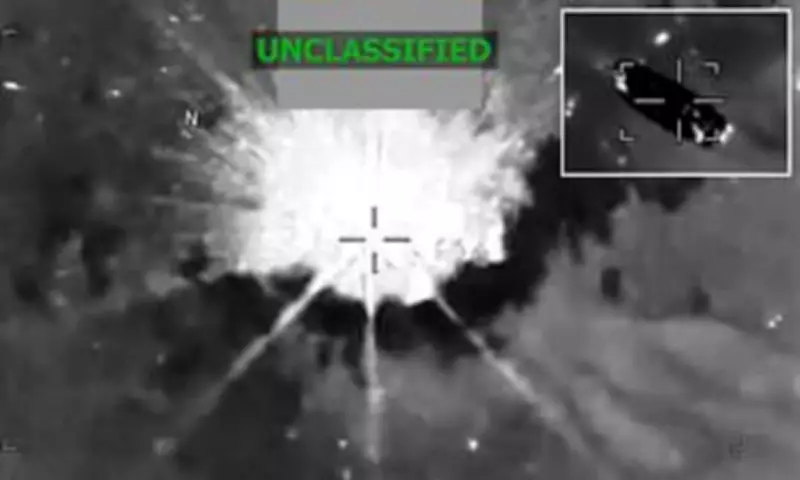
US Military Conducts Lethal Strike on Suspected Drug Trafficking Vessel in Caribbean
The US military has executed a lethal strike on a vessel suspected of drug trafficking in the Caribbean, resulting in three fatalities. The operation, carried out on Friday under the authority of US Southern Command and Joint Task Force Southern Spear, targeted what officials described as a suspected narco-terrorist's boat. This incident marks the fourth reported attack of its kind this year, highlighting an ongoing and contentious military campaign aimed at disrupting maritime drug routes.
Details of the Strike and Rescue Efforts
According to a statement from US Southern Command, intelligence confirmed the vessel was transiting along known narco-trafficking routes in the Caribbean and was actively engaged in narco-trafficking operations. Following the engagement, rescue crews swiftly initiated efforts to locate and recover a survivor, sparking a multinational search across the eastern Pacific waters. The command noted that US forces moved quickly to activate the Search and Rescue system, notifying the US Coast Guard to aid in the recovery of the lone survivor.
This strike follows a similar operation earlier in the week, where a separate attack in the eastern Pacific Ocean resulted in two deaths and one survivor. In that instance, the military described the ship as traveling along known narco-trafficking routes, with two narco-terrorists killed and one surviving. The press release for Friday's strike did not disclose the exact location, maintaining operational secrecy.

Controversy and Legal Challenges Surrounding Operation Southern Spear
Operation Southern Spear, which began in September 2025, has reportedly killed at least 124 people in strikes on suspected drug boats, according to CNN. The campaign has faced significant criticism from legal experts and military attorneys who question its legality. Multiple current and former military attorneys have argued that the operations do not appear lawful, raising concerns about the precedent of using military force against suspected smugglers outside traditional war zones.
Critics have also challenged whether sufficient evidence exists to conclusively link those targeted to drug trafficking operations and whether the use of lethal force is justified in such circumstances. The legality of these strikes has been a point of contention, with some experts asserting they violate the laws of armed conflict.
Political and Legal Repercussions
President Donald Trump has defended the strikes, stating that the US is in an armed conflict with cartels in Latin America and that such escalations are necessary to stem the flow of drugs. However, his administration has provided little evidence to support claims of killing narcoterrorists, fueling further debate.
In a related development, the families of two Trinidadian nationals killed in an October boat strike under the Trump administration have sued the federal government earlier this month. The lawsuit, believed to be the first wrongful death case linked to the campaign, calls the attack a war crime and part of an unprecedented and manifestly unlawful US military campaign. This legal action is expected to test the justification for the attacks and could set a precedent for future cases.
Frequency and Impact of the Strikes
The frequency of these boat attacks has slowed since January, which saw just one strike following the raid that captured Venezuelan President Nicolas Maduro. By comparison, the Pentagon targeted more than a dozen vessels in December 2025. This reduction in activity may reflect operational adjustments or increased scrutiny, but the campaign continues to be a focal point of international and domestic controversy.
As the US military persists in its efforts to combat drug trafficking through such strikes, the balance between security measures and legal accountability remains a critical issue. The ongoing legal challenges and public scrutiny underscore the complex nature of this military strategy in the Caribbean and beyond.