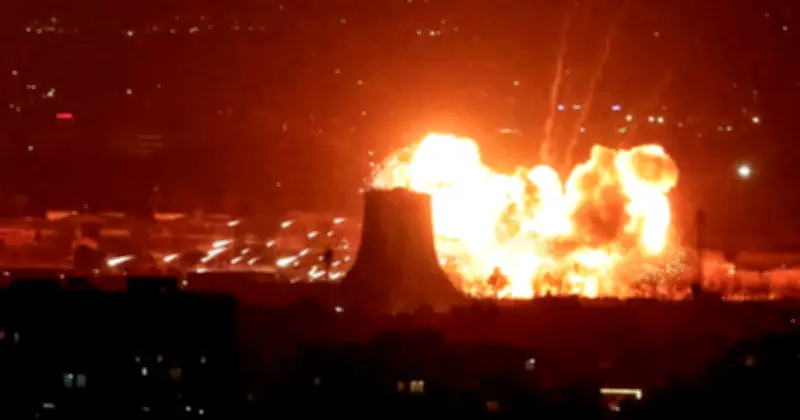
The US military could renew its bombardment of Iran "within days" in a joint effort with Israel to "finish the job", reports suggest. American forces have been ordered to launch a new wave of attacks in the Middle East, designed for maximum impact, rather than simply "mowing the lawn", officials said.
Strikes ahead of elections
It comes ahead of elections in both the US and Israel, as President Donald Trump prepares for next week's mid-terms and Prime Minister Benjamin Netanyahu faces his first contest since the October 7 attacks on Tuesday. A source told CNN the fresh strikes "will be a big effort", adding that US Central Command is developing a list of potential targets across Iran's military, energy and nuclear infrastructure.
Another source said any strikes launched by the US or Israel would trigger immediate retaliatory action against American facilities in the region. Negotiations in the Middle East have long been stalled, with Mr Trump repeatedly calling for "complete surrender" from Iran, which officials have said will not be accepted.
Netanyahu warns of retaliation
Mr Netanyahu also said on Sunday that Iran or its proxies could attack ahead of the election in an attempt to disrupt the vote. "The [military] is ready to both defend and strike," he said in a video statement. "You will suffer disproportionate blows far greater than you can imagine."
The US has sent more military assets to the region in recent days, including a third aircraft carrier and thousands of troops, while Tehran has indicated it could expand targets to include infrastructure such as data centres and undersea cables. Attempts from mediators to bring Washington and Tehran back to formal talks appear to be in vain, eight months after the conflict broke out in February.
Strait of Hormuz tensions
Iran is still promoting a proposal that would end the war and fully open the Strait of Hormuz within a week, provided the US meets conditions including ending a blockade on Iranian ports. Mr Trump has rejected the offer, with indirect discussions continuing in the intervening months, alongside attacks on ships transiting the strait.
A return to all-out war would put more pressure on global deliveries of oil, natural gas and related products like fertiliser from the Middle East and likely bring another spike in prices. This month has seen the highest number of reported attacks on commercial ships in the strait since the early weeks of the war in March.
Election impact
The upcoming elections in the US and Israel are expected to reflect voters' anger over the conflict, alongside other issues. Mr Trump's political support could be weakened as higher costs take their toll on American wallets, while Mr Netanyahu is in a tight race amid anger over the October 7 attacks and inconclusive wars in Gaza and Lebanon as well as Iran.
Mr Trump has thrown his support behind Mr Netanyahu, describing him as an "outstanding warrior prime minister" and urging voters to back him so the historic allies can "finish the job that we started". "As everyone is aware, including the enemy, Bibi and I have had a great relationship in winning together," he wrote on Truth Social.
"We did Operation Midnight Hammer, stopping the World's Number One State Sponsor of Terror from obtaining a Nuclear Weapon," Mr Trump added. "Then we did Operation Epic Fury, and Iran now has No Navy, No Air Force, and both their Military and Economy are in shambles. There can no longer be the chant heard around the World of "Death to America, Death to Israel", and there won't be."