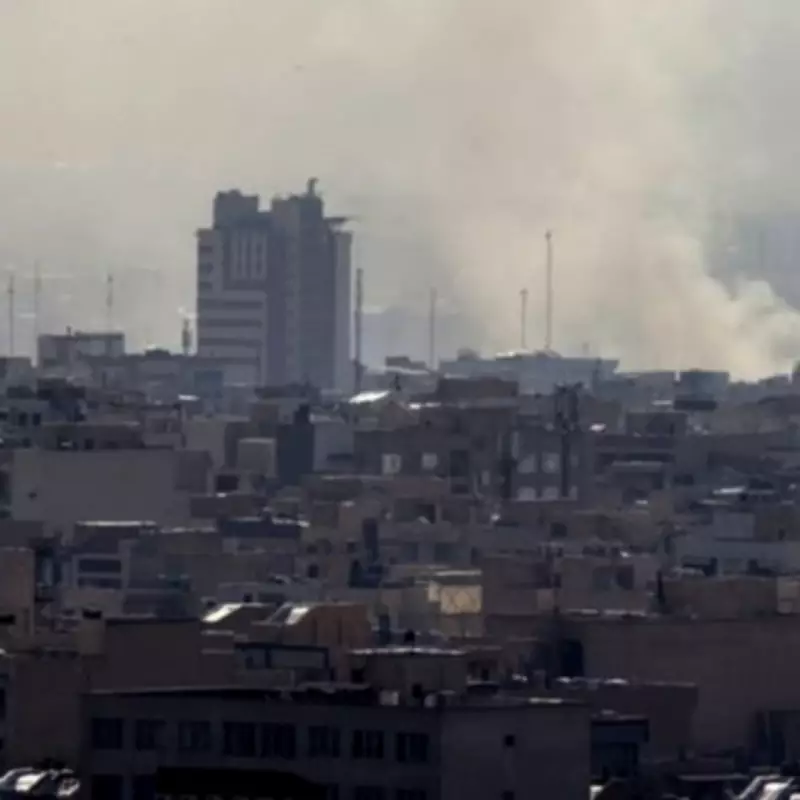
US-Israel Military Strike on Iran Could Reshape Middle East for Generations
The recent joint military operation by the United States and Israel against Iran represents a pivotal moment that may permanently transform the Middle Eastern geopolitical landscape. This coordinated assault, utilizing America's formidable war machine alongside Israeli military capabilities, has unleashed violence that experts predict will reverberate across the region for decades to come.
Unleashing Proxies and Global Terror Networks
What follows this initial bombardment may prove even more consequential than the attacks themselves. As Iran's fighters and proxy networks are unleashed, the world could face years of exported terrorism extending far beyond Middle Eastern borders. The shadowy Islamic Revolutionary Guard Corps leadership may either defect to new leadership or, mirroring the Iraqi insurgency model, go underground to launch sustained resistance against any emerging Iranian government.
Should the current regime collapse, critical support systems for groups like Hezbollah in Lebanon—amounting to approximately one billion dollars annually—would evaporate. This financial rupture could prompt these well-connected organizations to activate their global networks for terror operations, potentially targeting Western nations directly.

Historical Parallels and Future Dangers
The 2003 invasion of Iraq provides a sobering template for what regime change in Iran might entail. While that conflict eventually toppled Saddam Hussein, it sparked violence claiming approximately one million lives and created conditions that spawned the Islamic State terrorist organization. This "terror on steroids" network, with its brutal tactics including beheadings and drill tortures, emerged directly from the chaos of post-invasion Iraq.
More than two decades later, Islamic State demonstrates concerning resurgence, with MI5 operatives regularly uncovering plots against the United Kingdom and other Western nations originating from the region. The management of post-conflict Iran will prove crucial, yet there are legitimate concerns that the mistakes made in neighboring Iraq may be repeated with even graver consequences.
Immediate Conflict Dynamics and Military Operations
Current battlefield dynamics show smoke rising over Tehran as Iranian leadership reportedly flees the capital. Iranian missiles are being launched toward Israel, which has maintained a war-footing posture for several days, with civilians seeking shelter in air-raid facilities. Tel Aviv remains on high alert, its sirens blaring as waves of Islamic Revolutionary Guard Corps missiles approach the city.
Simultaneously, Israeli troops are massing at Lebanon's border, preparing for potential conflict with Hezbollah forces. Explosions echo above Syria and Jordan as American and Israeli warplanes attempt to intercept Iranian missiles destined for Israeli territory. Initial reports suggest as many as 400 missiles may have been launched from Iran, with Israeli defense systems working to neutralize the threat.
Military Strategy and Naval Deployments
The attack's preliminary indicators included the deployment of US F-22 Raptor warplanes to Israel, serving as aerial bulldozers designed to penetrate Iran's air defense networks. These advanced aircraft, considered among the world's most lethal, formed the final component of a substantial military armada that America has been positioning for weeks.
These stealth fighters paved the way for larger bombers and additional fighter jets to deliver precision strikes against Tehran's defensive and military installations. Sources indicate the US-Israeli assault originated from both air and sea platforms, with the powerful USS Abraham Lincoln carrier strike force launching weapons from the Arabian Sea.
Meanwhile, the USS Gerald R. Ford—the world's largest warship and aircraft carrier—is positioned near Israel, prepared to defend against potential retaliatory strikes from Iran, Hezbollah, or Houthi forces. This represents just the initial phase of what may become a prolonged effort by Israel and America to fundamentally alter Tehran's regime, which has dominated Middle Eastern aggression for decades.

Broader Implications and Future Uncertainties
The implications extend far beyond regional boundaries. Simply bombing away the regime's ideological refrain of "death to America" proves impossible, as such sentiments will likely persist within shadowy terror networks operating globally. Britain remains particularly vulnerable despite possessing world-class intelligence agencies and counter-terrorism police forces dedicated to mitigating emerging threats.
Reports indicate Iran's Supreme Leader Ayatollah Khamenei has fled the capital alongside most regime officials and military leaders. Early accounts suggest at least one senior regime figure has been killed, indicating this attack may produce more far-reaching effects than any regional conflict since the Gaza war began. This represents merely the opening chapter of a story whose consequences will likely unfold across coming decades, reshaping global security paradigms in unpredictable ways.