In a dramatic escalation of tensions, United States forces have seized Venezuelan President Nicolás Maduro from Caracas and transported him to the US to face long-standing drug trafficking charges. The operation, which took place in the early hours of Saturday, marks Washington's most controversial military intervention in Latin America since the invasion of Panama in 1989.
A Swift Seizure and Stark Warnings
Following the military action, former US President Donald Trump declared that America would now "run" Venezuela. He issued a further warning on Sunday, stating that the US might launch a second strike if remaining members of the Venezuelan government did not cooperate with his efforts to get the country "fixed".
The 63-year-old Maduro is currently being held in a New York detention centre, awaiting a court appearance on Monday. Images of the handcuffed and blindfolded leader being led from a US federal aeroplane have sent shockwaves through Venezuela and the international community.

Political Turmoil and a Conciliatory Shift
In the wake of the raid, Venezuelan Vice-President and Maduro ally Delcy Rodríguez was appointed acting president. In a significant shift, she has offered "to collaborate" with the Trump administration, potentially heralding a major change in relations between the two nations.
In a conciliatory message on Instagram on Sunday, Rodríguez expressed hope to build "respectful relations" with Donald Trump. "We invite the US government to collaborate with us on an agenda of cooperation oriented towards shared development within the framework of international law," she stated.
This contrasted with her earlier televised address, where she gave no indication of cooperation, labelling the US action "an atrocity that violates international law" and referring to Trump's government as "extremists".
International Condemnation and Domestic Fallout
The raid has drawn widespread international criticism. The governments of Spain, Brazil, Chile, Colombia, Mexico, and Uruguay issued a joint statement saying the US actions "constitute an extremely dangerous precedent for peace and regional security". All EU nations except Hungary called for restraint and respect for the will of the Venezuelan people.
Venezuelan Defence Minister General Vladimir Padrino claimed the US attack killed soldiers, civilians, and a "large part" of Maduro's security detail "in cold blood". The Cuban government said 32 of its citizens were killed during the operation.
In the UK, Prime Minister Keir Starmer said Britain was not involved in the attack but refused to condemn it. A close ally, cabinet minister Darren Jones, called for a peaceful transition of power in Venezuela to be reached "quickly".
Trump suggested the US would not push for immediate elections but would work with the remaining administration to clamp down on drug trafficking and overhaul Venezuela's oil industry, stating US oil companies needed "total access" to its vast reserves.
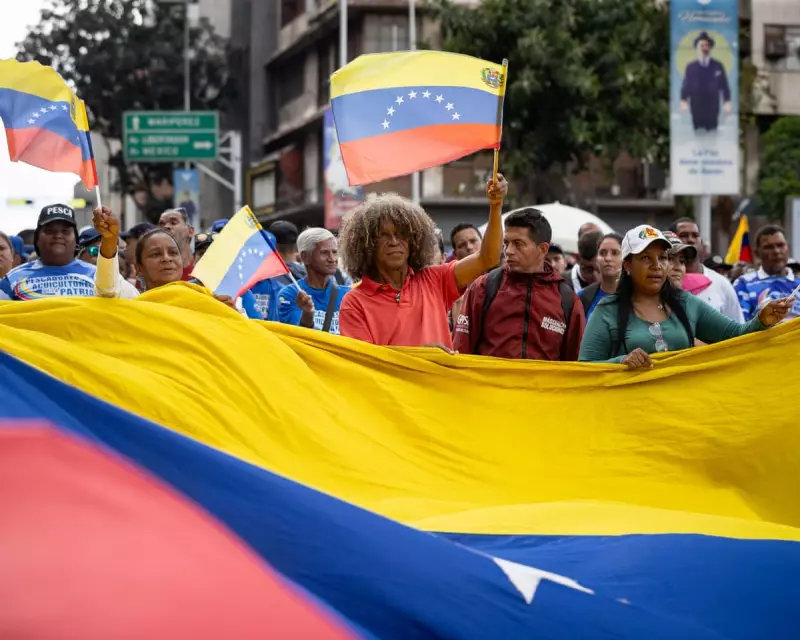
Hundreds of supporters of Maduro's Chavismo movement gathered in Caracas on Sunday to demand the release of the president and his wife, Cilia Flores, for whom a commission has been established.