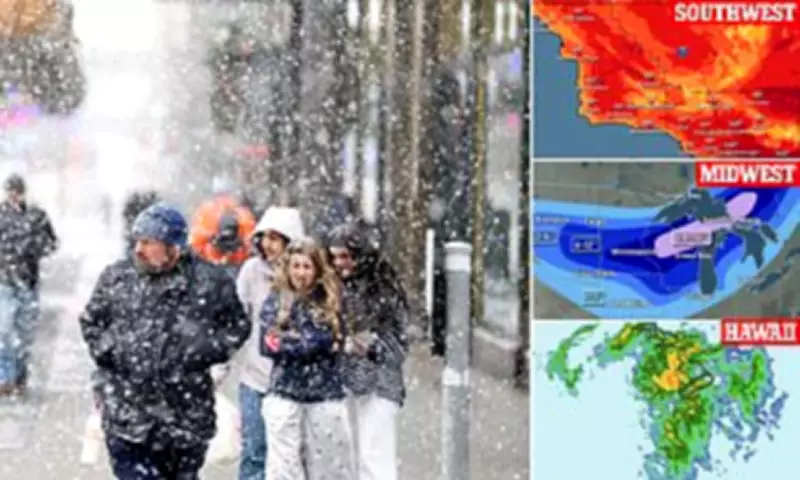
Nationwide Weather Alert: US Faces Simultaneous Heat, Cold, and Wildfire Threats
Forecasters have issued urgent warnings for Americans in every state to prepare for a barrage of extreme weather events over the coming days. The United States is set to experience a dramatic clash of meteorological phenomena, with a deadly heat dome, a returning polar vortex, and rampant wildfires creating hazardous conditions from coast to coast.
Southwest Scorched by Unprecedented March Heat
In the Southwest, a heat dome is expected to settle over the region at the start of the week, pushing temperatures to dangerous levels. Phoenix, Arizona, could see mercury readings soar to a blistering 107 degrees Fahrenheit, while Los Angeles faces rare 90-degree March heat. Southern California and Arizona are experiencing summer-like conditions before spring officially begins, with heat advisories and extreme heat watches activated across the Southwest.
Los Angeles is bracing for highs potentially reaching 100 degrees between March 17 and 19, following a record 92 degrees registered downtown on Friday. Phoenix may encounter temperatures between 103 and 109 degrees, marking a historic event as the city has never hit 100 degrees before March 26 in 137 years of record-keeping. Officials have labeled this a historic, long, and record-breaking March heatwave, warning it could be life-threatening, particularly for vulnerable populations like the very young and elderly.

Midwest and East Confront Polar Vortex and Blizzard Conditions
Meanwhile, the Midwest and East are preparing for the return of a polar vortex that could impact nearly 200 million people. In Minnesota, snow is forecast to begin on Saturday and continue through Sunday, with most of the state under winter weather alerts. Blizzard warnings have been issued for south central Minnesota, including areas near the Twin Cities metro, where travel could become very difficult to nearly impossible by early Sunday morning.
Chicago faces a high wind warning with damaging gusts expected through the weekend, while temperatures may plummet to single digits by Tuesday. The polar vortex could even reach parts of the Southeast, with Atlanta predicted to drop into the 20s. Michigan and the Great Lakes region will see cold and snow from two consecutive storm systems, with the second intensifying into a bomb cyclone, potentially burying parts of Michigan under three to four feet of snow.
Wildfires Rage and Hawaii Battles Cyclonic Flooding
In the heartland, wildfires have already torched hundreds of square miles in Nebraska, prompting Governor Jim Pillen to declare a state of emergency. National Guard troops have been mobilized to combat two dozen fires consuming over 550 square miles, with powerful winds threatening to fan the flames further. At least one fatality has been reported in connection with these wildfires.
Hawaii is grappling with relentless rain from an atmospheric river, triggering major flooding concerns across the island state. A powerful Kona storm has caused days of downpours, with flash flood warnings in effect and over 130,000 residents without power. Schools, universities, and public libraries have been closed due to the inclement weather, which is even expected to bring heavy snow to the Big Island Summits.
Widespread Disruptions and Safety Concerns
The extreme weather is causing widespread disruptions, including power outages affecting hundreds of thousands in Michigan and Ohio. More than 110,000 locals in Michigan lost power due to high winds on Friday, while Ohio reported over 100,000 homes without energy. The chaotic conditions are anticipated to lead to mass flight delays and cancellations from Sunday through Monday night, compounding issues from the partial government shutdown.
Marc Chenard, a National Weather Service meteorologist, summarized the situation, stating, All of the country, even if you're not necessarily seeing extremes, are going to see generally changing from cold to warm, or warm to cold to warm. Residents are urged to take precautions, especially those without air conditioning or engaging in outdoor activities, as the unusual timing of these events heightens the danger.