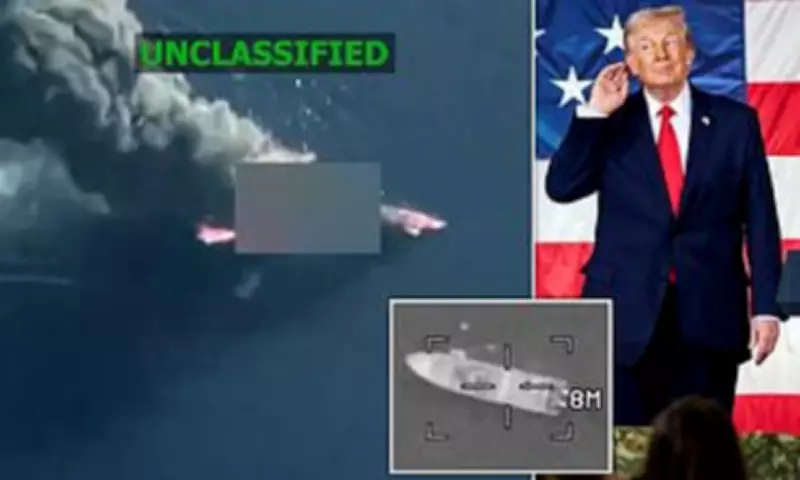
US Military Conducts Deadly Airstrikes on Suspected Drug Trafficking Vessels
The United States military has executed a series of targeted airstrikes against three boats suspected of involvement in drug trafficking operations in Latin American waters, resulting in the deaths of eleven individuals. According to US Southern Command, this operation represents one of the most lethal strikes since the inception of former President Donald Trump's campaign against narco-terrorism, which was initiated in early September.
Intelligence and Execution of the Operation
In a statement released on the social media platform X, US Southern Command confirmed that the strikes were carried out late on Monday. The military asserted that intelligence had verified the vessels were navigating along established narco-trafficking routes and were actively engaged in illicit drug operations. The boats were described as being operated by Designated Terrorist Organizations, although specific details about these groups were not disclosed.
Video footage released by the military depicted individuals aboard the vessels moments before their destruction. Authorities did not pinpoint an exact location for the strikes, only indicating they occurred in the Eastern Pacific and Caribbean regions. This lack of specificity has raised questions among observers regarding transparency and operational boundaries.

Escalating Death Toll and Recent Strikes
This latest incident brings the total reported death toll from such operations to at least 145 since the Trump administration launched its aggressive war against suspected drug trafficking boats. Notably, this strike marked the highest number of fatalities in a single operation since December 30, underscoring an intensification in military actions.
The military reported that all eleven individuals killed were men, and no US forces sustained injuries during the three separate strikes. This operation follows three other aerial attacks conducted by the Trump administration in the region earlier in February:
- The first strike on February 5 resulted in the deaths of two alleged narco-terrorists.
- A second strike on February 9 killed two individuals but left one survivor, prompting immediate rescue efforts by US forces.
- A subsequent strike on February 13 led to the deaths of three people.
In each instance, officials reiterated that the targeted boats were transiting known narco-trafficking routes and were engaged in drug trafficking activities.
Political and Legal Controversies
Secretary of War Pete Hegseth publicly endorsed the Trump administration's latest strike on X, stating, 'Turns out President's Day — under President Trump — is not a good day to run drugs.' However, the operation has not been without criticism. Skeptics have questioned the sufficiency of evidence linking the targeted boats conclusively to drug trafficking, while military lawyers and legal experts have challenged the legality of these fatal strikes.
In response, the Trump administration has defended the killings, with the White House asserting that Trump determined the United States is in an armed conflict with cartels. According to reports from The New York Times, the administration views the suspected drug-running boats as combatants, thereby justifying military action under this framework.
Operation Southern Spear and Strategic Objectives
The broader campaign in the Caribbean, dubbed Operation Southern Spear by the Trump administration, aims to combat narco-terrorism aggressively. Hegseth has previously emphasized that the mission serves to defend the homeland, remove narco-terrorists from the hemisphere, and secure the United States from drugs that pose a threat to public health. He added, 'The Western Hemisphere is America's neighborhood - and we will protect it.'
Despite these objectives, the frequency of strikes had diminished following the US seizure of Venezuelan leader Nicolás Maduro on January 3 in an overnight raid. The resurgence of such operations indicates a renewed focus on military interventions in the region, sparking ongoing debates about efficacy, ethics, and international law.