US Air Force Officer's Harrowing Escape After F-15 Shot Down Over Iran
When the highly respected colonel unclipped his safety harness and raised himself gingerly from the battered ejector seat, he was taking a terrifying step into the unknown. Minutes earlier, this senior US Air Force weapons systems officer had been cruising at over 1,500 miles per hour in the cockpit of an F-15 Strike Eagle over southwestern Iran. Then his aircraft sustained incoming fire, becoming the first US fighter jet to be shot down since the 2003 Gulf War.
Alone Behind Enemy Lines
As a result, he found himself deep behind enemy lines in the foothills of Kohgiluyeh and Boyer-Ahmad Province – a mountainous, sparsely-populated inland region more than 30 miles from the Persian Gulf. On that Friday afternoon, this unfortunate airman was completely and utterly alone. His nearest companion was the F-15's pilot, who had also pulled the yellow 'eject' lever that fires crewmen through the cockpit roof. The pilot had been relatively fortunate, landing on lowland terrain where a helicopter crew could rescue him within hours.
The weapons systems officer faced a much tougher situation. Not only was he further from civilization than his colleague, but as the White House later confirmed, he was 'seriously wounded'. Ejecting from a fighter jet is an immensely traumatic procedure that frequently causes bone fractures and serious spinal damage. While still able to walk, he would have been extremely sore and profoundly shaken.

Survival Training Kicks In
At this critical moment, the airman's extensive training became essential. All crewmen are experts in SERE – a military acronym standing for 'survival, evasion, resistance and escape'. After patching himself up using the medical kit in his flight suit's survival vest, his immediate priority was removing himself from immediate danger. This meant fleeing the area where observers might have seen the ejector seat land, following the rule of thumb to head toward the most secluded nearby terrain.
In this instance, that involved hiking up an elevated ridge toward one of the region's snow-capped mountain summits. The airman's survival vest contained crucial equipment: a knife, water-purification tablets, basic provisions, a Sig Sauer M18 pistol, a compass, and maps of pre-planned evasion routes from mission briefings.
The Critical CSEL Device
Most important was a small device known as a Combat Survivor Evasion Locator (CSEL). Manufactured by Boeing, this walkie-talkie-like piece of equipment sends short, encrypted updates to mission command with details of a survivor's location and status, along with simple messages such as 'injured' or 'enemy nearby' that help military leaders plan rescue operations.
First communications from the CSEL reached US authorities at noon Washington DC time (7:30pm in Iran). After the initial 'ping', the device went silent for several hours to conserve battery power and prevent hostile intelligence forces from intercepting its messages.
Massive Manhunt Underway
By this stage, the US airman was at the center of a massive manhunt. Iranian authorities, eager to score a propaganda coup, offered a $60,000 reward for his capture, while the US was anxious to avoid the public relations disaster of a serviceman falling into enemy hands. On Saturday morning, Iranian state television broadcast footage of armed militia members flooding into the mountains seeking the bounty.
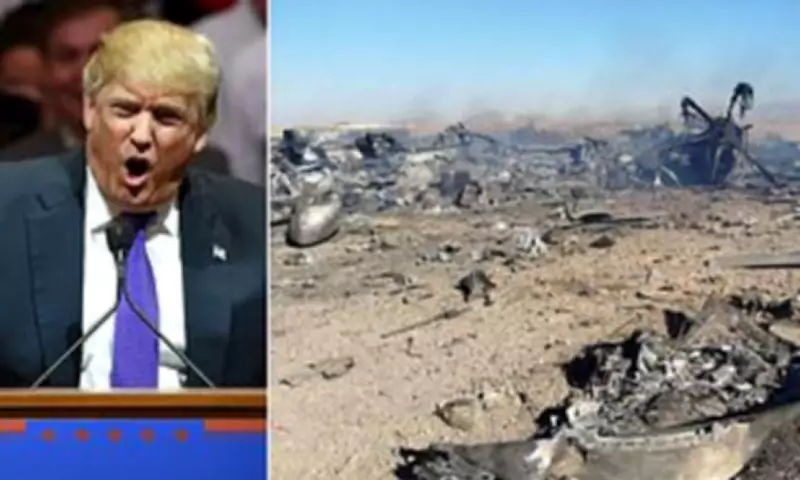
'This brave warrior was behind enemy lines in the treacherous mountains of Iran, being hunted down by our enemies, who were getting closer and closer,' President Donald Trump later described the situation.
Finding Refuge in the Mountains
Thankfully, the airman had found a decent hiding place. During the hours of darkness on Friday night, the weapons systems officer is believed to have hiked up to 7,000 feet along the ridge before concealing himself in a remote location where he felt confident of evading capture once daylight returned. His CSEL then sent another 'ping' to inform mission control of his new location, believed to be high above a village named Mahyar.

The US swiftly deployed a fleet of unmanned Reaper drones to patrol the skies around the area. Intelligence sources revealed that any fighting-age males who came within three miles of his location were 'liquidated'. American A-10 Warthog fighter jets also flew missions in the region to block roads and destroy communication towers and approaching vehicles. Iranian authorities reported at least four people killed in various strikes.
Planning an Audacious Rescue
Back at mission command, military leaders spent Saturday plotting an audacious rescue operation, overseen from the White House situation room. First, they needed to throw Iranian authorities off the scent. According to several US news outlets, CIA assets ran a 'deception campaign' inside Iran, spreading false rumors that the airman had already been located and suggesting he was being moved for 'exfiltration' in a different region from his actual hiding spot.
Whether this succeeded in sowing confusion remains unclear, as do many finer details of how the actual rescue operation unfolded. Early indications suggest it involved hundreds of the most formidable troops in the US military, including Navy SEALs, Delta Force operators, and Pararescuemen from the 24th Special Tactics Squadron.
Special Forces Insertion
These elite forces appear to have been 'inserted' close to the rescue site via MH-6 Little Bird helicopters from the 160th Special Operations Aviation Regiment – the 'Night Stalkers' unit that carried out the daring raid that killed Osama bin Laden in 2011. As the mission closed in on the airman's position, his CSEL switched modes, allowing comrades to lock onto his exact location.
At around 4am, explosions were seen in the night sky around Dehdasht, a city on the far side of the mountain range. Footage purportedly filmed there around this time showed roads blocked with traffic. There has been unconfirmed speculation that locals in the region, many hostile to Iranian authorities, were attempting to prevent troops from reaching the mountains.
Daylight Firefight
Despite overwhelming firepower, the US extraction didn't proceed entirely according to plan. Shortly after dawn, when a well-planned rescue operation would typically have been completed, small-arms fire appears to have been exchanged near the airman's hideaway.
'A firefight broke out. This happened in daylight,' reported Al Jazeera. 'Generally, special operations troops would go in for a rescue operation like that, and they would try to extract someone very quickly in the darkness. This went on for hours, we were told.' Unconfirmed local sources reported three Iranian revolutionary guards killed in the engagement.
Logistical Complications
Further complications emerged at an abandoned airport on the far side of Mahyar, approximately 30 miles southeast of Isfahan. This location appears to have been established overnight as a forward base for logistics, refueling, and troop extraction after locating the missing airman. Unfortunately, two transport planes that had landed at the site became stuck in mud.
These aircraft, possibly valuable C-130 Hercules planes worth £100 million each, were effectively rendered useless, requiring three more planes to be scrambled to remove all troops involved. It took several hours for replacements to arrive, during which the rescue team and the airman waited uneasily at the airfield.
Historical Parallels and Fortunate Outcome
In high-stakes military operations, such last-minute developments can lead to disaster, as occurred during the 1980 Iranian hostage crisis. Operation Eagle Claw – the daring rescue mission to extract diplomats from the US embassy in Tehran – had to be abandoned after a sandstorm damaged helicopters and contributed to a fatal crash at a makeshift airfield. The public relations fallout contributed to President Jimmy Carter's election defeat that year.
While sharing similarities with the 1980 raid, President Trump's Iranian rescue mission had a luckier outcome. The three new planes successfully completed their mission, and all troops were removed from the scene without US casualties. To prevent them from falling into enemy hands, the stricken aircraft were blown up alongside a helicopter that had suffered engine failure.
Mission Success Despite Propaganda Claims
Footage of the smoking wreckage allowed Iranian authorities to describe the operation as a disaster for the US. However, film taken yesterday morning tells a different story, showing one of the Hercules planes disappearing over a mountain top toward Kuwait, where the airman at the center of one of the most audacious rescues in military history received medical treatment.