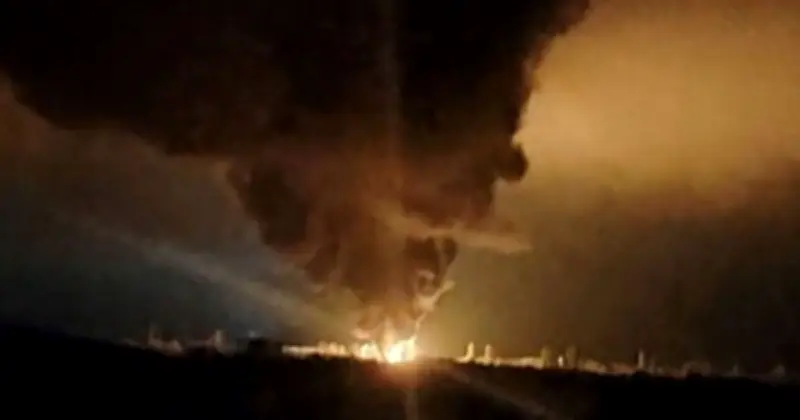
Ukraine has struck a major Russian military plant in overnight attacks on Moscow, according to reports. Kyiv targeted the 75th Arsenal in Serpukhov early on October 22, hitting the production site of weapons and ammunition for the Russian army.
Hundreds of drones and missiles were sent towards the facility, which has been sanctioned by Ukraine, the US and the EU for its role in the Eastern European war, the Kyiv Independent reports.
Moscow Region Attack Details
Moscow Mayor Sergei Sobyanin said the majority of the 630 drones sent towards the region were intercepted, and that two people were injured in the Voronovskoye settlement as part of the attack. The mayor suggested 163 drones had been shot down as they approached Moscow.
Videos circulated online and analysed by Russian outlet Astra appeared to show an explosion followed by a fire at the Serpukhov site. Alongside producing weapons, it repairs military equipment, including air defence complexes and artillery systems.
Earlier Strikes and Response
It followed Ukrainian drone strikes on the Russian city of Lipetsk earlier in the night, with a residential building allegedly struck and multiple explosions, monitoring channels said. A man was injured near the building when he was struck by falling debris, Astra reported.
Russia's Defence Ministry has not yet confirmed the number of drones downed during the attack and Ukraine has not confirmed its involvement.
Broader Conflict and Diplomacy
Russia has also levelled a number of recent strikes at Ukraine, including attacks in Kyiv that left three people dead and 12 injured early on Wednesday morning, according to the city's military administration. Energy facilities were also targeted in the capital and three other cities as the war grinds on amid efforts from mediators to bring President Volodymyr Zelensky and Vladimir Putin to the negotiating table.
The Kremlin said Putin has agreed to resume three-way negotiations with Washington and Kyiv aimed at ending the war this week, focused on "building a security system for Russia and Ukraine after the conflict ends". Representatives of the three countries held three rounds of negotiations earlier this year, meeting twice in Abu Dhabi in January and February, followed by further talks in Geneva in February.
However, little progress was made beyond exchanges of prisoners of war, as Moscow and Kyiv stuck to their basic demands. It comes as US President Donald Trump increases the pressure on Mr Zelensky to come to an agreement with Russia, with relations between the two leaders souring again.
"We want Zelensky to make a deal," Mr Trump told reporters in the Oval Office on Tuesday. "We've given a lot to Ukraine. We've gotten absolutely nothing back except grief, death, tremendous monetary loss." If that does not happen, "I think it's going to be a very bad thing", Mr Trump said.
Starlink Restrictions and Tensions
Strained relations between the US and Ukraine have sparked fears that America could stop intelligence sharing with Kyiv after Ukraine unexpectedly faced speed limits on the military component of Elon Musk's Starlink satellite communications system. Mr Musk suggested the order to impose caps on the system came from the White House, despite the Wall Street Journal reporting that the tech billionaire was behind the slowdown.
Ukraine relies on Starlink to help intercept Russian missile and drone attacks, with the restrictions imposed last week significantly curtailing its ability to do so. The relationship between the US and Russia deteriorated sharply earlier this month in the wake of Mr Trump's decision to ease sanctions on Russian diesel in a bid to cut fuel prices ahead of midterm elections in November.
He has also suggested Mr Zelensky should be replaced, declined to say whether Russia was responsible for the war and used his executive powers to block a major sanctions package he had previously supported. But the US leader has denied that the order to impose speed limits on Ukraine's Starlink access came from his administration.