UK Reinforces Gulf Military Presence with 1,000 Troops as Iran Menaces Region
The United Kingdom is significantly escalating its military support in the Gulf, with Defence Secretary John Healey confirming that total deployments will now reach 1,000 troops. This move comes in direct response to what Healey describes as an "expanding threat" from Iran, amid ongoing tensions and criticism from former US President Donald Trump regarding Britain's defensive posture.
Healey Condemns Iran's Aggressive Actions During Middle East Tour
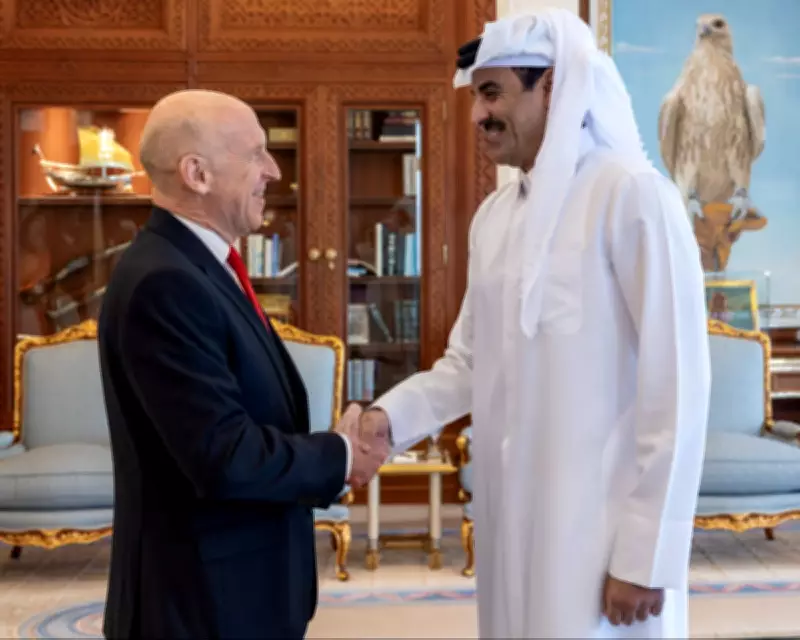
Speaking from Qatar where he met with UK forces, John Healey emphasised that the additional deployment is purely defensive. "What's struck me being here over the last couple of days is how clear it is in the Middle East that Iran is expanding its attacks, which I totally condemn as it's continuing to menace the region," Healey stated. He revealed that Iranian drones and missiles are now targeting critical infrastructure including universities, steel works, and aluminium plants across the Gulf states.
The enhanced military package includes:

- Additional Typhoon fighter jets to be stationed in Qatar
- Deployment of the Sky Sabre anti-drone and missile system to Saudi Arabia, Bahrain, and Kuwait
- Reinforcement of UK bases and those of Gulf allies across the region
Trump's Criticism and UK's Defensive Stance
The announcement follows pointed criticism from Donald Trump, who attacked the UK for refusing to participate in offensive operations against Iran. On his Truth Social platform, Trump wrote: "You'll have to start learning how to fight for yourself, the USA won't be there to help you any more, just like you weren't there for us."
When questioned about these remarks, Healey maintained Britain's consistent position: "We won't get drawn into the wider war. Throughout this conflict, we've been consistently taking decisions in Britain's interests because we need to defend our people, and we want to defend allies in the region." He added that Gulf leaders would "judge us by our actions and not our words" and confirmed ongoing defensive cooperation with the United States.
Strategic Discussions on Hormuz Strait Security
During his intensive 36-hour diplomatic tour, Healey met with two kings, two prime ministers, and three defence secretaries across the region. A central concern in all discussions was the security of the Strait of Hormuz, through which approximately 20% of global oil shipments pass.
"There's a determination that Iran cannot be allowed to hold the strait of Hormuz hostage and blackmail the world by stopping shipping in the way that it's doing," Healey asserted. He detailed that talks focused on developing options to ensure safe shipping, recognising that solutions "cannot just be military and that it must involve the widest possible range of nations alongside the US."
Operational Details and Regional Integration
The Ministry of Defence confirmed that the Sky Sabre system, accompanied by Royal Artillery operators, will be transferred to Saudi Arabia this week. This sophisticated defence system comprises:
- Advanced radar technology
- Central control nodes
- Multiple missile launchers capable of intercepting munitions and aircraft
According to the MoD, Sky Sabre will be integrated into broader Saudi and regional air defence networks, enhancing collective security capabilities. The RAF's joint Typhoon squadron with Qatar was initially deployed in January as regional tensions escalated, with Prime Minister Keir Starmer recently authorising four additional fighter jets following retaliatory strikes in the Gulf.
Healey concluded his Middle East visit by reinforcing Britain's commitment to regional partners: "My message to Gulf partners is: Britain's best will help you defend your skies." This substantial military reinforcement underscores the UK's strategic focus on defensive operations while navigating complex geopolitical dynamics involving Iran, Gulf allies, and transatlantic relations.