

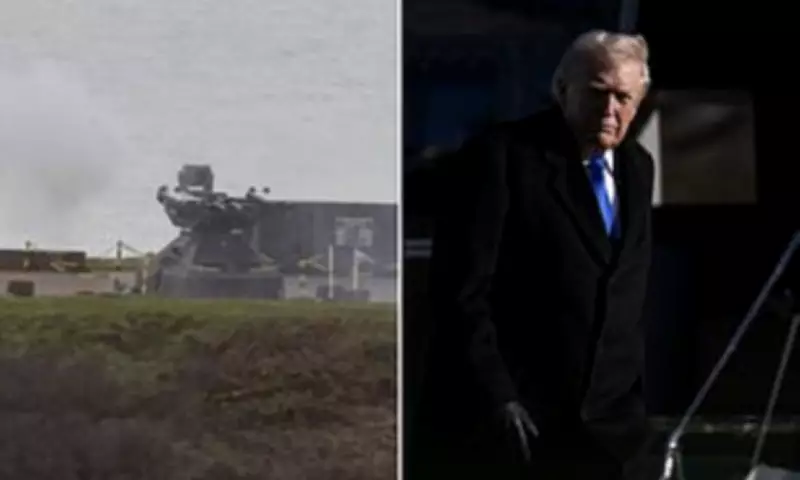
UK Special Forces Repel Record Iranian Drone Attack in Northern Iraq
In a dramatic escalation of hostilities, a British Special Forces base in northern Iraq successfully intercepted a record 14 Iranian suicide drones during a nighttime assault. This represents the largest single attack on UK troops by Iran to date, occurring despite recent diplomatic overtures from the United States.
Attack Details and Immediate Aftermath
The assault targeted the Special Forces compound in Erbil, located within the Kurdish-controlled region of Northern Iraq. This installation has been repeatedly singled out by Iranian forces in recent weeks, with more than 50 drones reportedly directed toward the multinational camp—though actual numbers may be significantly higher.
Elite Royal Air Force Regiment personnel, specialists in base protection using ground-to-air rocket systems, engaged and destroyed the incoming threats. The Ministry of Defence has been urgently contacted to confirm whether any British troops sustained injuries during the barrage.

Defensive Systems and Coalition Dynamics
The successful defense utilized multiple advanced systems. Rapid Sentry, a vehicle-mounted platform firing Lightweight Multirole Missiles, provided crucial firepower. Initial detection came from Orcus uncrewed drones patrolling Erbil's airspace, while the RAF Regiment's Ninja system demonstrated capability to hack into drone guidance systems for interception.
These defensive tactics were rigorously practiced during exercises at the Air Defence Range Manorbier in Pembrokeshire, Wales, before deployment—training that has proven effective in actual combat conditions.
Broader Regional Context and Coalition Response
This incident follows a pattern of Iranian aggression against Western forces in the region. Earlier this month, a French soldier was killed during a counterterrorism training exercise in a separate Iranian attack, which President Emmanuel Macron condemned as 'unacceptable'. Following previous assaults, Italian troops withdrew entirely from the Erbil base, with 102 personnel returning home and 40 relocating to Jordan—a move that complicated diplomatic relations.
Meanwhile, the Royal Navy's delayed deployment has raised concerns. HMS Duncan, a destroyer that could have provided deterrence in the conflict zone, only reached Cypriot waters this week after extended dockyard maintenance.
Naval Coalition and Strategic Challenges
Officials confirm that while the UK and France are leading international efforts to assemble a naval coalition securing the Strait of Hormuz, no Royal Navy warships will deploy to this crucial waterway until warring parties agree to a ceasefire. Iran has mined the strait, though the exact number of explosive devices remains unclear, and limited commercial traffic from select nations continues under Iranian permission.
The multinational coalition, initially comprising six nations, has now expanded to 30 states. Military chiefs are scheduled to meet in either London or Portsmouth later this week to finalize operational plans. The UK is preparing to deploy a combination of crewed ships and autonomous sea drones designed to identify and destroy mines, but only after the United States and Israel reach agreements with Iran.
Resource Constraints and Future Operations
Facing budgetary pressures, the Royal Navy is exploring leasing commercial vessels to operate alongside uncrewed systems. Unmanned sea drones would deploy from 'mother ships' to search for mines, with the Royal Fleet Auxiliary vessel Lyme Bay—currently patrolling the Mediterranean—potentially fulfilling this role.
More than 500 additional UK troops from various services have deployed to the Middle East and Eastern Mediterranean to counter the Iranian threat. As the RAF Regiment stated in a recent communication, personnel 'remain committed to protecting people and critical infrastructure in a complex and evolving environment' through precision, professionalism, and close coordination with coalition partners.






