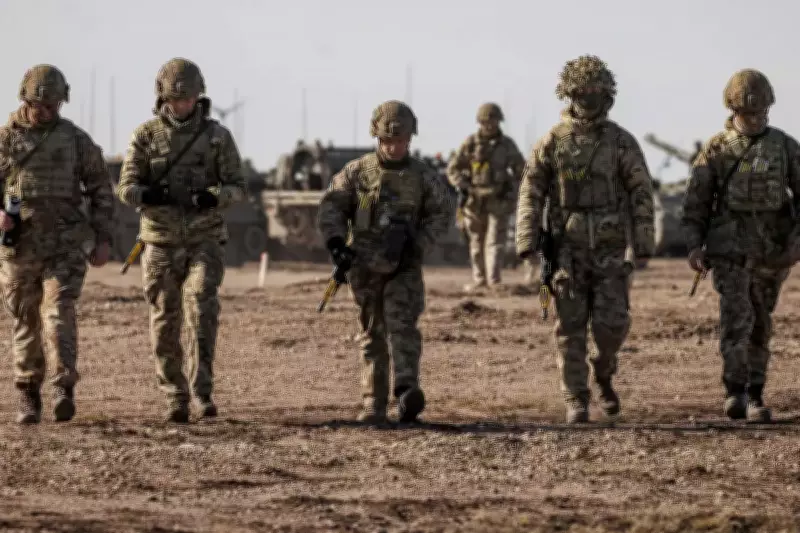
UK Defence Warning: Commons Leader Compares Situation to Pre-World War II
Britain is confronting a "similar situation" to the period before the Second World War due to severely run-down defences, the Commons Leader has starkly warned. Sir Alan Campbell acknowledged the alarming comparison to the 1930s but insisted the government is actively working to rebuild the country's military capabilities and strategic resilience.
He told MPs during a tense parliamentary session that he earnestly hopes "what happened later is not something that happens now," referencing the catastrophic global conflict that followed the interwar years. This sobering assessment comes as international tensions escalate, particularly between the United States and Iran, which has reportedly strained the special relationship between the UK and Washington.
Pressure Mounts Over Delayed Defence Investment Plan
Sir Alan's comments were made in response to Conservative former defence minister Andrew Murrison, who urgently pressed the government to publish its long-awaited defence investment plan. This critical blueprint was originally scheduled for release last autumn but remains conspicuously absent, causing growing concern among defence experts and political opponents.

Mr Murrison told the Commons with palpable frustration: "In the late 1930s, this country's defence industrial base grew very fast indeed to deal with the mounting threat. The failure to publish the defence industrial plan is not in that tradition. Can we have a debate in Government time to establish when we are going to see the defence industrial plan – whose delay is holding our defence industrial base back – published?"
Government Response and Broader Defence Concerns
Sir Alan responded with measured gravity: "We are facing a similar situation to the one that he describes at the end of the 1930s, in that defences were run down, and the decision had to be made in order to start to rebuild them. And that's why the work that he talks about at the end of the 1930s had to happen. Of course, we hope that what happened later is not something that happens now. But we are trying to rebuild our defences, we are working on the plan, and we will publish it as soon as we can."
This exchange highlights deepening anxieties about Britain's military preparedness at a time of global instability. Earlier this month, Labour's Tanmanjeet Singh Dhesi, the chair of the Defence Select Committee, emphasised that substantial investment and long-term certainty are desperately needed to enhance military capabilities amid rising geopolitical tensions worldwide.
Mr Singh Dhesi stated unequivocally: "The world is rearming at pace, and the United Kingdom is not keeping up. We must confront the reality together that national defence requires long-term thinking, stable investment and as far as possible, cross-party working."
The delayed defence industrial plan is seen as crucial for providing clarity and direction to Britain's defence sector, which faces challenges in modernising equipment, boosting production capacity, and maintaining technological edge. Critics argue that further postponement risks undermining national security and economic opportunities in defence manufacturing.
As debates intensify in Westminster, the government faces mounting pressure to deliver concrete plans and funding commitments to address what many perceive as a critical vulnerability in the nation's defences, drawing uncomfortable parallels with historical precedents that no one wishes to see repeated.