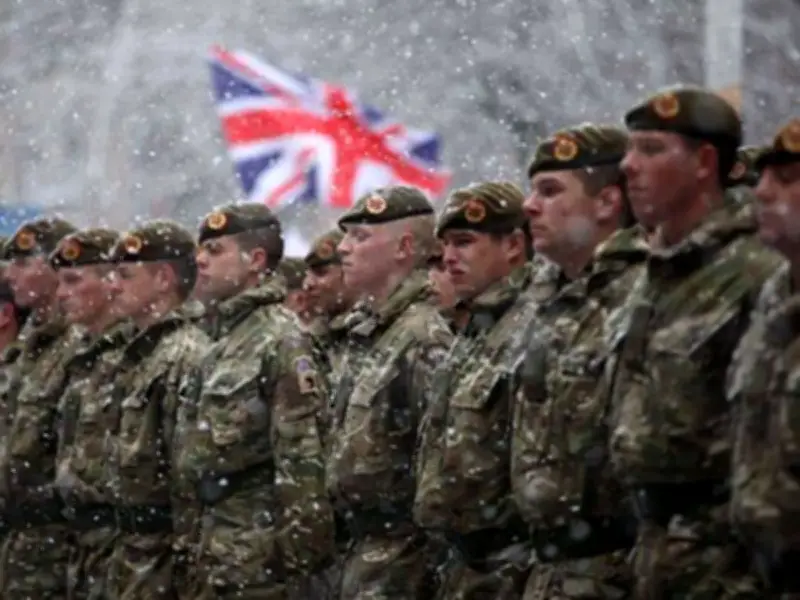
Military experts have outlined who would be called up first if the UK introduced conscription during a major conflict, with retired senior British Army officer Lord Dannatt telling the Express that the Army Reserve would be mobilised first, followed by Regular Reservists, before the Government considered conscription starting with 18-24-year-olds.
Expert views on mobilisation order
Lord Dannatt said: "I would expect to see the Army Reserve mobilised first, then Regular Reservists recalled to active service and then His Majesty's Government would need to consider conscription, starting with 18-24-year-olds."
Emeritus professor at the University of Buckingham, Anthony Glees, said full conscription would likely follow the WW2 model, meaning "all males from 18-41 would have to do military or national service." He noted that in May 1939, all males aged 20-22 were required to do national service, and in 1941 the age range was extended to 18-51, with unmarried women also required to do some kind of national service.
Lessons from Ukraine and deterrence
Glees argued the Government should begin floating the concept of compulsory national service, pointing to Ukraine as an example. He said: "When it was attacked, it introduced conscription for all males in the 25-60 year old category. Ukraine, with a population just a little more than half the UK's population, has armed forces of 900,000 men with a further four million in the reserve."
He added: "If we do not want to fight Russia, and no sane person does, the only way of deterring him is by getting ready to fight him." Glees also noted that not every conscript would be deployed on the front line, with many who "could do useful defence work from their laptops." He cited IPSOS figures showing just 11% of 18-27 year olds say they are prepared to fight for their country, which he said represents 154,000 people who "would more than double the size of our army."
Government position and RUSI assessment
The Government has dismissed both conscription and compulsory military service. In September, Defence Minister Lord Coaker stated: "Since 1963, it has been the policy of successive Governments that the best way of providing for the defence of our country is by maintaining professional Armed Forces which are manned by volunteers."
Instead, the Government is focusing on voluntary programmes to offer younger generations a taste of military life. Lord Coaker said: "Through this combination of military experience, engagement, education, skills development and voluntary service opportunities, defence is already helping more young people understand the role of the Armed Forces, experience Service life, develop valuable skills, and explore opportunities to contribute to national security and public service."
The Royal United Services Institute (RUSI) reckons that reservists and ex-armed forces personnel would be top of the list for any recall, but highlights challenges in tracing and reaching former military individuals. A research document stated: "With Russian military expansion and modernisation, and a growing rift between the US and European members of NATO, the risk of protracted conflict in Europe has grown. To deter such a conflict, or deal with the risk if deterrence fails, the UK's armed forces must be ready to mobilise and expand."