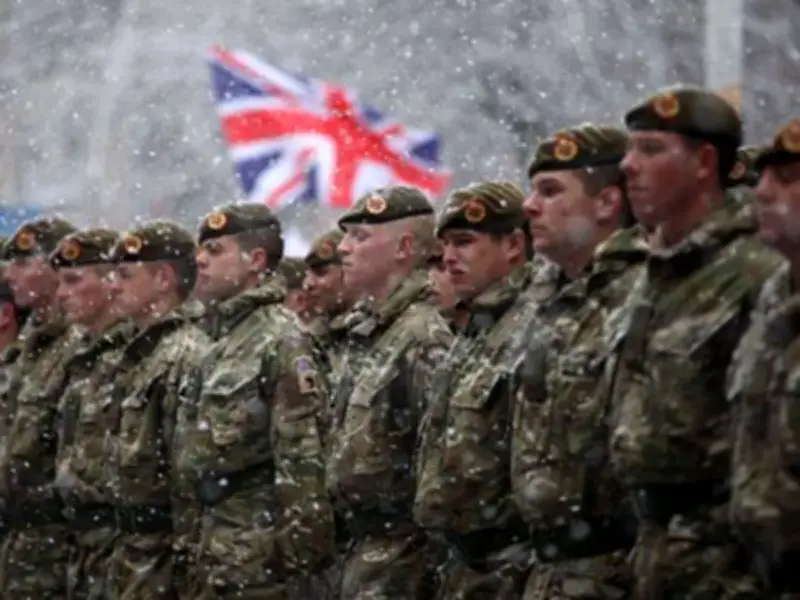
The head of the British Army has called on UK political leaders to start a 'frank conversation' with the public about preparing for war, as concerns over a potential global conflict grow. General Sir Roly Walker stated that "every" citizen would be "asked to make sacrifices" and contribute to the country's defence.
Rising Tensions and Global Shifts
This appeal comes amid escalating tensions between Russia and Ukraine, with the US appearing to align with Russia. Over the past week, US President Trump has encouraged Ukraine to "get a new leader" after signing a diesel supply deal with Russia, and has increasingly attributed the global price of diesel to Ukraine's refusal to capitulate to Putin, rather than the US conflict with Iran.
The risk of war appears to be increasing as the global order continues to change. Last summer, the UK government advised people to prepare for war on British soil, and is now advocating for greater readiness for conflict across society.
Historical Conscription Age Ranges
Should these tensions persist and a new global conflict break out, there are some indications of what might happen if the UK were to go to war and need to implement conscription, or compulsory military service, whether in a WW3 scenario or otherwise, reports the Express.
During World War 2, conscription was introduced for men aged between 20 and 22 in 1939, up to six months before the actual outbreak of war. The UK Parliament website states: "During the spring of 1939, the deteriorating international situation forced the British government under Neville Chamberlain to consider preparations for a possible war against Nazi Germany. Plans for limited conscription applying to single men aged between 20 and 22 were given parliamentary approval in the Military Training Act in May 1939. This required men to undertake six months' military training, and some 240,000 registered for service."
However, when war was declared, the age range was immediately expanded to include any man aged 18 to 41. It goes on to say: "On the day Britain declared war on Germany, 3 September 1939, Parliament immediately passed a more wide-reaching measure. The National Service (Armed Forces) Act imposed conscription on all males aged between 18 and 41 who had to register for service."
Exemptions and Wider Call-Ups
The only men who weren't conscripted were those deemed medically unfit or those working in crucial industries such as baking, farming, and medicine, which were essential to the war effort. It further adds: "Those medically unfit were exempted, as were others in key industries and jobs such as baking, farming, medicine, and engineering."
By the close of 1941, women and 'all childless widows' between the ages of 20 and 30 were called up, while men aged up to 51 were conscripted for military service. Even those aged 52 to 60 were required to participate in "some form of military service."
Modern Warnings and Consequences
In 2024, then Defence Secretary Grant Shapps warned that we are "moving from a post-war to a pre-war world", while General Sir Patrick Sanders, Britain's top army officer, advocated for an expansion of the army and stressed the need for the country to heighten its readiness for conflict.
The fate of those who might refuse to serve in a potential WW3 scenario remains uncertain. However, during WW2, British 'conscientious objectors' were brought to trial, with some assigned compulsory roles to support the war effort in alternative ways.