UK Expands Military Cooperation with US Against Iranian Threats in Strait of Hormuz
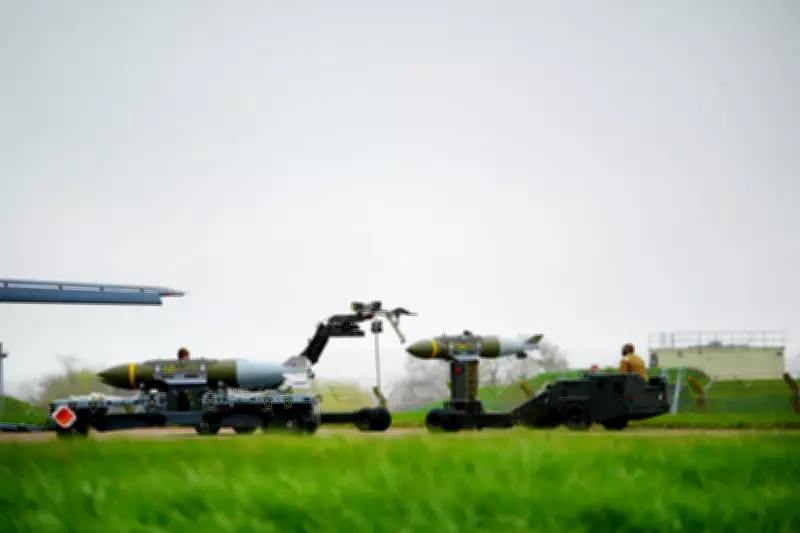
In a significant policy shift, British ministers have agreed to allow United States forces to utilize UK military bases for defensive operations targeting Iranian missile sites that threaten the vital Strait of Hormuz shipping route. This decision represents an expansion of previous arrangements that limited US use of British facilities to strikes against sites directly targeting UK interests in the region.
Escalating Regional Tensions Prompt Policy Change
Downing Street confirmed that UK bases will now be available for what it described as US "defensive operations to degrade the missile sites and capabilities being used to attack ships" in the strategic waterway. The announcement follows heightened tensions as Iranian forces have expanded their targeting to include international shipping vessels, including those flying the British Red Ensign flag.
Ministers convened on Friday afternoon to discuss the deteriorating security situation and reached the agreement amid growing concerns about regional stability. A government spokesperson stated: "Ministers condemned Iran's expansion of its targets to include international shipping. They agreed that Iran's reckless strikes risked pushing the region further into crisis and worsening the economic impact being felt in the UK and around the world."

Political Reactions and Diplomatic Exchanges
The policy change has sparked immediate political controversy and diplomatic repercussions. Conservative leader Kemi Badenoch characterized the move as "the mother of all U-turns," while opposition figures criticized what they perceived as inconsistent leadership from Prime Minister Keir Starmer's administration.
Shadow defence secretary James Cartlidge remarked: "Where we have been clear from the outset that we would have allowed our closest military ally to use our bases, Starmer has been all over the place. When we need strong leadership in challenging times, Starmer is weak and indecisive."
The Liberal Democrats called for parliamentary oversight, with foreign affairs spokesman Calum Miller warning: "This decision by the Prime Minister reminds us all of the disaster of Iraq and shows how we're being drawn further and further down Trump's slippery slope."
International Context and Security Concerns
The decision comes as former US President Donald Trump has intensified pressure on NATO allies, publicly criticizing what he called "cowardly" refusals to provide warships to help reopen the Strait of Hormuz. Trump has repeatedly asserted that securing the crucial oil and gas shipping route would constitute a "simple" military operation with "minimal risk," though defence experts have questioned this assessment.
UK military planners have already joined US Central Command to evaluate options for protecting tanker traffic through the strait, which has been effectively closed due to Iranian threats of retaliation against ongoing US-Israeli bombing campaigns. Defence sources have emphasized the extreme danger of the situation, noting that few nations would be willing to position warships "in the middle of that threat right now."
Diplomatic Fallout and Iranian Response
Tehran has reacted strongly to the announcement, with Iranian Foreign Minister Abbas Araghchi warning that UK participation would be "considered as participation in aggression" and permanently recorded in bilateral relations. During a conversation with UK Foreign Secretary Yvette Cooper, Araghchi stated that Iran "reserves our inherent right to defend the country's sovereignty and independence."
Cooper responded by condemning Iran's "reckless attacks" on Gulf partners and critical energy infrastructure, while specifically denouncing the closure of the Strait of Hormuz. She called for immediate restoration of freedom of navigation and warned against any Iranian targeting of UK bases, territory, or interests.
Strategic Bases and Operational Parameters
The agreement specifically involves strategic facilities including RAF Fairford in Gloucestershire and the Diego Garcia base in the Indian Ocean. Previously, Prime Minister Starmer had granted permission only for strictly "defensive" actions against Iranian missile sites from these locations.

Downing Street has emphasized that the UK's fundamental principles remain unchanged, stating: "The UK remains committed to defending our people, our interests and our allies, acting in accordance with international law and not getting drawn into the wider conflict." Ministers have simultaneously stressed "the need for urgent de-escalation and a swift resolution to the war."
The Foreign Office reinforced this position in its readout of the Cooper-Araghchi conversation, noting that UK operations represent "a response to the Iranian aggression against Gulf partner countries who had not attacked Iran" and calling for an immediate cessation of "reckless strikes against its neighbours."