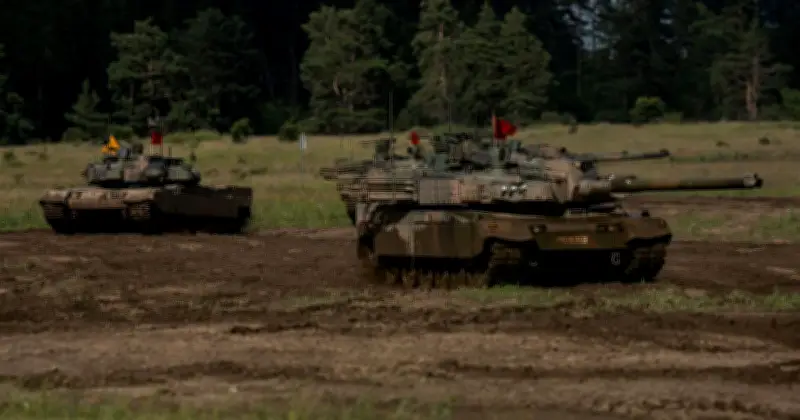
The Suwalki Gap, a roughly 40-mile stretch of farmland, forests and tiny villages along the Lithuania-Poland border, has been described as one of the most dangerous places on the planet due to its strategic position between Belarus and the Russian territory of Kaliningrad.
Life in the area may appear peaceful, but its location has made it one of NATO's biggest security concerns as tensions with Russia continue. On one side is Belarus, Russia's close ally, while on the other is Kaliningrad, the heavily militarised Russian territory on the Baltic Sea.
A key corridor for NATO
Lithuania, Latvia and Estonia are all members of NATO, and the Suwalki Gap provides their main land connection to the rest of the alliance. If Russia ever seized the area, the three Baltic states could effectively be cut off by land from their NATO allies.
Former US Army commander Ben Hodges has previously described the area as "one of the most volatile points on the world map", while it has also been dubbed the "most dangerous place on Earth". Any Russian attack on Lithuania could have much wider consequences because an armed attack on a NATO member could trigger Article 5, under which other members would be expected to come to its aid, sparking a wider conflict.
Local residents carry on
Despite its location, the people who actually live along the border are trying to carry on with their normal lives. In the tiny Lithuanian village of Salaperaugis, home to around 70 people, farm worker Valtemir Masharipov lives with his family.
The 54-year-old father of 11 told the Sun he regularly hears about the Suwalki Gap on the news and worries about what the future could hold for his five-year-old son. He said he might try to hide in his cellar if an attack came, although he feared it would offer little protection during heavy bombardment.
Closer to the Russian border in Kybartai, 43-year-old Jurgita Maurucaite said she would not know where to run if Russian forces crossed into Lithuania and would be left praying if tanks arrived. Another local, Giedre Brozotsko, 38, remembered being able to speak to Russian guards across the border when she was a child.
Defensive measures and outlook
Things are very different now. She said her daughter has been given advice at school about what could happen during a Russian invasion, while her family would try to escape towards Poland or, in the worst case, leave across the Baltic Sea. Retired farm worker Gintas Brizinskas, 74, was less concerned about himself but worried about what a conflict would mean for younger generations.
Lithuania has been strengthening its defences, with military exercises and rehearsals of wartime evacuation plans taking place. Concrete anti-tank obstacles can also be seen close to the Russian frontier, while razor wire and tank traps guard a closed crossing with Belarus. There have also been reports of GPS disruption affecting the region, including farmers who rely on satellite technology.
However, a Russian invasion is far from inevitable. Former NATO Assistant Secretary General Giedrimas Jeglinskas believes the likelihood of a conventional Russian attack is "very low". He said investment in roads, railways and military facilities has helped turn the Suwalki corridor into a "strong point rather than a weak point".