
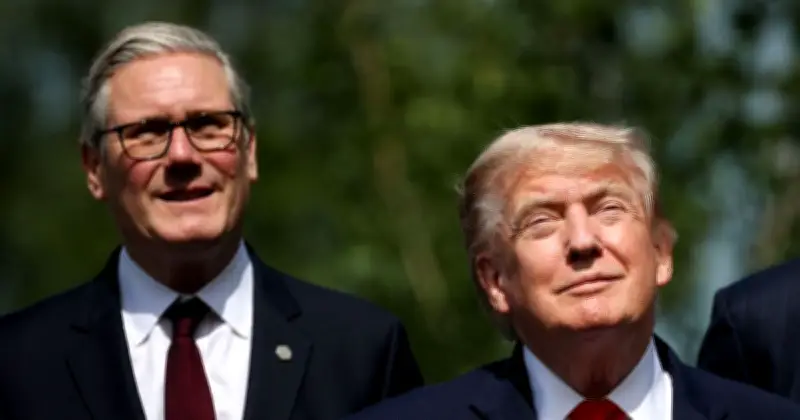
Keir Starmer and Donald Trump had an awkward showdown last night at the NATO summit in Ankara, their first face-to-face meeting since the US president criticised the outgoing prime minister following his resignation. The row centres on defence funding, with Trump sceptical that Britain can meet its spending obligations and considering imposing punishments such as withdrawing security support.
Domestic Pressure Over Defence Shambles
Sir Keir faces intense domestic pressure over Labour's defence shambles. His own military advisors have warned that the delays have left Britain more exposed to a Russian attack. Lord Robertson and Sir Richard Barrons, two of the three authors of Sir Keir's strategic defence review, accused him of leaving the UK vulnerable.
Sir Keir's defence investment plan was finally published last week after a year-long delay. There is still a £15 billion black hole in the proposals, which are unlikely to impress Britain's NATO allies during meetings at the Ankara summit.
Appearing at the defence select committee on Tuesday, Sir Richard said: “For me, by far the most dangerous consequence of the year’s delay is that the Prime Minister says Russia could attack NATO by 2030. And we essentially lost a year of mobilising for that, and that is profoundly dangerous.”
UK Leads £37 Billion European Missile Project
It comes as Sir Keir said Britain will lead a £37 billion European project to develop a new long-range missile and end NATO's reliance on US weapons. The “Deep Precision Strike Coalition” is regarded as one of the first steps towards the creation of a European pillar of NATO over the next decade. The missiles will have the ability to strike targets 3,000 km away with pinpoint accuracy.
Sir Keir said: "I am determined to ensure the safety of the UK and our Allies and to do that, we must step up to deliver a stronger, more European NATO. The UK is already working with partners to develop exquisite capability that will give our Armed Forces the ability to defend and deter thousands of kilometres from the front line, but this UK-led initiative will allow us to step up our cooperation, bringing European Allies together to ensure NATO remains safe and secure for years to come. We must continue to work together as Allies to develop the capability of the future to bolster security and protect growth at home."
Defence Secretary Dan Jarvis said: “Our new suite of deep precision strike weapons will give our forces the ability to strike targets hundreds of kilometres away with great accuracy – strengthening NATO and deterring our adversaries.”
Russian Threat and Defence Spending Targets
During the Summit, the Prime Minister will underline the substantial threat Russia poses to the UK and NATO. In the past two years, NATO has scrambled fighter jets to intercept Russian aircraft approaching allied airspace more than 700 times, and Russian military activity around UK waters has surged 30%.
Sir Keir's defence plan will see spending as a proportion of GDP rise from 2.6% in 2027 to 2.7% by 2030, with the intended “trajectory” to hit 3% in the next parliament. Under a plan agreed at last year's NATO summit in The Hague, members agreed to reach at least 3.5% of GDP by 2035, as part of a total of 5% on defence and “defence-and security-related spending”.
Criticism from Tory Leader Kemi Badenoch
Earlier, Tory leader Kemi Badenoch savaged Sir Keir for having no defence plan. She told a press conference: “We are sending an outgoing Prime Minister who is now completely powerless to that NATO summit. And he is taking with him a Defence Investment Plan which he knows is not fit for purpose. With barely half of the additional funding that our armed forces need.”




