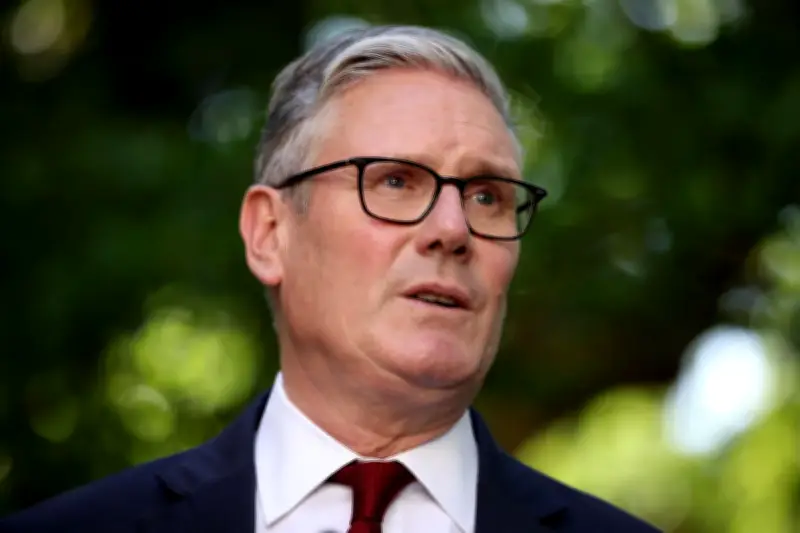
Sir Keir Starmer has said Europe must build a common security framework, warning that the change in its defence relationship with the United States is permanent and "not an aberration of the Trump presidency."
In his first major intervention since leaving Downing Street, the former prime minister cautioned that "things will not go back to the way they were" as America makes clear it will no longer "bankroll" allies on the continent.
Call for a Common Security Framework
Speaking at the British Irish Chamber of Commerce (Bicc) dinner at Dublin City Hall on Friday evening, he argued Europe needed a "common security framework as much as a common market" with the UK at its centre. He warned the continent had "twice been caught asleep" - firstly by Russia's invasion of Ukraine, and secondly by Donald Trump's insistence that it shoulder more of the burden of its own defence.
Addressing the event, where he was awarded an honorary life membership from the Bicc to "recognise his contribution to strengthening relations between the UK and Ireland" during his premiership, he said: "A stronger Europe is vital and the UK must be at the heart of it.
"Europe has twice been caught asleep - failing to anticipate and prepare for predictable events.
"First when Russia's attack on Ukraine exposed long-standing European weaknesses on defence and security; and second when President Trump made clear, once and for all, that the US will no longer bankroll our European security. We have to catch up."
Permanent Change in Transatlantic Ties
He added: "I will say here what I have said to European leaders. This is about responding to a permanent change of affairs, not an aberration of the Trump presidency. Things will not go back to the way they were before.
"That doesn't mean the US relationship is no longer important. On the contrary, the military, security and intelligence alliance is far too strong for that.
"But it does mean enabling Europe to take on far more responsibility for its own defence and security."
Sir Keir said increased defence spending was part of the picture, but that the challenge "goes far beyond that."
Pan-European Cooperation Needed
"We need to build up pan-European co-operation and co-ordination on defence and security - a common security framework as much as a common market," he said.
"The EU is changing to respond to that, but it cannot be the EU alone when Europe's periphery is core to its defence."
Sir Keir said he believed Britain's relationship with its friends and allies "can and should be strengthened by this urgent and common security project".
The former Labour leader grappled with an increasingly strained transatlantic relationship in No 10, having initially sought to pursue a conciliatory approach and even drawing praise for his handling of the unpredictable president. He later fell out with the US leader over his refusal to directly involve the UK in the Iran war and Mr Trump's threats to annex Greenland towards the end of his time in office.
Sir Keir has left frontline politics after resigning as leader in the summer but signalled a desire to focus on international affairs, with reports previously suggesting he has his sights set on becoming secretary general of Nato.