
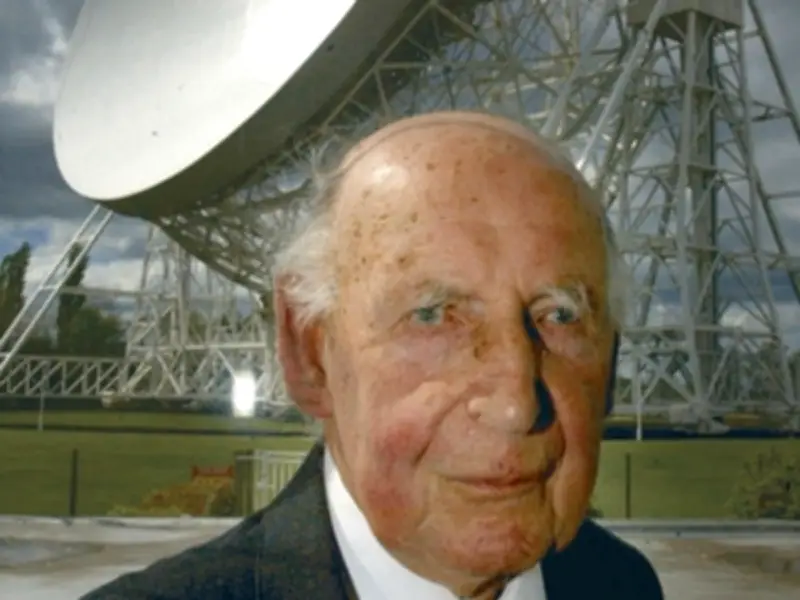
In a 2008 interview with the Manchester Evening News, Sir Bernard Lovell, founder of Jodrell Bank, revealed that the KGB attempted to recruit him at the height of the Cold War. During a visit to the Soviet Union in 1963, Russian officials tried to detain him and encourage his defection.
Secret military role
Sir Bernard was a member of several military committees and privy to Britain's defence secrets. Despite his international reputation as a radio astronomer, he was invited by the Soviet Academy of Sciences to tour major observatories in June and July 1963. He later said: "The point is that I should have been prevented from going to the Soviet Union in 1963 when they certainly knew we were part of the defence network. I shouldn't have gone."
After returning to England, he considered becoming a Church of England vicar due to doubts about his research. He returned to Russia in 1976 with his wife and hosted Soviet scientists later.
Telescope costs and military demands
The construction of the Mark I telescope went drastically over budget because of last-minute military requirements. The Air Ministry wanted the dish to track intercontinental ballistic missiles, but funding was not provided. Sir Bernard recalled: "I survived because I always had this place to return to. The head of the Public Accounts Committee knew jolly well why we had to change the design but he said 'My job is to defend the public accounts and it's you that has spent the money'."
The telescope was saved by detecting the Soviet Sputnik satellite. Sir Bernard said: "I don't think we would have survived. The situation was so bad the university could have dismissed me with ignominy." He added: "I simply wanted to come back and do research but events wouldn't allow me to."
Cold War warning system
Jodrell Bank was the only device capable of tracking Soviet intercontinental missiles during the Cuban Missile Crisis, providing a four-minute warning of attack. It was also used to give warnings for five years until RAF Fylingdales became operational in 1963.
The telescope's military role remained secret for decades. Engineers had said it might last 15 years; Sir Bernard noted: "The engineers who built it said if I was lucky it might last for 15 years. It was built without any computer design. It was slide rules in those days."
Legacy and future
Despite funding threats to the e-Merlin network, the observatory continues. Sir Bernard said: "Obviously it has a limited life. It is marvellous that it is still around after 50 years." He still visits weekly. Reflecting on his career, he said: "I'm very honoured. I have caused them so much trouble in the past."




